

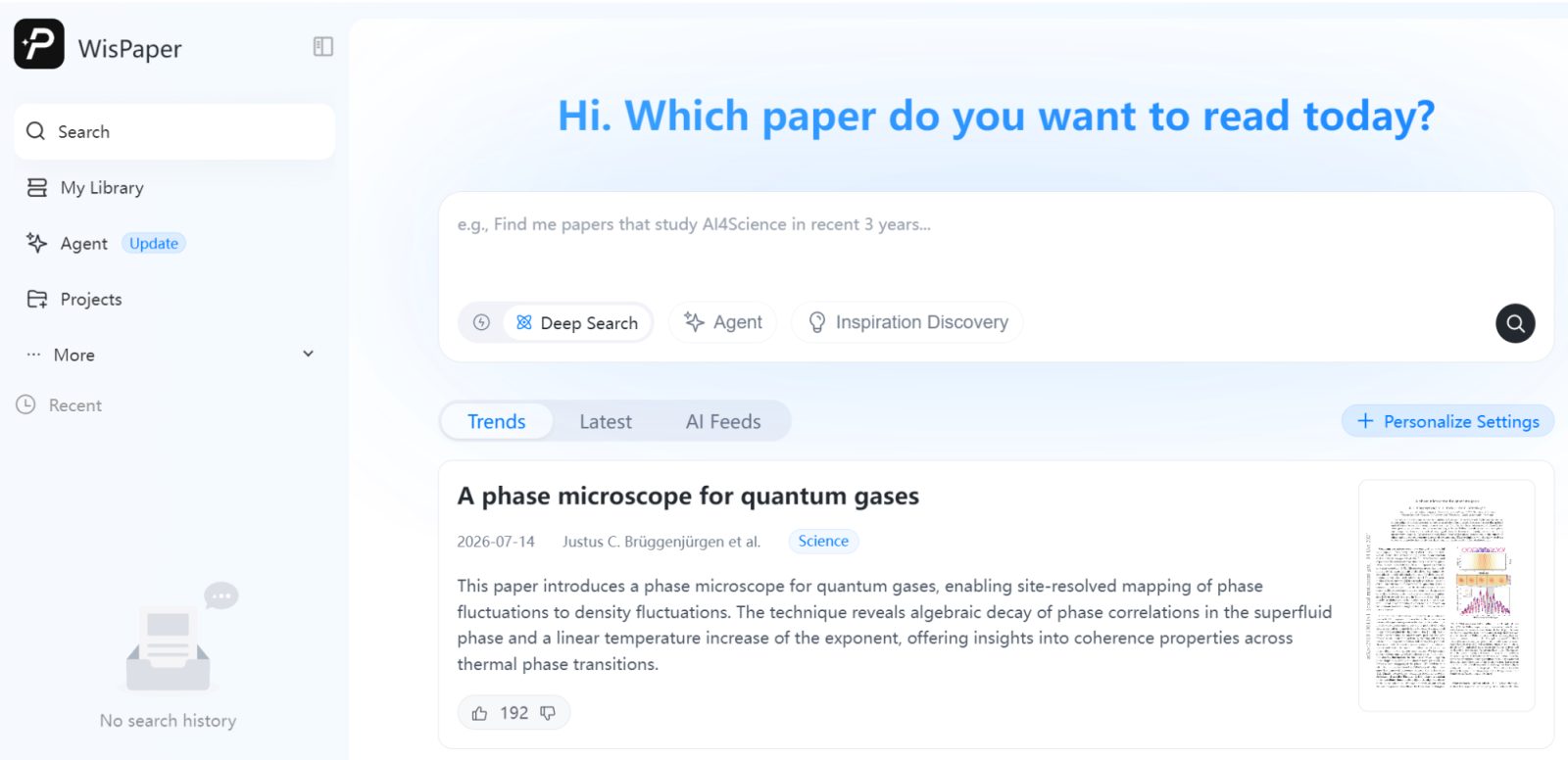
The call came at 7 a.m. A patent attorney stared at her screen, scrolling through a competitor's freshly granted patent describing a technique her client's R&D team had been calling their next breakthrough. The source material had been sitting in an open-access journal for six months — publicly available, fully indexed, and completely missed. In industries where a six-month knowledge gap can kill a product roadmap, this kind of blind spot reshapes who leads and who follows. WisPaper's Deep Search was built for this problem, though most organizations still treat competitive intelligence as something you do when you remember to.
The Weight of Incomplete Technology Landscapes
Most organizations navigate their technology landscape the way a person crosses a dark room with a match: they see a few things up close and assume the rest is empty. A handful of well-known journals, a few competitor patents, maybe a conference or two. The missed signals aren't hidden. They're published. They're just not reaching the right people.
Demand for Comprehensive Technology Intelligence
Research teams in pharmaceuticals, materials science, and semiconductors need more than a list of what competitors published last month. They need to see which directions are heating up, which labs are pivoting, which dead ends have been abandoned. This intelligence used to be built by hand — analysts reading journals, maintaining spreadsheets. The volume of publication has made that approach unsustainable.
Challenges in Competitive Technology Analysis
The bottleneck isn't access. Most competitive signals are technically available to anyone who knows where to look. The bottleneck is synthesis. A single research direction scatters signals across a dozen journals, preprint platforms, patent filings in multiple jurisdictions, and conference abstracts that never reach formal publication.
Streamlining Competitive Intelligence Gathering
The shift is from periodic manual scans toward continuous, automated intelligence feeds. AI Feeds let researchers monitor 32 disciplines with filters for keywords, journals, or research groups, delivering daily updates when something relevant surfaces. Deep Search handles complex include-and-exclude conditions with 95% accuracy. The WisPaper platform layers these with technology radar charts that make a field's trajectory readable at a glance, while Idea Discovery scans indexed documents to surface research gaps competitors haven't yet occupied. These aren't passive tools. They surface what you should pay attention to, not just what you already know to ask about.
Well-Informed Strategic Decisions
When competitive intelligence becomes continuous, strategic decisions change. Patent filings become proactive. R&D roadmaps adjust to gaps competitors haven't filled. Investment decisions get anchored to evidence about where a field is actually heading.
None of this guarantees a company will out-innovate its competitors. But it does mean the blindsiding that patent attorney experienced stops being an inevitable cost of doing research and starts being a correctable failure of process.








Comments are closed.