A custom pool is more than a place to swim. It can become a gathering space, a quiet retreat, an exercise area, or a central feature of the backyard. Because every household uses its outdoor space differently, small design choices can have a surprisingly large effect on how comfortable and practical the finished pool feels.
Built-in seating is one of those choices. When discussing a new design or renovation with a professional pool builder in San Diego, homeowners may want to consider not only the size and shape of the pool but also where people will naturally want to sit, relax, or socialize. Thoughtfully positioned seating can make the water more inviting, although it also takes up space that could otherwise be used for swimming.
So, is built-in seating worth adding? The answer depends on how you expect to use your pool, who will use it, and how much space you have available.
Built-In Seating Can Make the Pool More Social
Traditional swimming pools often encourage people either to stay fully in the water or sit outside the pool on patio furniture. Built-in seating creates a comfortable middle ground. Swimmers can remain partially submerged while talking with friends, supervising children, or simply cooling off without continuously swimming.
This can be especially useful when a pool is designed as part of a larger entertaining area. A bench positioned along one side allows several people to gather without blocking the main swimming space. Corner seating can provide a quieter spot while keeping the center of the pool open.
Seating can also help the pool feel more welcoming to guests who enjoy being around the water but do not necessarily want to swim. Someone can sit comfortably in shallow water while still participating in conversations and activities taking place around the pool.
Different Seating Styles Serve Different Purposes
Not all built-in pool seating needs to look or function the same way. The right design should reflect the activities that matter most to the household.
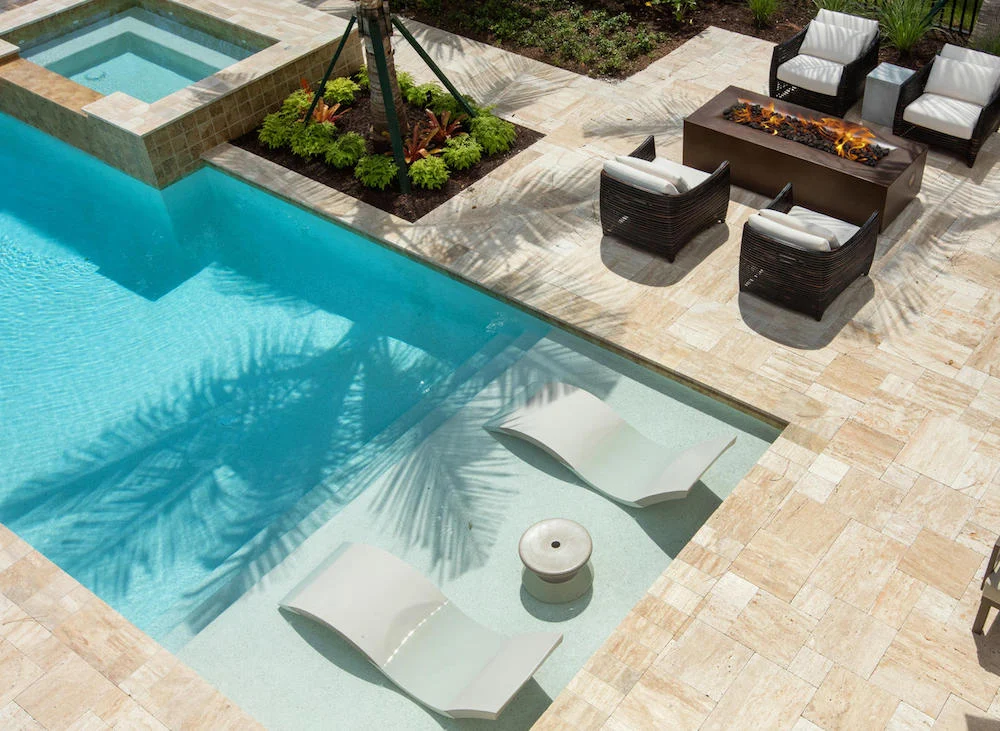
A long submerged bench is one of the most versatile options. It provides room for several people and can follow a straight or curved section of the pool wall. Smaller corner benches work well when space is limited, while deeper seating may appeal to adults who want to relax with more of their body underwater.
Another possibility is a shallow ledge large enough for sitting, lounging, or placing specially designed water-resistant chairs. These areas often create a gradual transition between the deck and deeper water. They can also provide a convenient spot for younger swimmers to become comfortable around the pool while remaining under close supervision.
The depth matters just as much as the shape. Seating that is too deep may be uncomfortable for shorter users, while extremely shallow seating may not provide enough cooling on hot days. Considering who will use the pool most frequently can help determine the most comfortable dimensions.
Think About Comfort Without Sacrificing Swimming Space
Every built-in feature occupies part of the pool’s usable interior. In a large pool, a generous bench may have little effect on swimming. In a smaller design, however, an oversized seating area can noticeably reduce open water.
That makes placement particularly important. Seating along the perimeter generally preserves more of the central swimming area than benches that extend far into the pool. Curved seating can sometimes follow the pool’s shape more naturally, while compact corner seats may provide enough room for relaxation without noticeably changing how swimmers move through the water.
Homeowners considering different layouts can compare how benches, ledges, steps, and open swimming areas work together before construction begins. Pool design examples available through reliefpools.com can help illustrate how individual features may be incorporated into a broader backyard plan, while the final arrangement should still be based on the dimensions and intended use of the specific pool. Good planning prevents a comfortable feature from becoming an obstacle.
Seating Can Add More Than Just a Place to Sit
Built-in benches can perform several functions at once. Depending on their position, they may serve as resting points for swimmers, conversation areas during gatherings, or convenient places to enter and exit the water.
They can also contribute visually to the pool. A curved bench can reinforce a rounded pool design, while clean rectangular seating may complement a more modern layout. Finishes can be coordinated with steps, waterline tile, and other interior surfaces so that the seating feels like part of the original design rather than an addition.
Lighting is another consideration. Underwater lights positioned near seating areas can improve visibility at night and create a pleasant atmosphere. However, placement should be planned carefully so swimmers are not sitting directly in front of an uncomfortable glare.
Consider Who Will Be Using the Pool
A household’s lifestyle should guide the decision more than current design trends. Families that frequently entertain may get significant use from a long bench where guests can gather. Someone who primarily swims laps may prefer to keep the interior as open as possible.
Older adults may appreciate convenient resting points, while families with children may value shallow areas where adults can sit nearby. However, built-in seating should never be treated as a substitute for proper supervision or appropriate pool safety measures.
It is also worth thinking ahead. Pool designs can last for decades, and the way a household uses its outdoor space may change over time. Features that accommodate several types of activities tend to remain useful longer than highly specialized additions.
Is Built-In Pool Seating Worth It?
For many custom pools, built-in seating is a worthwhile feature because it expands the ways people can enjoy the water. It creates space for conversation, relaxation, supervision, and short breaks between swimming without requiring anyone to leave the pool completely.
Still, more seating is not automatically better. The most successful designs balance comfort with open water, circulation, steps, and other features. A compact bench in the right location may provide more practical value than a large seating area that dominates the pool.
Before making the final decision, think about how many people normally use the pool, whether swimming or relaxation is the greater priority, and how much interior space can comfortably be devoted to seating. When those considerations guide the design, built-in seating can feel less like an extra feature and more like a natural part of the pool.