

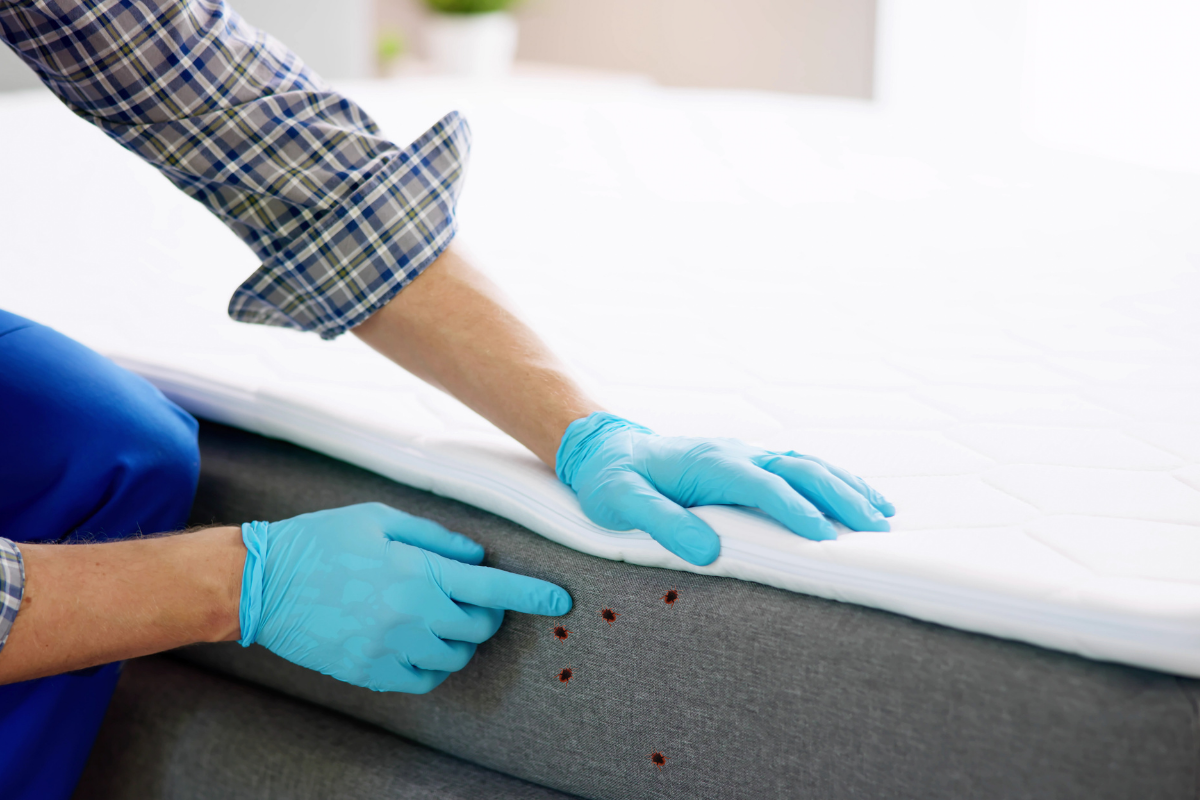
Bed bugs are among the most frustrating pests you can discover in your home. Small, discreet and remarkably resilient, these insects are experts at hiding in the most unexpected places and usually emerge at night to feed. If you have recently woken up with unusual bites or noticed small blood stains on your bedding, there is a good chance that bed bugs may be the reason.
The good news is that an infestation can be controlled. However, getting rid of bed bugs is rarely as simple as applying an insecticide once and expecting the problem to disappear overnight. Effective bed bug treatment requires the right approach, careful preparation and, most importantly, patience.
Why are bed bugs so difficult to eliminate?
Before choosing a treatment method, it is important to understand what you are dealing with.
Bed bugs are small, flat, reddish-brown insects that feed on blood. During the day, they usually remain hidden in narrow cracks and protected spaces close to where people sleep. Common hiding places include bed frames, mattress seams, headboards, furniture near the bed, skirting boards, electrical outlets, picture frames and even gaps in flooring.
At night, they leave their hiding places to feed.
What makes bed bugs particularly difficult to eliminate is not just their ability to hide. They can also reproduce quickly, while their eggs are often more resistant to treatment than adult insects and young nymphs. This means that a single treatment may kill many active bed bugs while some eggs survive and hatch later.
For this reason, multiple treatments are often necessary. If new bed bugs appear after the first intervention, it does not automatically mean that the treatment has failed. In many cases, the insects are newly hatched nymphs that emerged from eggs that survived the previous application.
That is why a successful bed bug treatment usually involves several interventions carried out at the right intervals.
What treatment methods can be used against bed bugs?
There is no single magic solution for every infestation. The most effective approach is usually based on combining different treatment methods so that both visible areas and difficult hiding places are addressed.
Chemical treatment through spraying
Spraying insecticide is one of the main components of professional bed bug control. The treatment is applied to the areas where bed bugs are likely to hide or travel, including bed frames, furniture, skirting boards, cracks, gaps around doors and other protected spaces.
The way the insecticide is applied is extremely important. A fine, controlled spray can provide better coverage and help the solution reach narrow cracks and crevices. Simply soaking surfaces is not only ineffective but may also damage furniture or other materials.
Mattresses also require special attention. Seams, folds and joints should be carefully inspected, as these are common places where bed bugs can hide. If activity is found, treatment should only be carried out according to the product label and safety instructions.
However, there is an important limitation. If bed bugs have penetrated deep inside a mattress or another inaccessible structure, a surface treatment may not reach them effectively. In these situations, additional control methods, including professional heat treatment where appropriate, may be necessary.
ULV fogging and thermal fogging
Fogging can be used as a complementary method alongside targeted spraying. ULV, or Ultra Low Volume fogging, produces very small droplets that can disperse throughout a treated space and reach areas that may be difficult to access with conventional spraying.
Thermal fogging can also be used in certain treatment programmes, depending on the environment, the equipment and the products being applied.
Unlike targeted spraying, fogging is designed to distribute the treatment more widely throughout the room. The fine particles can move into cracks, gaps and other difficult-to-reach areas.
When combined correctly with residual insecticide applications, fogging may also contribute to a so-called flush-out effect. The treatment can disturb hidden bed bugs and encourage them to leave their shelters, increasing the chance that they will come into contact with treated surfaces.
This is why combining methods can produce better results than relying on only one technique. Spraying provides targeted and potentially residual protection on key surfaces, while fogging can help reach hidden areas and disturb insects that remain concealed.
Smoke bombs and foggers: a practical alternative
Not everyone has access to professional fogging equipment. In these situations, insecticidal smoke bombs or total-release foggers may appear to be a convenient alternative, depending on the product and the conditions of use.
Once activated, these products release insecticidal particles into the room. The treatment can disperse throughout the enclosed space and reach certain cracks, gaps and areas that are difficult to treat directly.
However, smoke bombs and foggers should not be considered a complete replacement for targeted insecticide application. Bed bugs are extremely good at hiding inside narrow cracks, behind furniture and in other protected locations, and airborne treatments may not penetrate every harbourage.
For this reason, the strongest approach is often to combine methods where appropriate and permitted by the product instructions. Targeted spraying focuses on known hiding places and surfaces where bed bugs travel, while fogging or smoke treatments can complement the overall intervention.
Think of them as different tools in the same toolbox. Each one has a specific role, but the best results usually come from using the right combination rather than relying entirely on one method.
How many bed bug treatments are necessary?
This is one of the first questions people ask after discovering an infestation. The honest answer is that it depends on the severity of the problem.
In many situations, between two and four treatments may be required, usually with an interval of approximately 7 to 10 days between interventions. The timing is important because it allows eggs that survived the previous treatment to hatch before the next application.
The newly emerged bed bugs can then be targeted during the following intervention, before they have enough time to establish a new and growing population.
In more severe infestations, especially those that have remained unnoticed for a long time, more than four treatments may be necessary. This is one reason why it can be difficult to guarantee complete elimination before the property has been inspected and the first treatment has been carried out.
Every infestation is different. The size of the affected area, the number of hiding places and the length of time the infestation has been present can all influence the treatment process.
A positive sign is a gradual reduction in bed bug activity between treatments. Fewer live insects, fewer signs of feeding and a decrease in new evidence of activity can indicate that the control programme is moving in the right direction.
What should you do after a bed bug treatment?
The period after treatment is just as important as the treatment itself.
Depending on the product used and the application method, the room may need to remain closed for a specific period of time. Always follow the instructions on the product label or the recommendations provided by the pest control professional.
After the required waiting period, the treated space should be ventilated thoroughly before it is used again. Good ventilation is particularly important in bedrooms and other enclosed spaces.
It is also essential not to clean treated surfaces immediately if the insecticide is designed to leave a residual effect. Washing or wiping these areas too soon may remove the active treatment and reduce its effectiveness.
At the same time, bedding, clothing and other washable fabrics that may have been exposed to bed bugs should be handled carefully and washed or treated according to appropriate temperature recommendations. Vacuuming can also help remove insects, shed skins and other signs of activity, especially from cracks, furniture and areas around the bed.
Monitoring should continue between treatments. Check mattress seams, bed frames and other common hiding places for live insects, eggs, shed skins or small dark spots that may indicate bed bug activity.
Patience and consistency make the difference
Getting rid of bed bugs is not a one-day job. Even a carefully performed treatment may not eliminate every insect during the first intervention, particularly because eggs can survive and hatch later.
The key to effective control is consistency. Combining targeted spraying with complementary methods such as fogging, repeating treatments at the correct intervals and monitoring the affected area can significantly improve the chances of eliminating the infestation.
A steady reduction in bed bug activity from one treatment to the next is a positive sign that the approach is working. The process may require patience, but with the right treatment strategy and careful follow-up, even a persistent bed bug infestation can be brought under control.











1 thought on “Bed bugs treatment: how to get rid of these persistent pests”
Comments are closed.