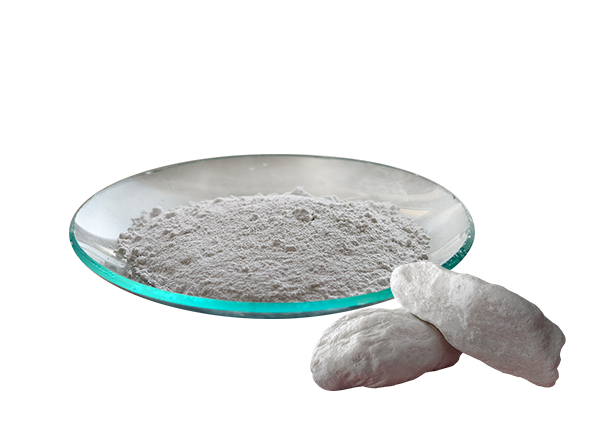
A smoother LSZH cable surface depends on more than choosing a finer talc grade. Particle distribution, dispersion, polymer compatibility and batch consistency all influence the final extrusion result.
A rough LSZH cable surface is rarely solved by choosing the smallest talc particle available. Particle distribution, mineral–polymer compatibility, whiteness and batch stability all affect whether an ultrafine talc grade actually performs well during extrusion.
Victoryfr ‘s VT-series provides one practical example of how talc suppliers address these variables through ultrafine and surface-modified grades, including products around a D50 of 4 μm.
For LSZH cable formulations, that question usually leads through three stages: particle control, interface control and production consistency.
Start With the Surface Problem, Not the Talc Label
A cable surface can become rough because of oversized particles, agglomeration, poor filler distribution or unstable extrusion.
This becomes more important in LSZH formulations because talc normally works inside a highly filled mineral system rather than alone. Magnesium hydroxide, polymer resin and other additives all influence melt behavior and surface appearance.
The first useful distinction is therefore:
- roughness linked to coarse or uneven particles: review talc particle distribution;
- poor dispersion in PE or EVA: review mineral–polymer compatibility;
- color variation in light compounds: review whiteness and purity;
- good lab results but unstable production: review batch consistency.
When D50 Around 4 μm Becomes Relevant
A D50 around 4 μm is a useful ultrafine reference point for cable compounds that require tighter particle control and a smoother finished surface.
But D50 is only the median particle size. It does not show whether the powder contains oversized particles or agglomerates.
That is why two grades with a similar D50 can still produce different extrusion results.
For a smooth LSZH surface, buyers should look beyond the headline D50 and also review:
- the broader particle-size distribution;
- agglomeration;
- particle morphology;
- dispersion after compounding;
- consistency between production batches.
Victoryfr’s ultrafine talc range illustrates this type of particle-control approach, with grades around the 4 μm D50 range for applications requiring finer mineral distribution.
When Finer Talc Is Not Enough
Reducing particle size addresses only one part of an LSZH formulation. In PE and EVA compounds, poor mineral–polymer interaction can remain even when the talc is already ultrafine.
When dispersion is the limiting factor, surface modification becomes more important than further reducing particle size.
Surface Modification for PE and EVA Compounds
Victoryfr’s VT-X-AS modified talc is designed to improve dispersibility and compatibility in polymer matrices, including polyolefins.
This creates a clear distinction between two product routes:
- Ultrafine VT talc: focuses on particle control and smoother surface quality.
- VT-X-AS modified talc: focuses on dispersion and mineral–polymer compatibility.
For PE cable formulations, VT-X-AS directly matches the need for improved filler interaction in a polyolefin matrix. In EVA compounds, the same selection logic applies, but the product should be verified under the actual filler loading and extrusion conditions.
The practical rule is simple: use finer talc when particle distribution is the problem; evaluate surface-modified talc when compatibility and dispersion are the stronger limitation.
Light-Colored LSZH Also Requires Stable Whiteness
Surface quality is not the only reason to control talc specifications.
White and light-colored flame-retardant compounds also require consistent mineral color because talc can influence:
- finished-product appearance;
- pigment adjustment;
- color matching between production batches.
Victoryfr’s talc range combines high purity, good whiteness and stable quality, while higher-whiteness ultrafine grades provide an additional route for light-colored polymer compounds.
For production, the important requirement is not the highest possible whiteness value. It is whether the selected grade can maintain the required color range across repeat batches.
From Lab Sample to Continuous Extrusion
The same principle applies to surface quality.
A talc grade that produces a smooth cable surface in one trial must reproduce that result during longer production runs. Particle distribution, surface treatment and whiteness should therefore be connected with the actual extrusion result.
| Production issue | Main factor to review |
| Rough cable surface | Particle distribution and agglomeration |
| Poor dispersion | Surface treatment and polymer compatibility |
| Color variation | Whiteness consistency |
| Batch-to-batch surface changes | Repeatability of particle and surface specifications |
Victoryfr’s combination of ultrafine talc, modified talc and magnesium hydroxide gives cable manufacturers a practical way to evaluate several mineral variables within the same LSZH formulation rather than changing each filler independently.
Where Victoryfr Fits in LSZH Cable Formulations
Victoryfr has a defined role in LSZH cable formulations because its talc portfolio covers three connected requirements within the same mineral-filled system.
Ultrafine VT talc addresses particle distribution and surface quality.
VT-X-AS provides a surface-modified route when polymer compatibility becomes the main limitation.
High-whiteness talc options support light-colored compounds that require visual consistency in repeat production.
Combined with Victoryfr’s magnesium hydroxide portfolio for wire and cable applications, these products connect talc selection directly with the wider mineral system used in LSZH compounds.
This positions Victoryfr around a clear application logic: particle control for smoother surfaces, surface modification for better compatibility, and stable mineral quality for repeat production.
Combined with Victoryfr’s wider mineral portfolio for wire and cable applications, these options allow talc selection to be matched to the actual formulation limitation rather than treated as a single particle-size decision.
FAQ
Does a D50 around 4 μm guarantee a smoother LSZH cable surface?
No. D50 describes only the median particle size. Surface quality also depends on the wider particle-size distribution, agglomeration, dispersion and actual extrusion conditions.
When should surface-modified talc be used in PE or EVA cable compounds?
Surface-modified talc becomes more relevant when poor dispersion or weak mineral–polymer interaction is the main limitation. Victoryfr’s VT-X-AS is designed to improve dispersibility and compatibility in polymer matrices, making it especially relevant to PE systems and other formulations where interface control matters more than further reducing particle size.
Why does whiteness matter in light-colored flame-retardant compounds?
Whiteness affects finished-product appearance, color matching and pigment adjustment. For repeat production, stable whiteness is more important than a single high value because batch variation can create visible color differences in light-colored LSZH compounds.
Conclusion
Smooth LSZH cable surfaces depend on more than talc fineness alone. Particle distribution affects filler uniformity, surface modification changes mineral–polymer interaction, and stable whiteness and material quality help maintain consistent results during continuous production.
A product range such as Victoryfr’s VT-series illustrates how different talc grades can address different formulation needs. Ultrafine grades around the D50 4 μm range provide one route for tighter particle control, while VT-X-AS represents a surface-modified option where dispersion and polymer compatibility require more attention.
For cable manufacturers, the practical approach is to identify whether the main limitation is particle distribution, interface compatibility, color consistency or production repeatability, and then validate the selected talc grade against that specific LSZH processing problem.