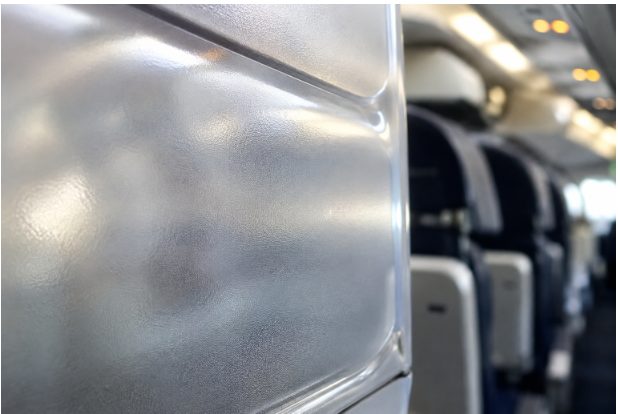
An aircraft cabin is shaped by thousands of design decisions, including choices passengers may never notice. From window surrounds and lighting covers to partitions, service panels, and overhead storage components, every interior element must meet demanding requirements for weight, safety, durability, and appearance. Selecting the right material is therefore about more than creating an attractive cabin. It means finding a solution that performs reliably throughout years of service while meeting the technical requirements of its intended application.
For manufacturers and aircraft interior designers, thermoplastic sheet for aircraft cabin interiors is an option to consider when balancing design flexibility, lightweight construction, surface quality, and production needs. Yet no single material is ideal for every component. Engineers must consider how a material will respond to impact, vibration, cleaning chemicals, temperature changes, and applicable fire-safety requirements. Understanding these trade-offs helps teams make informed choices that support passenger comfort, efficient manufacturing, and long-term cabin performance.
Why Cabin Materials Deserve More Attention
A cabin component has to fit precisely around seats, wiring, insulation, ducts, safety equipment, and the aircraft structure. It also has to remain functional and presentable through years of passenger use. This makes material selection a shared concern for engineers, designers, manufacturers, airlines, and maintenance teams.
The Main Trade-Off: Less Weight Without Less Safety
Reducing unnecessary cabin weight can contribute to a more efficient aircraft, which is why lightweight engineered plastics, sandwich panels, and composite assemblies are widely considered for interior applications. Yet a lighter part must still resist impact, abrasion, moisture, cleaning chemicals, and deformation over time.
- Strength and stiffness: The component must hold its shape and perform its intended function.
- Impact resistance: Baggage, service carts, and passenger contact can create repeated localized loads.
- Dimensional stability: Parts must continue to fit properly under varying conditions and vibration.
- Repairability: A material that is difficult to inspect or replace may create unnecessary service delays.
Fire, Smoke, and Material Qualification
Cabin materials are evaluated for more than whether they ignite. Depending on the application and certification basis, engineers may assess flame behavior, heat release, smoke, and the part's performance after forming, bonding, coating, or installation. The FAA’s advanced cabin safety work reflects the need to balance new cabin features and materials with occupant protection, emergency escape, flammability, and crash-related considerations.
This is why a promising raw sheet, resin, or core material cannot be treated as an approved cabin solution on its own. The finished component, its geometry, fasteners, decorative layers, and intended location all matter.
Where Advanced Materials Appear Inside an Aircraft
Engineered thermoplastics, composite panels, and lightweight cores can appear throughout a passenger cabin, including:
- Window surrounds and interior glazing
- Sidewalls, partitions, and decorative panels
- Overhead bins, service panels, and equipment housings
- Lighting covers, diffusers, and trim pieces
- Tray tables, lavatory panels, and high-contact protective surfaces
How Materials Affect Passenger Comfort
Comfort is not limited to seat pitch or upholstery. A light diffuser can soften illumination and reduce visual harshness. A low-glare surface can make the cabin feel calmer. Smooth, durable finishes can help high-contact areas remain easier to clean and visually consistent. Materials can also influence touch temperature, perceived quality, acoustic treatment, and how open or bright a cabin appears.
Design Freedom and Efficient Production
Formable sheet materials and molded parts enable designers to create curved surfaces, thin profiles, integrated mounting features, and clean transitions between components. In a confined cabin, this flexibility can reduce the need for separate trim pieces while allowing the part to fit around existing systems.
Efficient material choices can support production through fewer assembled parts, repeatable dimensions, cleaner finished surfaces, and simpler replacement during refurbishment. Those benefits only matter when they are matched with the required performance and inspection standards.
What Recent Aerospace Materials Work Reveals
Recent aerospace material-development work shows that qualification is a deliberate process, not a quick material swap. Boeing’s work on a newly qualified aramid-paper honeycomb core for interior applications involved screening candidate materials, mechanical testing for crack propagation, and flammability comparisons before wider use was considered. The qualification of a lightweight honeycomb core for cabin components illustrates why strength, flame resistance, manufacturing consistency, and real-world application must be evaluated together.
Durability, Cleaning, and Maintenance
Cabin interiors encounter frequent cleaning, repeated touch, baggage strikes, ultraviolet exposure near windows, vibration, and temperature variation. A part can meet its initial design target yet still be a poor operational choice if it scratches easily, absorbs moisture, discolors, or requires lengthy removal procedures.
Maintenance Checklist
- Can the surface tolerate approved cleaning agents?
- Will common impacts cause cracks, chips, or sharp edges?
- Can technicians inspect and replace the part efficiently?
- Is damage visible before it becomes a larger issue?
- Will the finish remain consistent after repeated cleaning and use?
Sustainability and End-of-Life Planning
A responsible material decision considers the part's full service life. Recycled content, efficient processing, low scrap rates, long durability, repair options, and easier separation at end of life can all be relevant. A lightweight part is not automatically the most sustainable choice if it fails early or cannot be recovered in practice.
A Practical Material Selection Process
- Define the location. Identify the component’s proximity to passengers, windows, lighting, electrical systems, and emergency equipment.
- Set performance needs. Establish fire, smoke, impact, optical, chemical-resistance, and appearance requirements.
- Compare candidate properties. Review mass, stiffness, toughness, abrasion resistance, and environmental stability.
- Match the manufacturing method. Confirm suitability for forming, machining, molding, bonding, or finishing.
- Evaluate the finished part. Test the completed assembly rather than relying solely on raw-material data.
- Plan for service. Account for cleaning, inspection, repair, replacement, and end-of-life handling.
Common Questions About Aircraft Interior Materials
Are lighter materials always better?
No. Weight matters, but the material must also meet the required safety, durability, structural, and certification expectations for its exact location.
Why are thermoplastics used in cabin components?
Suitable thermoplastic grades can provide low weight, impact resistance, smooth surfaces, and flexibility for forming complex shapes. The appropriate choice depends on the finished component and its required performance.
Can aircraft interior materials be recycled?
Some materials can be recovered, but the outcome depends on coatings, adhesives, reinforcements, contamination, local processing capability, and how the part was designed.
Conclusion
Aircraft interior materials influence far more than the cabin’s appearance. They affect safety, weight, passenger comfort, manufacturing efficiency, and the work required to keep every component in service. The most effective material choices begin with the needs of the specific application and account for the finished component’s performance, qualification requirements, maintenance demands, and eventual replacement or recovery. By weighing these factors together rather than focusing on a single property, aircraft manufacturers and interior designers can create cabins that are functional, durable, and comfortable throughout their service life.