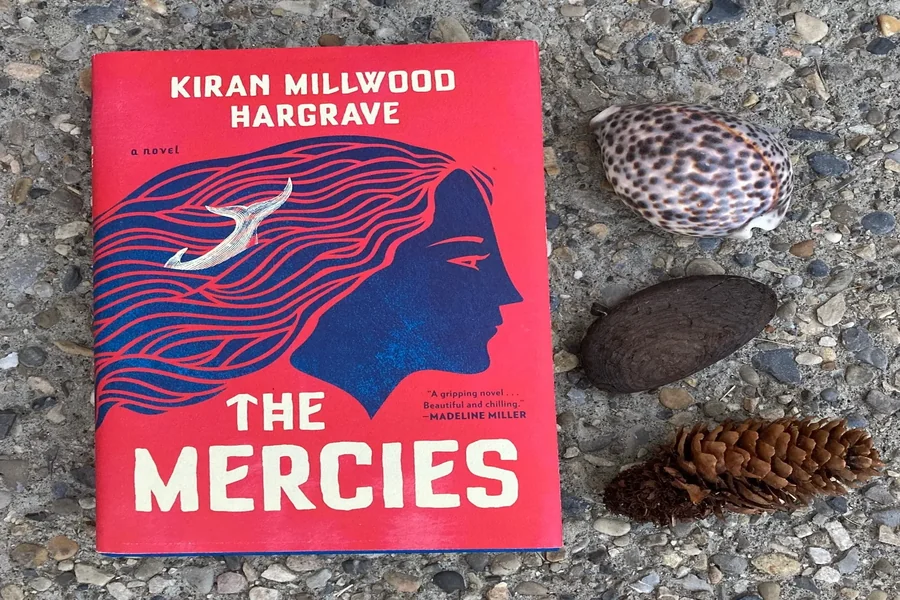
This book was a somewhat different read for me; I tend to read more science-fiction and fantasy than historical fiction, but the cover and description of this really caught my eye. Scandinavia, feminism, witchcraft—count me in! And overall, I quite enjoyed this book.
The main characters Maren and Ursa are great. Maren’s grief throughout the book for her deceased father and brother is palpable and creates a melancholic tone for the entire story. And her views that women should be able to take care of themselves, without influence of anyone, makes her sympathetic. You want her to have the chance to lead the life she wants. The same goes for Ursa, who finds herself in a marriage of convenience rather than affection and is taken from the only home she has ever known. So seeing these two come together and learn from each other is touching (even if it took a really long time for them to finally kiss).
The other characters such as Kirsten, Toril, Diinna, and Absalom are well-developed too. Seeing how different people view the role of women in that society was fascinating and infuriating and excellently written. The explorations into cultural and religious differences was also intriguing; I don’t know anything about Scandinavian history, so this was new information for me.
Furthermore, the way this small isolated town evolves over time is executed so well. Hargrove guides the reader through a landscape of gossip, rumor, prejudice, and mounting dislike with skill, so when the confrontations finally happen, it feels both devastating and inevitable. The culmination of all these elements, in the form of the witch trials, feels a little rushed but still very emotional and impactful.
I wasn’t entirely satisfied by the ending, because I didn’t expect it to be so ambiguous. However, Hargrave leaves enough there to feel that there is still some hope, and that the characters endure beyond the last page, so I’m not too mad about it.
In the end, The Mercies is a wonderful examination of matters of bias, religiously driven bigotry, gender roles, and the dangers that come from these. Hargrave creates some touching scenes, memorable characters, a sorrowful and rugged setting, and an engaging plot with a slowly burning romance at the core. If you like vivid historical fiction with queer protagonists and a nice dose of feminism, definitely give this a try!
Leave a Reply