
I received a digital advance reader’s copy (ARC) of Basil & Dahlia by Joy McCullough. Since this version is just a proof and not the final version, I won’t quote directly and will keep my comments general.
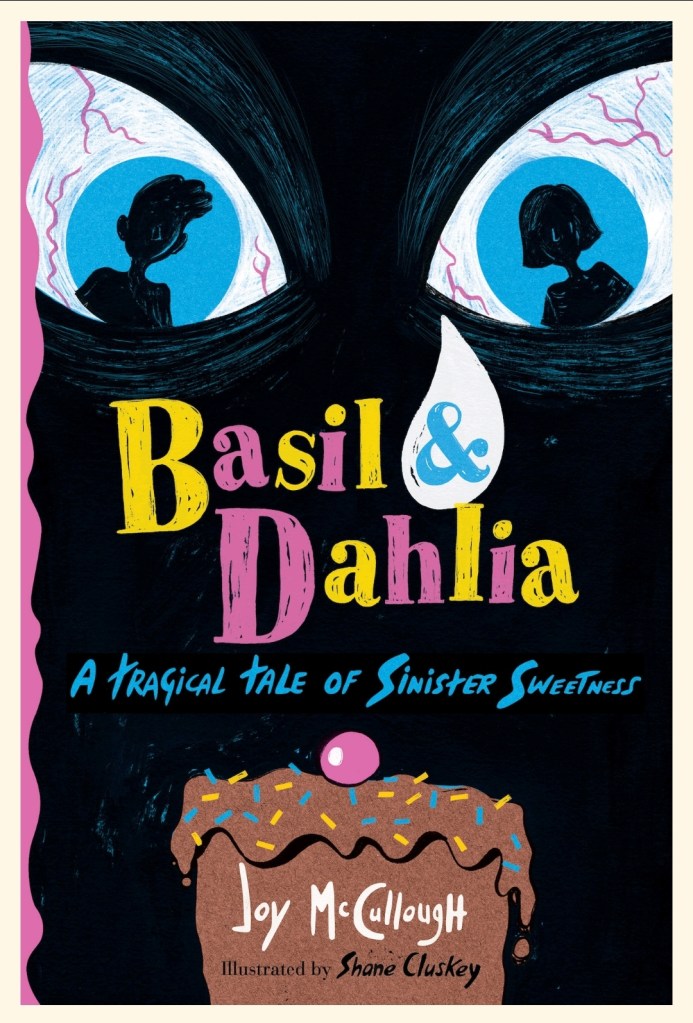
In Basil & Dahlia, the titular characters have recently been orphaned, after a terrible accident in their scientist parents’ greenhouse. When the siblings learn that they’re going to be placed in separate foster homes, they ditch their social worker on a train and set off on a chaotic adventure to find a new place to live. They end up in New York City, where a baker known as Laurel Fox takes them in, promising warmth and safety and delicious food. But Dahlia and Basil soon learn that not all is as it seems, and they might be in more danger than ever before.
This is the most Series of Unfortunate Things thing I’ve ever read, short of that series itself.
That isn’t to say that this doesn’t work as its own thing; Basil and Dahlia are very much their own characters. The former is studious and cautious, whereas the latter is the bold go-getter. Dahlia’s street smarts, and Basil is book smarts, and it’s a fun dynamic. But I also love how they support each other, know each other’s strengths and weaknesses, and always try to help each other.
There’s some lovely representation, too, of kids who have trouble with reading. Whether Dahlia has dyslexia or something else, she struggles very much with reading words on a page, and so has self-esteem issues relating to that. But Basil, and the narrative itself, makes a point of demonstrating that this does not make Dahlia stupid or lesser, and that’s very sweet to see. In fact, of the two characters, Dahlia might be the stronger one. (Though both are, of course, great.)
The peril that the siblings are in, thanks to Laurel Fox, is really quite ridiculous. There’s some magic at play here, sort of in a Roald Dahl sort of way. Her abuse (because it is abuse, exaggerated as it is) takes the form of forced labor and stealing tears to use in her recipes. And yes, the more I think about this, the more I want to compare this story to Matilda. Anyway. The kids are in rather bizarre danger, which clearly works as a metaphor for the troubles some children face in foster care. But it’s also, on the surface, a way to soften the content for younger readers, while still letting there be stakes and obstacles for the characters to overcome.
In the end, Basil & Dahlia is a decent story. It’s got dark humor and quirky characters, weird antagonists and macabre illustrations to match. It won’t be for everyone, but if you like Lemony Snicket, this Hansel and Gretel–esque tale will be for you!
Basil & Dahlia is available now!
 Righter of Words