
I love a good retelling. And this is a good retelling!
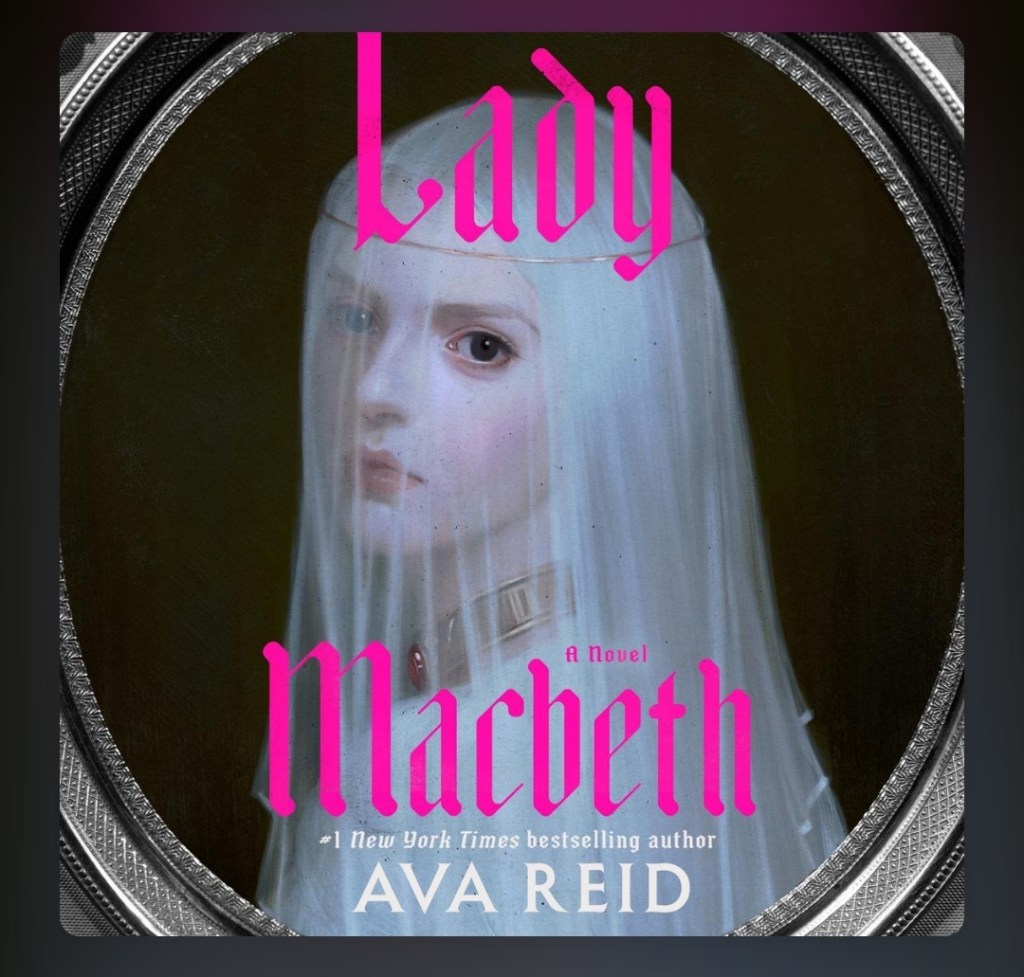
In Lady Macbeth by Ava Reid, Roscille has been raised her whole life knowing that, firstly, she is only useful as a wife and not as a person, and secondly, that she is witch-touched and so her direct gaze will drive men to madness. So she’s been wearing a veil for years, as well as preparing herself for the inevitable marriage bed. When she’s paired with Macbeth, a Scottish lord whose home is quite alien to her, she is resigned. Upon arrival at her new home, she does everything she can to survive this new life, only to discover that Macbeth has prophecies to protect and guide him, and that he will allow no one else’s will to stand in his path to the throne. Roscille finds herself trapped in an intensifying war, trying to maneuver out with her body—and her sound mind—still intact.
I’ve always liked Macbeth ever since I first read it in high school, even preferring it over the ever-popular (and still very good in its own right) Hamlet. I just think Macbeth is more entertaining—very bloody yes, but come on, there are witches! There are ghostly visions! There are Scottish warriors!
And there’s Lady Macbeth. She’s always been a fascinating character to me, a loyal wife to the point of tragedy, a woman so desperate for glory for her family that she’s driven to unthinkable actions. There’s so much beneath the surface, clearly, one of those characters in literature that sparks so many essays, so many analyses. So it’s no wonder that this novel (and another one I have on my shelf) have chosen to place her center stage.
In this version, Lady Macbeth is given an actual first name (unlike in the play), and the cultural backdrop is rich with detail. Clearly, Reid did a lot of research about life at the time, about name conventions, about gender roles. It’s evident in basically every moment how little choice “high-born” women had in their lives, how little opportunity for freedom the “low-born” women had as well. Yet we see always how Roscille is clever and observant, how she as an individual is a whole and complex person, even if no man around her recognizes it. At the same time, most of her actions are fueled by fear, or sometimes righteous anger. She didn’t choose this life, and she’s desperate to seize upon any amount of agency that she can, which makes her incredibly sympathetic.
The ways that this retelling tackles the original plot of Macbeth are quite smart. The bones of the story remain, though a bit twisted. Banquo and Fleance have bigger parts, Duncan’s sons have more depth, while others are relegated to more minor positions. But it all works, because so much of the focus ends up being on the titular character and her husband. And Macbeth is quite a character, a large and looming presence in every scene he’s in, and even some he’s not.
However, I think the real standout characters are the three witches. The way that folklore and the original play interact with the themes of gender roles and female empowerment is done so well. I loved the scenes with the witches in this book, and the way the plot developed over time was wonderful.
In the end, Lady Macbeth is a fantastic novel, taking influence from its source while also standing on its own. The audiobook, narrated by Imani Jade Powers, is a great production. The protagonist of the story is excellently rendered, as are the other major characters. The setting is stark and unsettling and vivid. The themes are obvious without being too overbearing, though Reid certainly doesn’t shy away from portraying the struggles that women must go through sometimes to take charge of their own lives. The magical elements are cool, though somewhat take a backseat in favor of simple cleverness and manipulation. There is a minor romantic subplot that didn’t really do anything for me, and a couple of the plot points I would have written differently if I’d been the author, but this is still a great novel. If you’re not a fan of Shakespeare, you might find less in this to enjoy, but I think this works as its own thing nonetheless. And if you are a fan of Shakespeare, consider picking this up!
Lady Macbeth is available now!
 Righter of Words
Pingback: Top 10 Books I Read in 2024 – Righter of Words