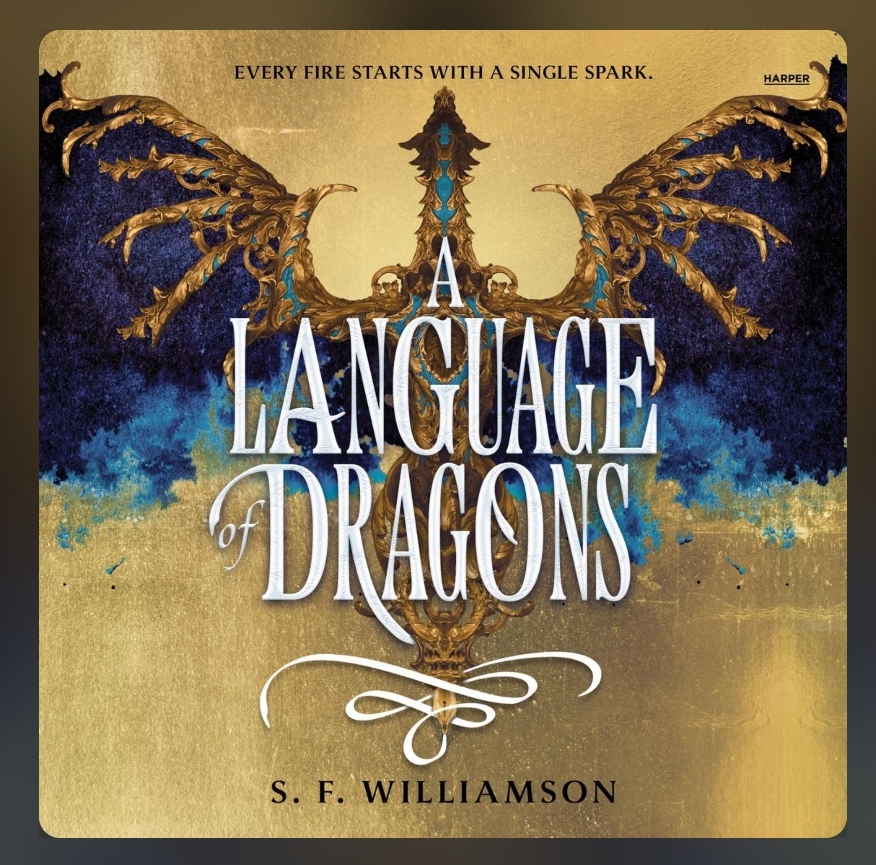
In A Language of Dragons by S. F. Williamson, it’s the 1920s, and there has been a precarious truce struck between the dragons and humans of Great Britain for some time now. But there are rumblings of a rebellion, determined to get better rights for the dragons and to dismantle the human class system. Vivian, however, only wants to follow the rules. So when her parents are arrested as rebels, she’s shocked, and desperate to protect her cousin and younger sister, especially as civil war breaks out. She agrees to work at Bletchley Park as a code breaker, studying dragon languages in order to use them in the war effort. As she does this work, though, she starts to realize that the peace treaty itself is stifling and corrupt, and that her own work might lead to more harm than good. But she’s in an impossible position, between saving the country and keeping her family safe, and she has no idea what to do.
Between this and Capitana, apparently I’m reading a lot of “young woman realizes that her government is bad” books lately. Hmm, I wonder why.
I have to say, the concept of this story is really cool — a retelling of Bletchley Park with a fantasy twist. I really enjoyed that, as well as the historical details of what life was like in 1920s England, just with a slightly different take. This is probably where the book is strongest, enriching the world of dragons and humans with tangible details from the past, from small things like fashion and manner of speaking to the generally fragile politics of Europe at the time.
I also enjoyed how, instead of computer and Morse code, the codebreakers in this book were instead deciphering echolocation between dragons. It’s both scientific and magical, and done in a rather clever way.
I do, however, wish that we’d spent more time with the dragons (surprise, surprise) to get a better sense of their personalities and cultures. We did get to know Jumana (no idea if I’m spelling this right, since I listened to the audiobook) well enough, but there were other dragons around that I would have loved to see more of. I feel similarly for some of the humans that Vivian gets to know—other than Sophie and Atlas, I didn’t really connect with any of them.
Speaking of Atlas, I liked the romance between him and Vivian well enough. He’s a rebellious type without falling into the overdone “bad boy with a heart of gold” archetype. Instead, he’s a thoughtful and idealistic young man, driven by his faith and a desire to help people. He and Viv are a little back-and-forth in regards to their relationship, but it’s nothing out of keeping with teenage romance, so I just rolled with it.
The best relationship, though, is the fraught friendship between Viv and Sophie. At the beginning of the story, secrets and betrayal make for a very interesting dynamic for them both to navigate, but it ends with being a touching example of forgiveness and second chances.
Beyond the characters and their relationships, the plot is interesting enough. Lots of political machinations and government secrets, making the reader wonder who to trust and what to believe. There’s also some decent action in the final act, with high stakes and genuine sacrifices that were impactful. The only complaint I have is that I was unaware that this is a series. I mean, it is a series, right? There’s way too much unresolved for this not to have a sequel, right? It was an irritating realization, because I’d largely read this because I thought it was a standalone, only to end the book with so many questions, and clearly a lot more story to be told.
However, in the end, A Language of Dragons is a respectable debut novel. The characters are fine, and the setting is excellent. I loved the themes about the power of language and communication, and the examination of unchecked government control. This isn’t the most amazing novel I’ve ever read, but it was still entertaining, especially for readers who like their history served with a touch of magic. And the narrator of the audiobook, Henrietta Meire, performs it well (though sometimes she speaks too quietly for me to easily hear, since I usually listen to audiobooks while driving or working out. But that’s a minor quibble). And mostly, I wish I’d known it wasn’t a standalone!
 Righter of Words