Seventeen grains per gallon. That's what's coming out of your taps if you run a business in Las Vegas, and it's not a minor inconvenience. It's one of the highest municipal water hardness readings in the country, and if your equipment uses water in any capacity, that number is actively working against your bottom line every single day.
Most business owners think about hard water the way they think about the weather. Annoying, unavoidable, not worth doing anything about. That's a costly assumption. The mineral load in Las Vegas water doesn't just leave white spots on glassware. It accumulates inside water heaters, chiller lines, ice machines, boilers, and steam equipment, cutting efficiency and shortening operational lifespan in ways that show up on your P&L before you ever trace them back to the source.
This article breaks down the actual mechanisms, ranks the equipment categories by exposure, and gives you a practical audit checklist so you can figure out where you're already losing money.
Why Las Vegas Water Is So Aggressive
Las Vegas draws roughly 90 percent of its water supply from the mineral-dense Colorado River via Lake Mead. As that water travels through limestone and sedimentary rock formations, it picks up calcium and magnesium carbonate. By the time it reaches a commercial building, it measures 291 mg/L, or 17 grains per gallon, which the USGS classifies as "very hard," the top of its hardness scale.
For context, most American cities deliver water at 3 to 7 grains per gallon. Las Vegas sits at more than twice that. The practical translation: scale doesn't just form in your equipment over years. It forms fast, and it forms thick.
When Lake Mead water levels fall, the remaining water becomes more concentrated with minerals because there's less volume to dilute them. This is one reason hardness readings have crept slightly higher across the valley in recent years. A drought environment doesn't just affect supply. It makes the supply more punishing to your infrastructure.
The U.S. Geological Survey documents the core mechanism clearly: when hard water is heated, solid deposits of calcium carbonate form. This scale can reduce the life of equipment, raise the costs of heating water, lower the efficiency of electric water heaters, and clog pipes. At 17 gpg, that process isn't slow.
The USGS hardness water science reference is worth bookmarking: the USGS Water Science School published its full breakdown of how hard water affects equipment, citing scale formation in heated systems as a primary cost driver for industries in hard water regions.
The Scale Tax: A Framework for Thinking About Equipment Damage
Here's a way to think about it that actually sticks. Call it the Scale Tax. Every piece of water-dependent equipment you operate is paying a silent surcharge every month because of mineral buildup. That surcharge shows up as higher energy bills, more frequent service calls, shorter replacement cycles, and voided manufacturer warranties. It doesn't show up as a line item labeled "hard water cost." That's what makes it so easy to ignore.
Hard water mineral buildup increases energy costs by over 25% due to limescale insulating heating elements. For a commercial kitchen running water heaters, steam equipment, and dishwashers simultaneously, that's not a rounding error. Buildings magazine's reporting on hard water in commercial properties notes that most manufacturers state in their manuals that they will not provide a warranty or replacement for hard water damage, so repairs must be paid out of pocket.
That 25% energy penalty and the loss of warranty coverage together represent a real exposure. You can read the full Buildings.com breakdown at their analysis of how hard water erodes commercial property profitability, which covers how calcium and magnesium deposits affect plumbing and fixtures across commercial building types.
Which Equipment Takes the Hardest Hit
Not all equipment suffers equally. The damage scales with how much heat the system applies to water, how long water sits in contact with metal surfaces, and how frequently the system cycles. Here's how the major categories stack up in a Las Vegas commercial setting:
|
Equipment Type |
Primary Risk |
Failure Mode |
Exposure Level at 17 gpg |
|
Commercial water heaters |
Scale on heating elements |
Energy loss, premature burnout |
Very High |
|
Ice machines |
Mineral buildup in water lines |
Ice malformation, valve clogging |
High |
|
Boilers and steam equipment |
Scale concentration as water evaporates |
Reduced heat transfer, tube restriction |
Very High |
|
Commercial dishwashers |
Limescale on heating elements and spray arms |
Longer cycles, cloudy results, element failure |
High |
|
Cooling towers / chillers |
Scale deposits in heat exchange surfaces |
Reduced cooling capacity, increased energy draw |
High |
|
Plumbing and fixtures |
Calcium buildup in pipes |
Reduced flow, pressure drops, seal erosion |
Moderate to High |
Ice machines deserve special attention. Limescale can develop even in freezing water. The sediment within the water forms into hardened crystals, which cause ice malformation, valve scoring, clogs, and possible tube restriction. In a restaurant or hotel environment, a malfunctioning ice machine isn't just a maintenance problem. It's a service gap.
Boilers are the other equipment type that operators often underestimate. In different pieces of hot equipment like steamers and boilers, the hard water evaporates and leaves behind concentrated minerals. There's no drainage relief valve for that process. The scale just builds until something fails or efficiency collapses.
Conservation Pressure Adds Another Layer
Las Vegas businesses face a secondary pressure that operators in most cities don't: mandatory water conservation regulations that are tightening over time. Since August 2023, no new commercial or industrial building permits in the Las Vegas Valley Water District's service area can be approved for evaporative cooling, because evaporative mechanisms are Southern Nevada's second largest consumptive use of water, exhausting nearly 10 percent of the region's Colorado River allocation annually.
The Las Vegas Valley Water District publishes its current conservation mandates at lvvwd.com, including details on which commercial water uses are now restricted and which will face additional rules beginning in 2027. For businesses retrofitting their water systems, knowing what's coming from the utility side is just as important as managing what's coming out of the pipes.
That regulatory context is relevant when you're evaluating water treatment options. Reverse osmosis and water softening systems reduce the actual mineral load in your water, which means treated water cycles more efficiently through your equipment and returns less mineral waste to the sewer system. That aligns with where the Valley's mandates are pushing operators, not just for ecological reasons but for regulatory ones.
Your Practical Hard Water Audit: Five Questions to Answer Before Next Quarter
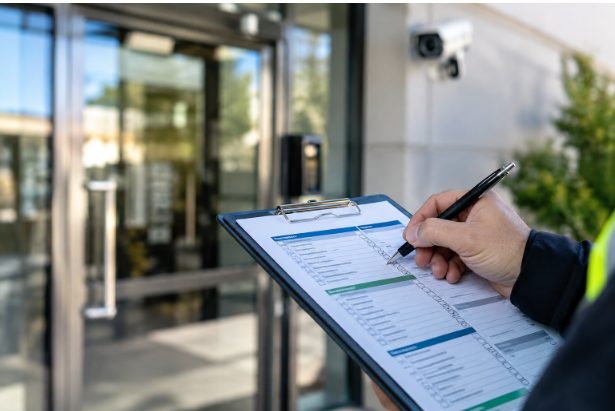
You don't need a water engineer on retainer to get started. Walk through this checklist with whoever manages your facilities.
- When was your water heater last descaled or inspected for scale buildup? If the answer is "we've never done that," you're almost certainly paying the 25% energy penalty on water heating right now.
- Are your ice machines producing irregular, cloudy, or small-batch ice? That's a classic early-stage scale symptom in the water lines and float valves.
- Do your dishwashers leave white film on glassware after a full cycle? Your commercial kitchen's reputation doesn't recover from a guest photographing a cloudy wine glass.
- When did you last replace faucet aerators, spray arms, or showerhead fixtures? These are low-cost components that calcify quickly at 17 gpg and mask pressure problems in your supply lines.
- Do you have a softening or filtration system in place, and is it sized correctly for your current daily water volume? A system that was adequate five years ago may be under-capacity today if your operation has grown.
If three or more of those questions don't have clean answers, that's where your attention belongs. Businesses in Las Vegas that have addressed their water treatment proactively consistently report longer equipment cycles and more predictable maintenance schedules. That's not marketing language. That's just what happens when you stop feeding 17-gpg water into machinery rated for 7 gpg.
A good starting point is talking to a provider who knows the local water profile. commercial water treatment in las vegas covers everything from softener installation to reverse osmosis service and ongoing salt delivery, and working with someone who operates specifically in the Nevada market matters because the hardness profile here isn't like anywhere else your equipment was probably designed for.
The minerals aren't going away. Lake Mead geology isn't changing. The only variable you actually control is what happens to the water before it reaches your equipment.