

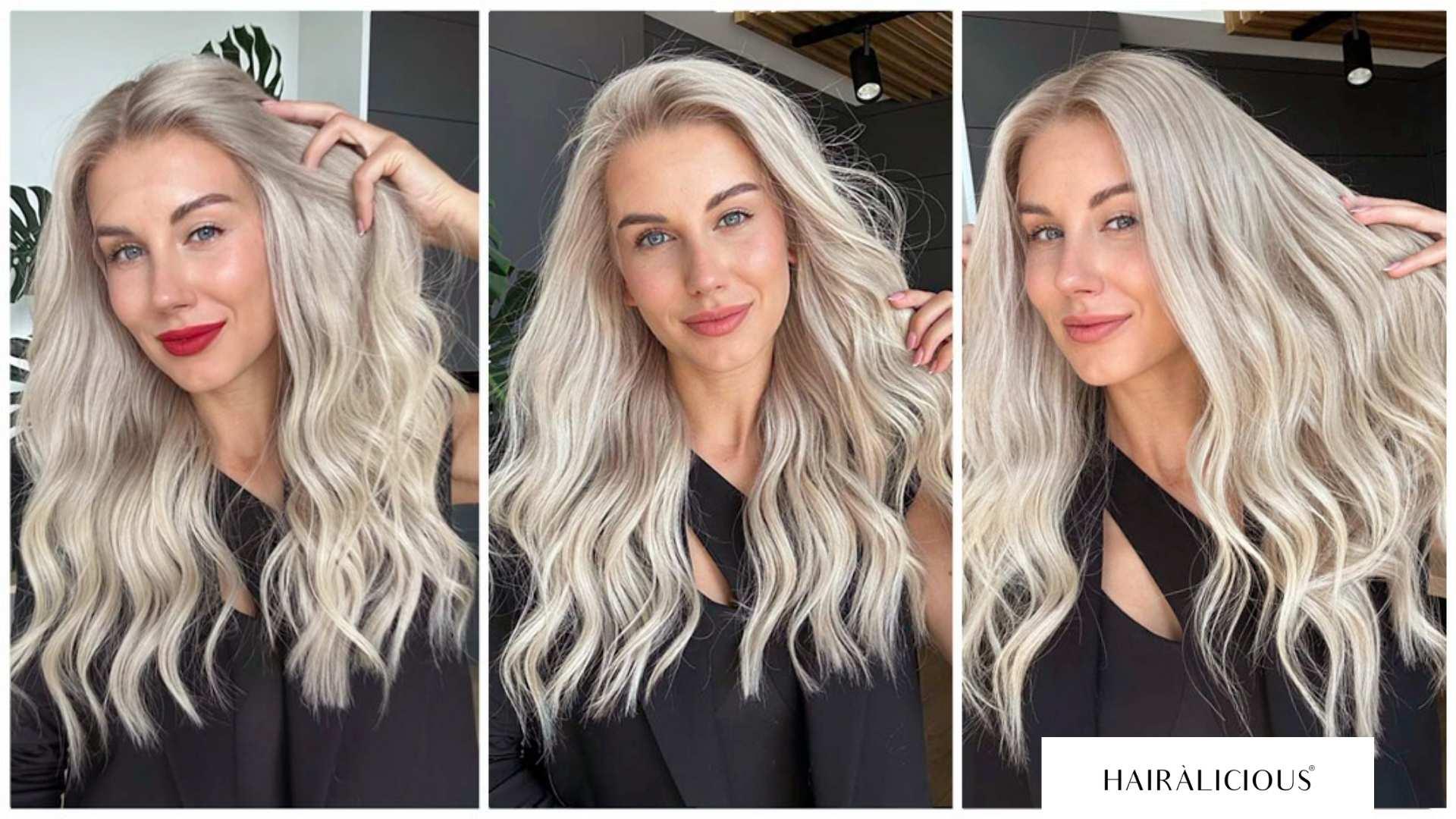
A wig can feel secure while you are standing still in front of a mirror and behave very differently once the day begins. Fit is tested by movement, posture, natural hair underneath and the length of time the wig is worn. A cap that is too small may create pressure without providing better security. One that is too large may shift even after its straps are tightened. Secure glueless wigs depend on accurate sizing and well-positioned internal features, rather than tightness alone. The following five situations can reveal problems that a quick visual check may miss. Each one reflects an ordinary part of wearing a wig, not an extreme test.
1. Turning your head during a conversation
Turn your head naturally from side to side and notice what happens around the ears and nape. The cap should move with you rather than remain behind as your head turns. Ear tabs should stay in a balanced position directly in front of the ears.
If one tab moves while the other remains flat, the wig may be sitting off-centre. Repositioning can solve a simple application issue. Repeated uneven movement, however, may point to a mismatch between the cap and the wearer’s head shape.
The nape also deserves attention. It should remain comfortably in place without riding upward when the head turns.
2. Looking down at a phone or desk
Lowering the chin changes the tension at the back of the cap. Well-fitted, secure glueless wigs should remain stable without digging into the forehead or lifting at the nape.
If the front edge feels as though it is being pulled backwards, the front-to-nape measurement may be too short. If the cap gathers or creates empty space when the head is lowered, it may be too long or too large in that area.
This is why circumference alone cannot describe the complete fit. Two people with a similar circumference may still need different cap proportions.
3. Wearing glasses for several hours
Glasses bring attention to the area where the temples, arms of the frames and ear tabs meet. A bulky or poorly positioned tab may push against the frames. A tight cap can make that pressure more noticeable over time.
Lace ear tabs can offer a closer fit around the temples and may be shaped to suit the wearer. Firm ear tabs can provide a straightforward glueless application, although their position and shape are less adjustable.
Try the glasses you wear most often, not just a lightweight pair used occasionally. A fit that works without accessories may require a second look once frames are added.
4. Moving from a cool room into warmer conditions
Comfort can change as the scalp becomes warmer. A cap that initially feels snug may become irritating after several hours, while one with excess space may shift more as the wearer moves.
Breathable construction can help, but sizing remains central. Over-tightening the straps in anticipation of movement can create pressure and does not necessarily make the wig more stable. A secure fit should distribute support rather than concentrate it at the hairline or behind the ears.
This test is especially useful for anyone planning to wear a wig through a full workday rather than for a short occasion.
5. Repeating the application on another day
A good fit should be reasonably repeatable. If the wig sits correctly only after numerous attempts, the problem may not be technique alone. Check whether the natural hair underneath is arranged consistently, whether the elastic band has changed position and whether the adjustable straps are set evenly.
Long or thick natural hair can alter the space required inside the cap. Measurements should be taken with that hair prepared in the same way it will be worn. Otherwise, the wig may appear to fit one day and feel too tight the next.
Reliable application is one of the clearest practical signs that the cap and head shape work together.
Does the wig feel secure without feeling restrictive?
The aim is not to make a wig impossible to move by tightening every feature. Secure glueless wigs should remain stable through ordinary movement while allowing the wearer to forget about the cap for much of the day. Symmetrical ear tabs, a flat hairline, a settled nape and even pressure are more useful signs than tightness. Test the wig in the situations that form part of your real routine. A fit that works while talking, working, wearing glasses and moving between environments is far more meaningful than one judged only in front of a mirror.






2 thoughts on “Five Situations That Reveal Whether a Wig Fits Properly”
Comments are closed.