

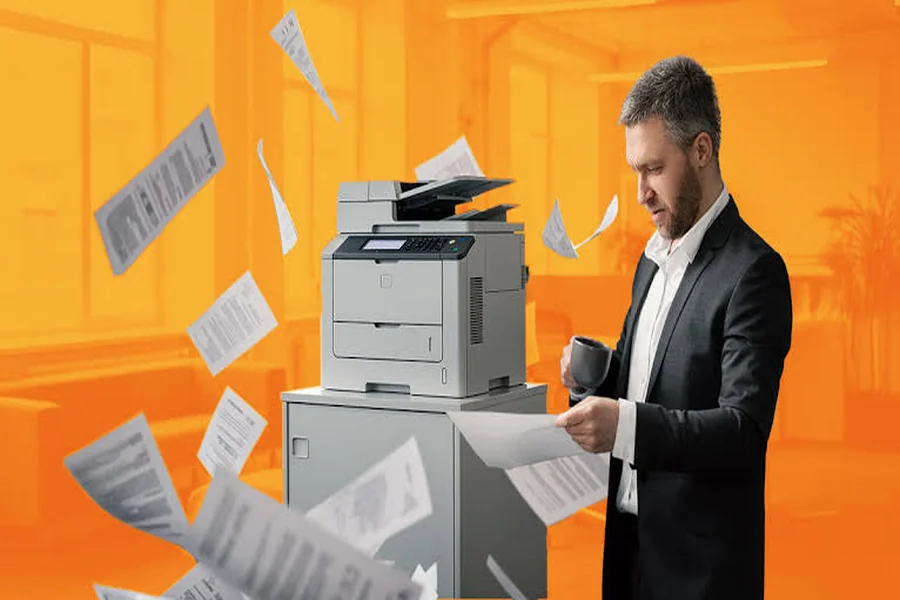
A single returned check can feel like a minor annoyance. But when it’s caused by a printing error, like misaligned MICR data or ink that bleeds, it’s a symptom of a larger risk. In-house check printing seems like a straightforward way to control costs, but it often introduces hidden expenses and vulnerabilities. From the specialized paper stock required by banks to the security protocols needed to prevent fraud, the process is more complex than just hitting “print.”
These small operational frictions add up. Time spent reissuing payments, troubleshooting printer jams with expensive check stock, and manually stuffing envelopes is time your team could be spending on core business functions. When a company manages dozens or hundreds of payments, these manual processes become a significant operational drag. The risks associated with manual check handling, including potential for fraud and mail theft, have been highlighted by FinCEN. For this reason, many finance departments choose to work with dedicated business check printing services to offload the risk and administrative burden, ensuring payments are handled correctly and securely from the start.
Quick answer: In-house check printing often creates hidden costs and security risks related to fraud, compliance, and simple human error. Outsourcing these tasks to a specialized service can reduce these liabilities, improve efficiency, and ensure payments meet strict banking and regulatory standards.
What’s inside
- What Are the Real Financial Risks of DIY Check Printing?
- How Can You Verify a Vendor’s Security and Compliance Claims?
- What Is the Single Biggest Point of Failure in Check Printing?
- Frequently Asked Questions
- Rethinking the True Cost of a Business Check
What Are the Real Financial Risks of DIY Check Printing?
To adequately explain the financial risks of in-house check processing, the following data is required:
- A statistic on the cost or prevalence of check fraud. This is the primary financial risk. A credible source would be the Association for Financial Professionals (AFP), which publishes an annual Payments Fraud and Control Survey. A specific data point (e.g., “X% of organizations reported experiencing check fraud in [year]”) is needed to anchor the discussion.
- A statistic on the cost of compliance violations or data breaches. The brief mentions HIPAA and SOC 2. To explain the stakes, a figure on average HIPAA violation fines from the U.S. Department of Health and Human Services (HHS) or the cost of a data breach from a primary research source like the Ponemon Institute would be necessary.
- A statistic on mail delivery failure. To quantify the operational drain of flawed address data, a figure on the percentage of mail classified as Undeliverable as Addressed (UAA) by the U.S. Postal Service would provide a concrete example of hidden costs.
Without these data points, any discussion of risk would be generic and fail the “non-commodity” and “evidence” requirements of the editorial test.
How Can You Verify a Vendor’s Security and Compliance Claims?
You should evaluate a vendor by requesting and reviewing their third-party audit reports, such as a SOC 2 report, and by understanding their specific data handling protocols. Marketing claims are one thing; independent verification is another. A credible partner will be transparent about their security posture and operational standards.
Start by asking for their Service Organization Control (SOC) reports. These are not simple checklists; they are formal attestations from an independent auditor. A SOC 1 report focuses on controls relevant to a client’s financial reporting. More comprehensive is the SOC 2 report, which evaluates a company’s systems based on criteria like security, availability, and confidentiality. Always ask for the Type 2 report, which assesses the effectiveness of these controls over a period of time, not just at a single point.
Next, inquire about their data hygiene processes. For mailed payments, flawed address data is a primary cause of failure. Look for a service that is CASS-certified. The Coding Accuracy Support System (CASS) is a standard offered by the U.S. Postal Service to ensure the accuracy of address matching software. This process standardizes addresses against the official USPS database, correcting errors and appending data like ZIP+4 codes, which can improve delivery rates and reduce returned mail.
❝ Ask a potential partner to walk you through their documented procedure for a payment exception. For instance, what happens when a check is returned as undeliverable? Who is notified, what is the resolution workflow, and how is the process tracked in a way that is auditable for you?
Finally, understand which compliance frameworks apply to your business. Not all are relevant to every company, but a vendor’s certifications signal their ability to handle sensitive information.
| Standard/Framework | What It Governs | Why It Matters for Your Payments |
| SOC 2 | Security, Availability, Confidentiality, Privacy | Confirms the vendor has robust, audited controls over the systems that handle your financial data. |
| HIPAA | Protected Health Information (PHI) | Essential if payments include Explanation of Benefits (EOBs) or other documents containing patient data. |
| NACHA | ACH (Automated Clearing House) network rules | Ensures the vendor follows the operating rules for electronic funds transfers, vital for direct deposit. |
A vendor’s ability to provide this documentation and answer specific process questions is a strong indicator of their operational maturity. It separates a simple print-and-mail shop from a true financial technology partner.
What Is the Single Biggest Point of Failure in Check Printing?
The most common and costly technical failure is a flawed MICR line. This single string of characters at the bottom of a check, the bank routing number, account number, and check number, is the lynchpin of automated payment processing. While it may look like simple text, it is a highly sensitive data format that requires specialized materials and precise calibration to function correctly.
MICR stands for Magnetic Ink Character Recognition. Bank sorting equipment doesn’t “see” the numbers; it reads the magnetic signal from the iron oxide particles mixed into the ink. This is the first place where in-house printing often fails. Standard office printer toner lacks these magnetic properties. A check printed with regular toner is illegible to a bank’s automated reader, forcing it into a manual, and more expensive, exception queue. This can result in rejection fees charged back to your account.
The problems go beyond the ink. The characters must be printed in a specific font, like E-13B, and positioned perfectly within a “clear band” at the bottom of the check. Even minor misalignments, skewed printing, or using a visually similar but incorrect font can make the line unreadable by the high-speed sorters. Smudges or extraneous marks in this zone will also trigger an error.
❝ A subtle but critical detail is the signal strength of the magnetic ink after printing. Ask a potential vendor if they use a MICR verifier as part of their quality control. This device tests the magnetic signal of printed checks to ensure it falls within the precise specifications required by the banking system, catching printing errors before they cause payment delays.
Ultimately, a rejected MICR line transforms an efficient, automated payment into a costly manual one. The immediate result is often a processing fee from the bank. The secondary costs are more significant: delayed payments to vendors, strained business relationships, and the administrative time your team spends investigating the failure and reissuing the payment. Properly calibrated, specialized equipment is the only way to reliably avoid these entirely preventable errors.
Frequently Asked Questions
What is the difference between using a service and just buying check printing software? Software only addresses the printing step. You are still responsible for purchasing and stocking secure check paper, MICR toner, and envelopes. A full-service provider handles the entire workflow: data processing, printing, pressure sealing, postage application, and mailing, which removes the physical supply chain and labor from your office.
How does the Positive Pay security feature work in practice? Positive Pay is a fraud-prevention tool that creates a three-way match between your company, your vendor, and your bank. After you send a payment file to your printing service, they generate a corresponding file of issued checks with details like the check number, payee, and amount. You upload this file to your bank. The bank will only honor checks that exactly match the information in that file, rejecting any altered or fraudulent items.
Can I customize the checks with my company’s logo and branding? Yes, reputable services allow you to use your own branding. You typically provide your logo as a high-resolution file, such as an .AI, .EPS, or .PDF. The service then incorporates it into a professional check layout that still meets all banking standards for formatting and security features, ensuring a consistent brand image for your payments.
What is the process for stopping or voiding a payment after the file is sent? This depends on the provider’s cutoff times. If you catch an error before the daily print run, you can usually cancel the payment directly through their system. If the check has already been printed and mailed, you would follow your standard stop-payment procedure with your bank and then log the voided check in your accounting software for reconciliation.
Are there minimum volume requirements for outsourcing check payments? Many modern payment services are designed to be scalable and do not require minimum batch sizes. This allows businesses of any size, from those sending a handful of checks per month to those sending thousands, to benefit from the security and efficiency of outsourcing. You should confirm this directly, as some older or larger providers may still have volume thresholds.
Rethinking the True Cost of a Business Check
The real cost of printing a check is not the paper and ink. It is the accumulated risk of fraud, compliance gaps, and technical failure. Handling payments in-house means your organization absorbs these risks directly. A single bad MICR line creates operational drag, a weak security protocol invites fraud, and a compliance oversight can lead to significant penalties. These are not edge cases; they are the predictable outcomes of using non-specialized tools and processes for a critical financial function.
The decision to outsource is therefore less about saving a few cents per payment and more about transferring risk. A dedicated service provider’s core function is to manage these specific failure points at scale. Their investment in compliant technology, secure facilities, and quality control like MICR signal verification is something an individual business cannot replicate cost-effectively.
Ultimately, the most important question is not “What does it cost to print a check?” but “What is the business cost of a failed payment?” When you calculate the staff time for remediation, the damage to vendor relationships, and the exposure to fraud, the value of a reliable, secure payment workflow becomes clear. It is an investment in operational stability.
About the author Smart Payables is a financial technology company that provides outsourced payment solutions for businesses. Founded in 2005, the company manages check printing and mailing, ACH processing, and tax form distribution. Its platform includes security features like Positive Pay, address verification to improve mail delivery, and API integrations for connecting with existing accounting systems. The firm supports companies across various industries, offering compliant payment processing for both standard and sensitive financial documents.








3 thoughts on “Beyond the Printer: Are Your Business Checks a Hidden Liability?”
Comments are closed.