Vietnam is long, narrow, and climatically diverse, which means there is no single perfect month for every traveler and every region. A beach holiday in Central Vietnam, a mountain trek in the north, and a Mekong Delta trip in the south can each have different ideal timing. The smartest approach is to match the season to the route, travel style, and experiences that matter most.
There Is No One-Season Answer
Travelers often search for the best time to travel to Vietnam expecting one simple answer. In reality, Vietnam is usually understood through three broad climate regions: north, central, and south. The north has the clearest seasonal contrast, with cooler winters, warmer summers, and milder spring and autumn periods. Central Vietnam has a coastal dry season but is more exposed to heavy rain and storms later in the year. The south stays warm year-round, with seasons defined more by rainfall than temperature.
That regional variety is why a guide to when to visit Vietnam is most useful when it helps travelers compare timing by destination rather than giving a single nationwide rule.
North Vietnam: Mountains, Cities, and Rice Fields
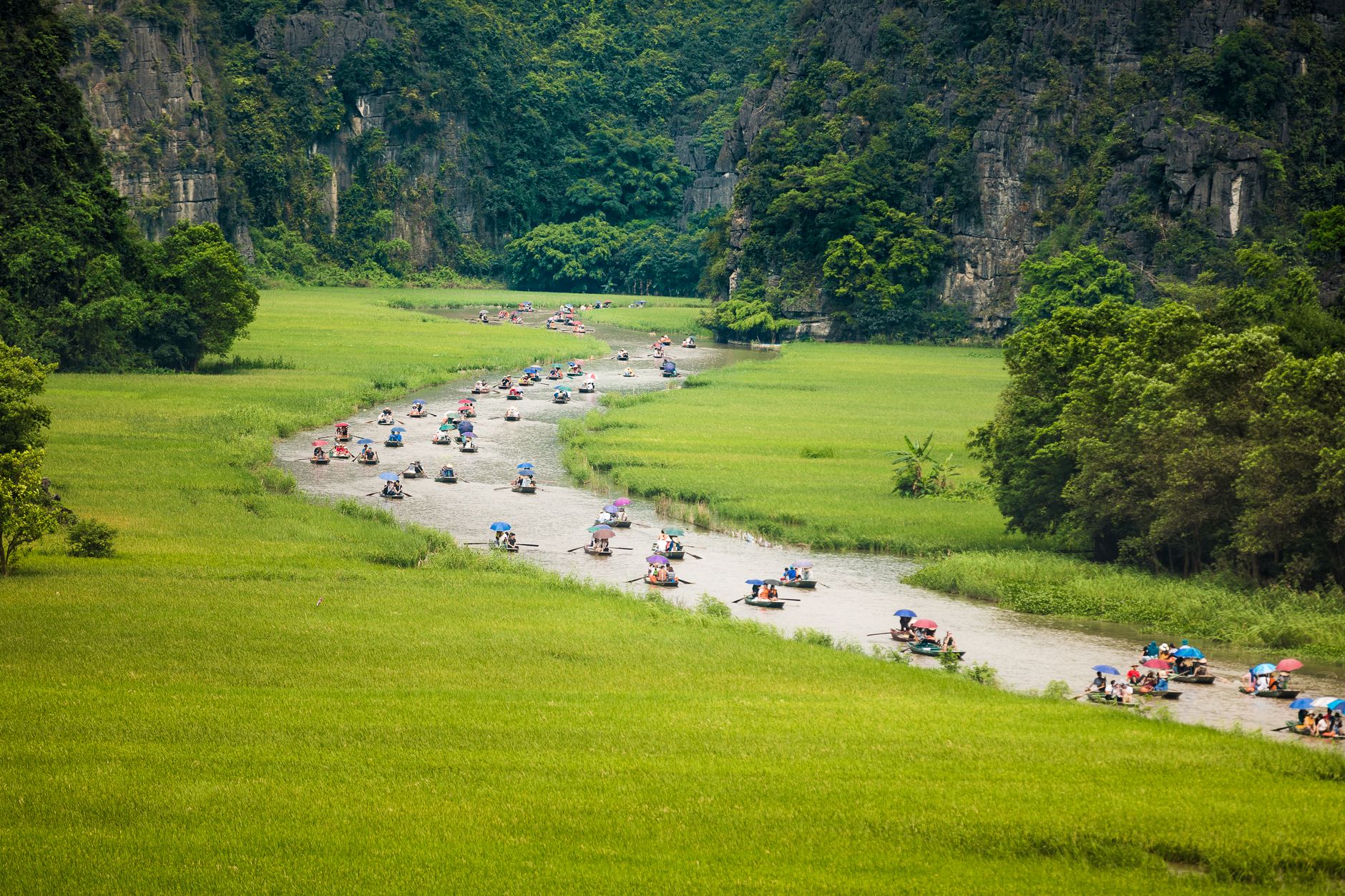
North Vietnam includes Hanoi, Sapa, Ha Giang, Ninh Binh, Halong Bay, Pu Luong, Cao Bang, and other varied destinations. October to April is often more comfortable for travel because rainfall is lower and temperatures are easier for walking, trekking, and road trips. March and April can be especially pleasant because the north begins warming after winter without reaching the heaviest summer rains.
However, scenery changes the calculation. The highland rice terraces are often green during the wetter growing months and golden around harvest. Travelers focused on photography or rural landscapes may accept more rain for more dramatic scenery. Winter can bring dry conditions but also cold nights and fog in mountain areas.
Central Vietnam: Beaches and Old Towns
Central Vietnam includes places such as Hoi An, Da Nang, Hue, Nha Trang, Phong Nha, and the Central Highlands. Coastal areas are often best from roughly February to August, when beach conditions are more likely to be dry and sunny. This period works well for travelers who want to combine cultural stops with swimming, cycling, food, and coastal relaxation.
Later in the year, especially around September to November, heavy rain and typhoon risk can affect plans along parts of the central coast. That does not mean travel is impossible, but it does mean itineraries should be flexible. Travelers who care most about beach time should pay close attention to regional weather rather than assuming Vietnam has one uniform rainy season.
South Vietnam: Warm Weather and Rain Patterns
South Vietnam, including Ho Chi Minh City, the Mekong Delta, and Phu Quoc, stays warm throughout the year. December to April is generally the drier period and often the easiest time for island stays, city sightseeing, and delta travel. During the wetter months, rain often comes in heavy but shorter showers rather than constant all-day downpours.
For many travelers, the south can be visited year-round with sensible planning. The key is understanding how rain affects the specific experience. A food-focused city trip may handle showers easily, while a beach stay or boat-heavy itinerary benefits more from drier weather.
How to Read Vietnam Weather Month by Month
Vietnam weather month by month should be read as a planning tool, not a guarantee. January may be excellent for the south but chilly in northern mountains. March and April often work well for multi-region trips because the north is warming, the central coast is entering a strong beach period, and the south is still in its dry season. July and August can bring lush scenery, stronger waterfalls, and green rice fields, but also more heat and rain in many areas.
This monthly view helps travelers decide what tradeoffs they are willing to accept. Perfect sunshine is not always the only goal. Some of Vietnam’s most beautiful landscapes depend on rain, rice cycles, and seasonal agriculture.
Matching Timing to Travel Style
The process of choosing when to go to Vietnam should begin with priorities. First-time visitors covering multiple regions often do well in late winter or spring, especially February to April. Beach travelers may prefer Central Vietnam from February to August or southern islands from December to April. Trekking and mountain road trips are often easier in the cooler, drier months, though rice terrace scenery may be more dramatic during the growing and harvest periods. Budget travelers may find more value in shoulder or low seasons, as long as they build in flexibility.
Families, photographers, honeymooners, and adventure travelers may all choose different months for good reasons. The best timing is the one that supports the trip’s purpose.
Using Local Expertise Well
Local Vietnam frames weather planning around real regional differences, scenery, crowds, pricing, and travel style. That broader view is useful because many travelers arrive with fixed vacation dates. If dates cannot move, the route should adapt. A rainy central coast period might shift the focus toward the north or south. A hot summer trip might include highland destinations. A winter visit might combine southern beaches with Hanoi and lower-altitude northern stops.
This is where a brand such as Local Vietnam can be helpful: not by promising perfect weather, but by helping travelers design a route that makes sense for the month they actually have.
Practical Weather Planning Tips
Weather planning should be practical. Travelers should pack layers for northern mountains, breathable clothing for humid regions, rain protection for wet months, and flexible expectations for outdoor days. It is wise to avoid overloading an itinerary when moving through areas affected by mountain roads, storms, or seasonal flooding. For beach trips, checking the specific coast matters more than checking Vietnam as a whole.
It also helps to build a route with backup options. Museums, food tours, cooking classes, cafes, markets, and shorter city activities can save a rainy day. In nature-focused areas, an extra night can make the difference between missing a viewpoint and catching clear weather the next morning.
Conclusion
The question of when to visit Vietnam is really a question about where, why, and how someone wants to travel. March and April may be the most balanced months for many multi-region itineraries, but mountains, beaches, rice fields, budgets, and fixed vacation dates can all point to different choices. By studying regional seasons and matching them to the desired experience, travelers can build a Vietnam trip that feels intentional rather than weather-lucky.