

A customer-focused approach starts with understanding the operation itself. Partners such as C.H. Guenther & Son recognize that foodservice, retail, K-12, and convenience operations each have different equipment, labor needs, service patterns, and customer expectations. The best product choices account for those differences before an item reaches the menu.
Why Product Fit Matters
A product can perform well in a tasting and still create problems during a busy shift. It may require too much prep, occupy needed freezer space, lose texture in takeout packaging, or be difficult for a new employee to portion correctly. Product fit matters because menu appeal and operational practicality must work together.
Current foodservice trend predictions for 2026 point to continued labor pressure, smaller portions and snackable formats, and technology that supports daily operations. Those factors make versatile, easy-to-execute products especially valuable, but local customer habits should still guide every final decision.
Start With The Operation, Not The Trend
Before evaluating a new product, review what happens in the kitchen, at the service counter, and after the order leaves the building. A full-service restaurant may have time for finishing steps that a high-volume café, stadium stand, or convenience location cannot support.
Questions To Ask First
- How much dry, refrigerated, and frozen storage is available?
- What equipment is already in regular use?
- How much preparation time is realistic during peak periods?
- Will the item hold its quality for takeout, delivery, or display?
- Can staff prepare it correctly with limited training?
- Does it complement the existing menu and customer base?
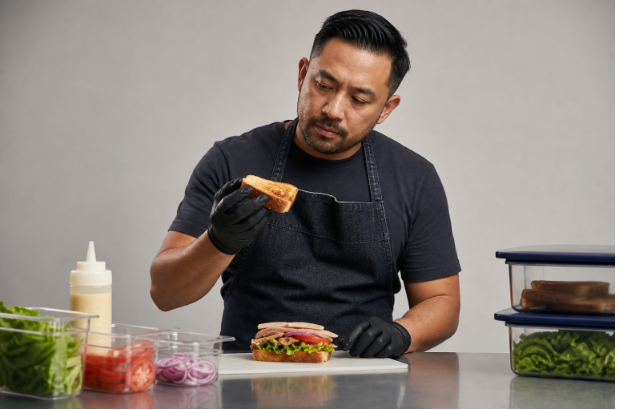
For example, a sandwich component that is finished to order may work in a restaurant kitchen with a dedicated line cook. At a counter-service location, that same product may need a simplified assembly method, clearer portioning, or a faster heating process.
Gather Useful Customer Feedback
Casual customer comments can reveal useful ideas, but one request should not drive a major purchasing decision. Stronger insight comes from reviewing multiple feedback sources over time and identifying recurring needs rather than isolated opinions.
Useful Feedback Sources
- Point-of-sale data and item mix reports
- Customer surveys and online reviews
- Questions customers ask at the counter
- Observations from servers, cashiers, and delivery staff
- Kitchen waste, remakes, and unsold item records
- Repeat purchases and recurring ordering patterns
Group feedback based on the underlying need. Several comments about portion size, for instance, may indicate a broader desire for flexible serving options. Repeated requests for faster service may point to a preparation issue rather than a menu gap.
Turn Feedback Into Clear Requirements
Broad feedback becomes useful when it is translated into measurable targets. “Make it healthier,” “give us more value,” or “make it easier” are starting points, not product specifications.
- Customers want more value: Set targets for food cost, serving size, and perceived value.
- The item takes too long to prepare and assemble: Establish a maximum prep and assembly time.
- Customers want variety: Look for a base product that can support multiple flavors, dayparts, or applications.
- The product does not travel well: Test texture, appearance, and temperature after a defined holding period.
Rank each requirement as essential, preferred, or optional. This prevents teams from adding complexity to satisfy every possible preference and helps suppliers understand which product characteristics matter most.
Balance Quality, Cost, And Labor
Taste is necessary, but it is not the only standard. Operators also need to consider yield, storage, labor, consistency, waste, and the number of menu items a product can support. An item with a lower purchase price may cost more overall if it creates excess waste or requires extensive preparation.
A Simple Evaluation Checklist
- Taste and texture: Does it meet the expected standard through service and transport?
- Yield: How many reliable portions does each case or batch provide?
- Labor: How many steps are required before serving?
- Consistency: Can multiple employees produce the same result?
- Flexibility: Can it work across multiple menu items or dayparts?
- Margin: Does the selling price support the full cost of serving it?
Recent discussion of quality, labor savings, and return on investment reflects the same practical challenge: operators need products that protect the guest experience while fitting modern back-of-house conditions.
Test New Products Before Scaling
A small pilot offers a lower-risk way to learn before making a systemwide change. Test the complete experience, not only the flavor. A product that tastes excellent during a scheduled sampling may still slow a lunch rush or lose quality after twenty minutes in packaging.
- Choose one clear goal, such as improving speed, increasing sales, or reducing waste.
- Select a limited group of locations, menu periods, or service days.
- Provide short written preparation and handling instructions.
- Track sales, preparation time, waste, remakes, and staff comments.
- Review results after a defined test period.
- Adjust the product, process, portion, or placement before expanding.
Measure The Results
Choose a short list of metrics that directly reflect the pilot goal. Useful measures include units sold per service period, repeat purchase behavior, food cost percentage, average prep time, waste, customer satisfaction, employee feedback, and profit per serving. Compare the test item with a similar existing product to provide the team with a meaningful baseline.
Avoid Common Product-Decision Mistakes
- Chasing a trend without confirming it fits the concept.
- Letting one vocal customer outweigh repeated feedback.
- Ignoring kitchen and front-line employee input.
- Testing only during slow periods, not at peak service.
- Focusing on purchase price while overlooking labor, storage, and waste.
- Skipping follow-up after launch and missing changes in demand.
Build A Repeatable Decision Process
The most reliable product decisions follow a repeatable process: listen to customers and staff, define measurable needs, test in real service conditions, measure financial and operational results, then improve before scaling. This approach helps operators say yes to ideas with genuine potential and no to products that create more strain than value.
Conclusion
The strongest foodservice product choices begin with real operating needs. Customer feedback provides direction, while testing and measurement turn that direction into action. By combining customer insights, kitchen data, cost reviews, staff input, and small-scale pilots, operators can choose products that fit the people, processes, and places where they are served.











2 thoughts on “How Foodservice Operators Can Find Products That Fit Real Customer Needs”
Comments are closed.