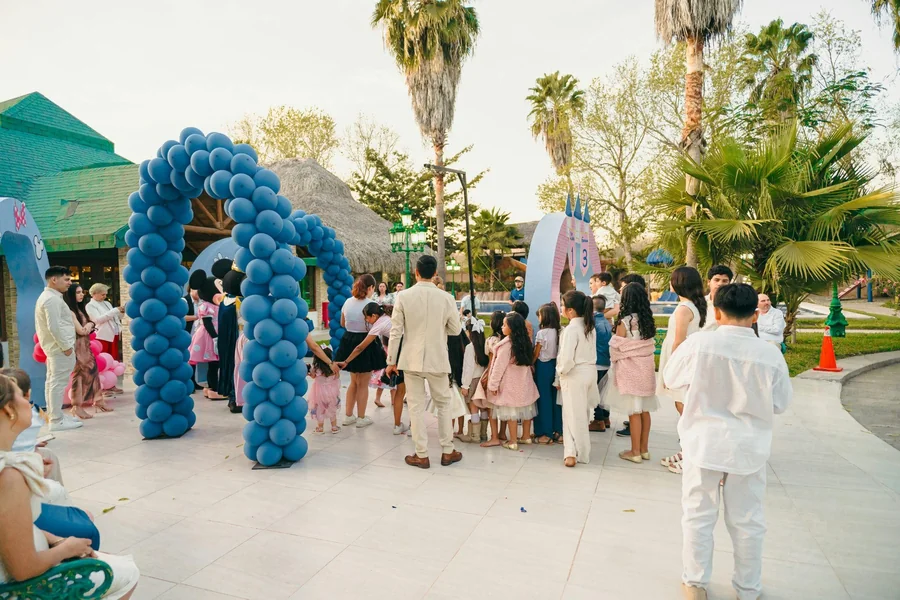
Outdoor celebrations have an advantage that indoor events can rarely reproduce. Gardens, open lawns, courtyards, and festival-style spaces already provide scenery, changing light, and a sense of freedom. At the same time, outdoor settings can feel unfinished when the smaller details have not received enough attention.
Guests may not remember every centerpiece or flower arrangement individually, but they notice whether the event feels easy to navigate, comfortable after sunset, visually connected, and full of moments worth stopping for. The strongest outdoor celebrations combine decoration with practical details, turning an open space into somewhere that feels deliberately created for the occasion.
Signs Can Become Part of the Decoration
Event signs are practical, but they do not need to look purely functional.
Welcome boards, directional arrows, seating information, menu signs, parking markers, and labels for different activity areas can all reinforce the visual identity of a celebration. Using consistent fonts, colors, illustrations, or wording makes these practical pieces feel like part of the overall design.
Outdoor events also require materials capable of handling conditions that would not matter inside. Lightweight paper signs can quickly become problematic when wind or moisture appears, making more durable options useful for temporary outdoor displays. Custom coroplast signs can be used for everything from directional markers to personalized event graphics while allowing organizers to coordinate practical information with the celebration’s visual style.
Placement matters just as much as design. A beautiful sign hidden behind flowers or positioned after guests have already made a wrong turn is not particularly useful. The best signs appear exactly where someone naturally needs information.
Lighting Changes Everything After Sunset
An outdoor celebration can look completely different once daylight disappears.
Lighting therefore needs to be considered from the beginning rather than added as an emergency solution shortly before guests arrive.
String lights can define dining or gathering areas without making them feel enclosed. Lanterns can guide pathways, while carefully positioned lights can draw attention to trees, architecture, tables, or other features worth highlighting.
Different areas may require different levels of brightness. Dining tables need enough light for guests to comfortably see their food and one another, while lounge areas can generally remain softer. Paths, steps, entrances, and other changes in level need practical illumination for safety.
The transition from daylight to evening can become one of the most memorable parts of an outdoor event when lighting has been planned properly. Instead of the celebration simply becoming darker, the atmosphere gradually changes.
That transformation gives the evening its own visual identity.
A Memorable Finale Can Define the Entire Evening
Celebrations often benefit from one moment that feels distinctly different from everything that came before it.
Depending on the occasion and venue, that might be live music, a surprise performance, a special dessert presentation, or a professionally managed fireworks display where permitted and appropriate. Event planners considering the latter can explore specialist retailers such as Red Apple Fireworks Store when planning a celebration in a location where fireworks can be used legally and safely.
The important element is not simply making the finale bigger or louder. It should feel connected to the event.
Timing matters enormously. A memorable moment loses some of its effect when guests do not know where to stand, cannot see properly, or are interrupted while eating. Organizers should also consider venue restrictions, local regulations, fire conditions, neighboring properties, animals, and professional safety requirements well before the event.
A successful finale feels effortless to guests precisely because the complicated planning remains behind the scenes.
Comfortable Seating Keeps People at the Party

Guests notice beautiful chairs when they arrive, but they notice uncomfortable chairs after an hour.
Outdoor events often focus heavily on appearance when choosing furniture, yet comfort influences how people actually use the space. Dining chairs need to work for the duration of the meal, while informal seating areas can encourage guests to remain and talk long after dinner has finished.
Variety helps.
Not every guest wants to stand beside a cocktail table, and not everyone wants to remain in an assigned dining seat all evening. Benches, lounge furniture, small conversational groups, and a few tables away from the busiest area provide options.
Shade is equally important for daytime celebrations. Umbrellas, trees, canopies, or other covered areas give guests somewhere to escape direct sun without leaving the event.
Later in the year, blankets or appropriately planned outdoor heating can serve a similar purpose when temperatures fall after sunset.
Comfort rarely becomes the centerpiece of event photographs, but it strongly influences how long people want to stay.
Tables Feel More Special When Details Have a Purpose
Outdoor tables already have natural surroundings working in their favor, so they do not necessarily need elaborate decoration.
A few carefully chosen elements can create more impact than filling every available space.
Flowers or greenery can connect the tables to the setting. Interesting linens can introduce color or texture. Menus, place cards, candles where suitable, and distinctive tableware provide opportunities to personalize the event.
Practicality should remain part of the design.
Tall arrangements may look impressive but become frustrating when guests cannot see one another across the table. Very lightweight decorations can become difficult in windy conditions. Candles and open flames require particular consideration outdoors and may be inappropriate or prohibited in some locations.
The most successful table design survives actual use. Guests should have enough room for plates and drinks, servers should be able to reach the table comfortably, and decorations should remain attractive once everyone sits down.
Good design supports the celebration rather than forcing guests to work around it.
Give Guests Something Worth Photographing
People will take photographs at celebrations whether a dedicated photo area exists or not. Giving them one particularly attractive location can make those photographs better while also adding another visual feature to the event.
The backdrop does not need to be complicated.
A garden wall, interesting piece of architecture, floral installation, decorated arch, fabric backdrop, or even a particularly beautiful view can become the natural photography spot. Good lighting is more important than adding dozens of props.
Personalization can make the area feel connected to the occasion rather than like a generic social-media installation. Initials, a meaningful phrase, event date, illustrations, or references to the location can provide enough individuality.
Consider the background from the camera’s perspective as well. Storage boxes, catering equipment, parked vehicles, and temporary event infrastructure have a remarkable ability to appear in photographs when nobody checks the angle beforehand.
A quick test photograph during setup can prevent that problem.
The Best Details Make the Celebration Easier
The most memorable creative touches are often the ones that combine appearance with usefulness.
A beautifully designed sign helps someone find the ceremony. Thoughtful lighting creates atmosphere while making pathways easier to navigate. Comfortable seating becomes part of the decor while giving guests somewhere to relax. A well-positioned photo area provides entertainment and leaves people with better memories of the occasion.
Even practical preparations for changing weather can become part of the presentation. Umbrellas can be displayed neatly rather than hidden away. Blankets can be rolled into baskets. Water stations can be styled to complement the event rather than looking like an afterthought.
This is where outdoor celebrations often succeed or fail. Decoration alone can make a space attractive, but thoughtful details make it work.
Guests may never know exactly why an event felt particularly polished. They simply remember that finding their way was easy, the tables looked beautiful, the atmosphere changed perfectly after dark, and there always seemed to be somewhere comfortable to sit or something interesting to see.
Those are the details that turn an outdoor gathering into a celebration people continue talking about after the decorations have come down.