

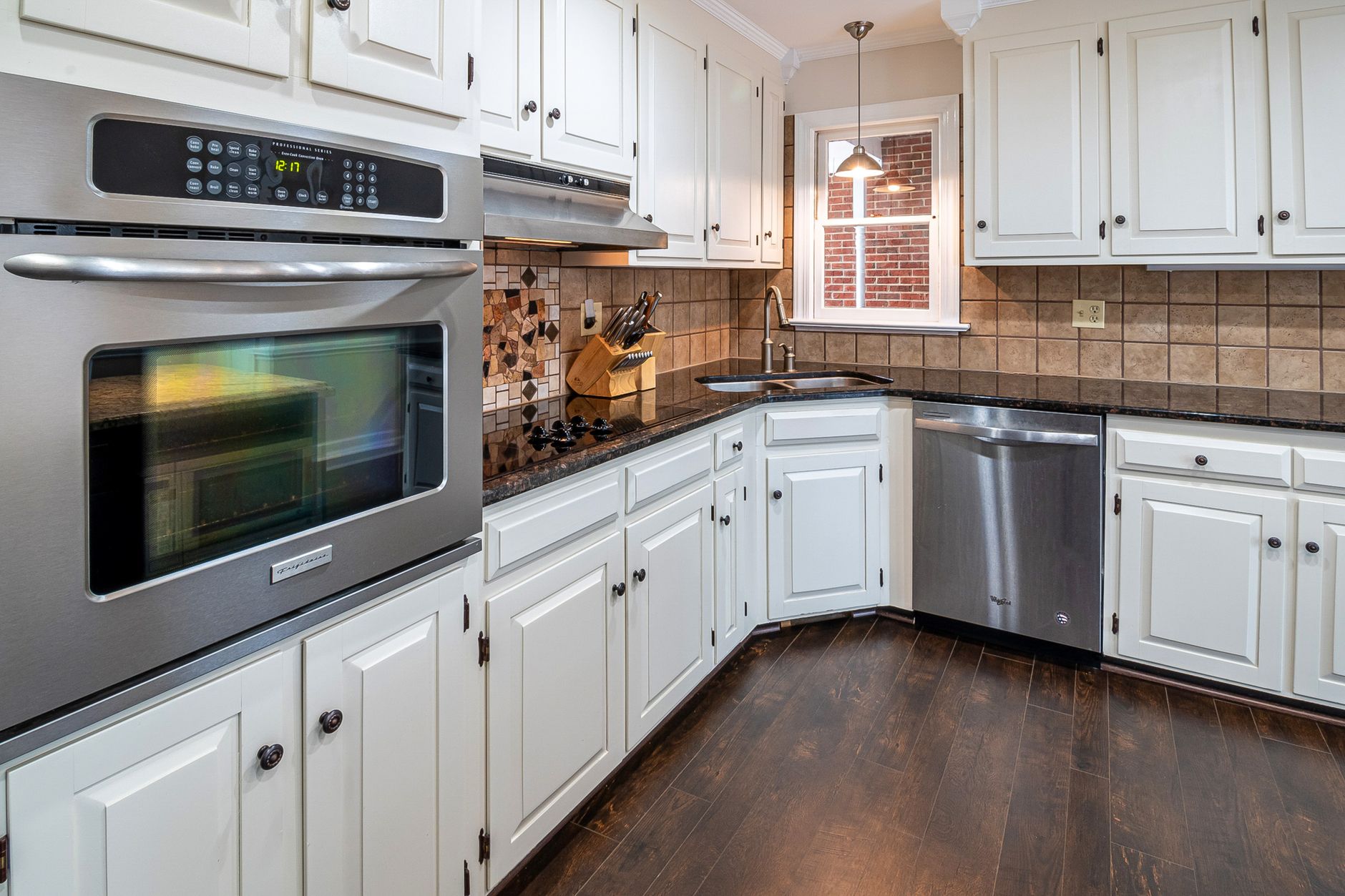
A kitchen renovation does not have to mean tearing everything out and starting from scratch. For most homeowners, the cabinets themselves are structurally fine. The boxes are solid, the hinges still work, and the layout makes sense for the space. What makes the kitchen look dated is almost always the doors and drawer fronts, and replacing those alone can produce a transformation that looks like a full renovation at a fraction of the cost and disruption.
Replacing cabinet doors and drawer fronts is one of the most underutilized home improvement strategies available, and once you understand how straightforward the process actually is, the appeal becomes obvious.
Why the Doors Are Doing All the Visual Work
Walk into any kitchen and your eye goes immediately to the cabinet doors. They cover the majority of the visible surface area, they establish the style of the space, and they are what you interact with dozens of times every day. The countertops matter, the backsplash matters, the hardware matters, but the doors are doing the heavy lifting when it comes to the overall impression the kitchen makes.
This is why replacing doors and drawer fronts produces such a dramatic visual result without touching anything structural. You are replacing the element that defines how the kitchen looks while leaving everything else exactly where it is.
What the Process Actually Involves
The process is more accessible than most homeowners assume. The existing doors and drawer fronts are attached to the cabinet boxes with hinges and screws that can be removed with basic tools. The new doors go on in their place, often using the same hinge holes if the new doors are ordered to match the existing size, or with minor adjustments if the style or overlay changes.
The most important part of the process is measuring accurately before ordering. Cabinet doors are custom made to specific dimensions, and the width and height need to be correct for the doors to fit properly and align evenly across the run of cabinets. Most manufacturers provide detailed measuring guides that walk homeowners through exactly what to measure and how to account for overlay, gaps between doors, and the reveal around each door.
Drawer fronts follow the same principle. They attach to the drawer box with screws from the inside, and replacing them involves removing the existing fronts, positioning the new ones correctly, and securing them in place. The process is even simpler than door replacement for most people.
Choosing the Right Style
One of the advantages of replacing doors and drawer fronts rather than buying new cabinets is access to a wider range of style options than most stock cabinet lines offer. Custom door manufacturers produce a broader selection of profiles, panel configurations, and wood species than any off-the-shelf cabinet program, which means you can update the kitchen to a specific aesthetic rather than settling for whatever the local big-box store carries.
The most popular styles right now reflect the ongoing preference for clean, simple lines. Shaker doors with their recessed center panel and straightforward frame profile work across traditional, transitional, and modern kitchens, which is why they have remained consistently popular for years without feeling like a trend. Slab doors with a completely flat surface are the go-to choice for contemporary kitchens where the hardware does the decorative work and the door itself stays visually quiet. Mitered five-piece doors add a more refined, architectural quality that suits formal kitchens and spaces where a more elevated aesthetic is the goal.
Wood species selection affects both the look and the longevity of the doors. Maple is the most versatile choice, with a light, consistent grain that takes paint evenly and stains cleanly. Oak has a more pronounced grain that adds visual texture and character. Alder's warm reddish tone works particularly well in rustic and transitional kitchens. The right choice depends on the finish direction and the overall aesthetic of the space.
Ordering Direct From a Manufacturer
The most cost-effective way to replace cabinet doors and drawer fronts is to order directly from a manufacturer rather than through a retailer or a renovation contractor. Buying through intermediaries adds markup at every step, and for a product that is custom made to order anyway, there is no inventory advantage to justify the additional cost.
Cabinet Door Factory manufactures custom replace cabinet doors and drawer fronts to order and ships directly to homeowners, with a selection that covers the most popular door styles and wood species at prices significantly lower than what most local suppliers charge for comparable quality. Orders ship within 12 to 14 calendar days, and buying direct from the manufacturer typically saves 30 to 50 percent compared to retail pricing on equivalent products.
The ordering process is straightforward. You provide the dimensions, choose the style and wood species, and the doors are manufactured and shipped to your door. The installation is something most homeowners can handle themselves with basic tools and an afternoon, or a handyman can complete in a few hours if the DIY route is not appealing.
The Difference It Makes
A kitchen with new doors and drawer fronts does not look like a kitchen that got new doors and drawer fronts. It looks like a kitchen that got renovated. The visual impact is disproportionate to the scope of the work, which is exactly what makes this one of the highest-return home improvement projects available to homeowners who want a meaningful upgrade without a full renovation budget.








1 thought on “How to Replace Cabinet Doors and Drawer Fronts Without Replacing Your Entire Kitchen”
Comments are closed.