Electric bikes have become increasingly popular for commuting, recreation, exercise, and everyday transportation. However, not every e-bike works in the same way or follows the same speed limits. One of the most commonly discussed categories is the Class 3 e-bike, which is designed to provide assistance at higher speeds than Class 1 and Class 2 models. Understanding how this classification works can help riders choose an appropriate bike and understand where and how it can be used.
If you want a detailed introduction to the category, this guide to what is a Class 3 e-bike explains the main characteristics, benefits, limitations, and buying considerations in greater detail.
What Is a Class 3 E-Bike?
A Class 3 e-bike is generally an electric bicycle that provides motor assistance while the rider is pedaling and can assist up to a maximum speed of 28 miles per hour. In the commonly used three-class system, Class 1 e-bikes provide pedal assistance up to 20 mph, Class 2 models can use a throttle and are generally limited to 20 mph, while Class 3 models provide pedal assistance up to 28 mph.
The higher assisted speed is the defining feature of Class 3. Once the bike reaches its regulated assistance limit, the motor stops providing additional propulsion, although the rider can continue traveling faster through their own pedaling or downhill momentum. The exact legal definition can vary by jurisdiction, so riders should always check local regulations before purchasing or riding one.
How Does a Class 3 E-Bike Work?
The basic operation is similar to other pedal-assist electric bicycles. A rechargeable battery supplies electricity to a motor, while sensors detect the rider's pedaling. When the pedal-assist system is activated, the motor provides additional power to make acceleration and sustained riding easier.
The rider still pedals the bicycle rather than simply relying on the motor. This is one of the major differences between a pedal-assist Class 3 e-bike and some other motorized two-wheelers. Depending on the model and local regulations, certain Class 3 bikes may also have throttle functionality with restrictions, so buyers should check the manufacturer's specifications and applicable local rules instead of assuming that every Class 3 bike has identical controls.
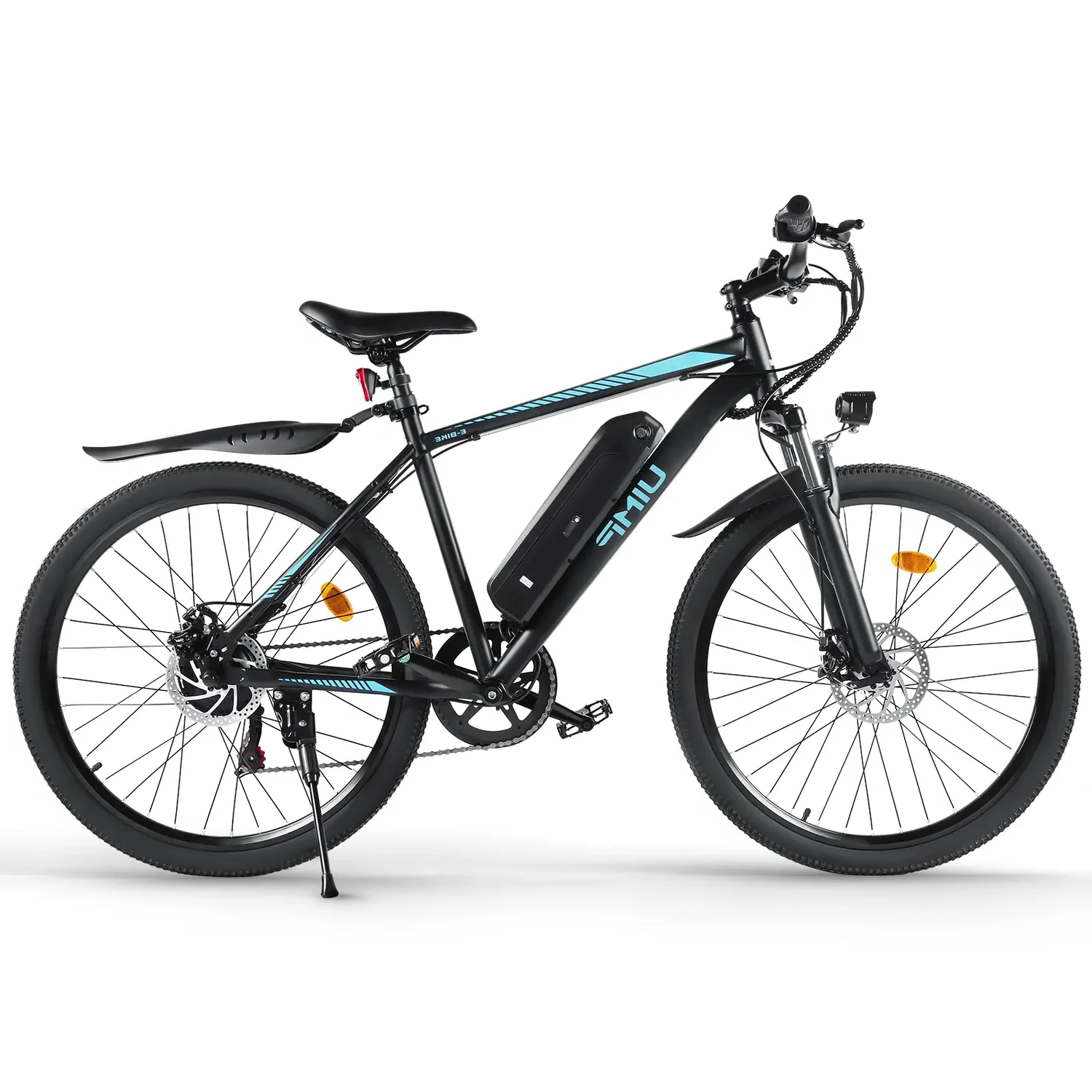
Many Class 3 e-bikes also include a display that shows information such as current speed, battery level, riding mode, distance, and other trip data. A speedometer is part of the Class 3 definition in many jurisdictions using the three-class framework.
What Is the Difference Between Class 1, Class 2, and Class 3?
The three classes are primarily separated by how the motor operates and how fast it can provide assistance. Class 1 uses pedal assistance and stops assisting at 20 mph. Class 2 generally includes a throttle and also has a 20 mph assistance limit. Class 3 increases the pedal-assist limit to 28 mph.
This difference makes Class 3 models particularly interesting to commuters who want to cover longer distances more quickly. However, a higher assisted speed does not automatically mean a Class 3 bike is suitable for every rider or every location. Trail access, age requirements, helmet rules, and other regulations can differ between states and municipalities.
Why Do People Choose Class 3 E-Bikes?
One of the biggest reasons riders choose Class 3 e-bikes is their higher assisted speed. A rider commuting several miles to work may find that the additional motor assistance makes the journey more practical. Instead of relying entirely on physical effort, the rider can use pedal assistance to maintain a faster pace.
Class 3 e-bikes can also be useful for riders who regularly travel through areas where maintaining momentum matters. Hills, headwinds, and longer distances can make traditional cycling demanding, while an electric motor can provide additional support.
Another advantage is flexibility. Riders can adjust the level of pedal assistance according to the situation. Lower assistance can conserve battery power and encourage more physical effort, while higher assistance can be useful when climbing hills or dealing with strong headwinds.
Speed Does Not Replace Safety
Because Class 3 e-bikes can reach higher assisted speeds, riders should take safety seriously. A bicycle traveling close to 28 mph has considerably more momentum than one traveling at 15 or 20 mph. Braking distance, reaction time, road conditions, traffic, and rider experience all become important factors.
A properly fitted helmet is an important part of responsible riding, and riders should also pay attention to braking performance, tire condition, lights, reflectors, and visibility. The American Academy of Pediatrics notes that e-bikes are faster and heavier than traditional bicycles and that children and teenagers can experience serious injuries in e-bike crashes.
Riders should also become comfortable with the bike at lower speeds before using its highest assistance setting. Practicing braking, cornering, starting, stopping, and controlling the bike in different conditions can help develop the skills required for more confident riding.
Where Can You Ride a Class 3 E-Bike?
This is one of the most important questions to investigate before buying one. Class 3 regulations are not identical everywhere. Some jurisdictions allow Class 3 e-bikes on roads and certain bicycle lanes but restrict them from particular shared-use paths or trails. Other locations may have specific requirements relating to rider age, helmets, speed, or equipment.
For example, some state-level rules specifically establish a minimum age for Class 3 riders. California's classification materials, for instance, specify age and helmet requirements for Class 3 operation. Other states use different rules, and some states do not use exactly the same three-class framework.
Therefore, riders should check the rules for the specific state, city, trail, or park where they intend to ride. A bike being marketed as Class 3 does not mean that it has unrestricted access everywhere.
What Should You Look for When Buying a Class 3 E-Bike?
The first consideration should be the bike's actual configuration rather than the marketing description. Check the manufacturer's specifications for the assisted speed, motor rating, pedal-assist system, battery capacity, brakes, tires, and display.
Braking deserves particular attention because higher speeds place greater demands on stopping performance. Hydraulic or mechanical disc brakes can provide strong braking performance, but the specific components and overall bike design should still be evaluated.
Battery capacity is another important factor. A larger battery can provide more potential range, but real-world range depends on rider weight, terrain, weather, speed, tire pressure, assistance level, and riding style. A bike that travels mostly uphill at high assistance will generally use more energy than one ridden on flat roads with moderate assistance.
Comfort also matters. Frame geometry, saddle design, handlebar position, suspension, tire width, and overall weight can significantly affect how enjoyable the bike is during longer rides.
Class 3 E-Bikes and Teen Riders
Parents sometimes consider electric bikes for teenagers because they can provide transportation and recreational opportunities. However, higher-speed e-bikes require careful consideration. The American Academy of Pediatrics currently recommends that parents pay close attention to a child's age, maturity, riding skills, training, and supervision when deciding whether an e-bike is appropriate. Its 2026 guidance advises against e-bikes for children under 12 and recommends that families consider lower-class models for younger teens.
This is particularly relevant when comparing a Class 3 e-bike with an off-road electric bike. An electric dirt bike may have a different design, intended riding environment, speed capability, and safety requirements. Parents looking specifically for youth-oriented off-road options can also review this guide to an electric dirt bike for teens before making a purchase.
The important point is that age alone should not determine whether a young rider is ready. Experience, physical ability, understanding of traffic rules, protective equipment, and adult supervision should all be considered.

Maintenance and Battery Care
Like conventional bicycles, e-bikes need regular maintenance. Tires should be inflated according to the manufacturer's recommendation, brakes should be inspected regularly, and the chain and drivetrain should be kept clean and properly lubricated where appropriate.
The electrical system also requires attention. Riders should use the manufacturer's recommended charger and follow the battery instructions. The American Academy of Pediatrics specifically advises against charging an e-bike battery while sleeping and recommends using the recommended charger.
Keeping the battery and electrical components in good condition is important for both performance and safety. Riders should also avoid unauthorized modifications that increase the bike's speed beyond its intended classification.
Is a Class 3 E-Bike Right for You?
A Class 3 e-bike can be a practical option for an experienced rider who wants faster pedal-assisted transportation. Its 28 mph assistance limit can make it appealing for commuting and longer journeys, particularly where local laws permit its use.
However, the higher speed also means riders need to pay greater attention to safety, equipment, road conditions, and local regulations. Someone who mainly wants a relaxed recreational bicycle for slower shared paths may have different requirements from a commuter who travels several miles each day.
The best choice depends on how, where, and by whom the bike will be used. Understanding the classification before purchasing is therefore just as important as comparing battery capacity, motor specifications, brakes, comfort, and price.
FAQs
Is a Class 3 e-bike faster than a Class 1 e-bike?
Yes. Under the commonly used three-class system, Class 1 e-bikes provide motor assistance up to 20 mph, while Class 3 e-bikes provide pedal assistance up to 28 mph.
Does a Class 3 e-bike have a throttle?
Not necessarily. The standard three-class definition describes Class 3 as pedal-assist, but some products marketed as Class 3 may include a throttle subject to additional restrictions. Always check the specific bike's configuration and local law.
Can a Class 3 e-bike go faster than 28 mph?
The rider can potentially travel faster than 28 mph through pedaling or downhill momentum, but the motor's regulated assistance is designed to stop at the applicable Class 3 limit. Modifying the bike to provide motor assistance beyond its legal classification can change how the vehicle is regulated.
Are Class 3 e-bikes suitable for teenagers?
It depends on the teenager's age, maturity, riding skills, and local rules. Because Class 3 bikes can reach higher speeds, parents should carefully evaluate whether a young rider has the necessary skills and use appropriate protective equipment. Pediatric safety guidance recommends extra caution with e-bikes for children and teens.
Do Class 3 e-bikes require a license?
There is no single answer for every location. E-bike regulations are primarily determined by state and local laws, and requirements can differ. Riders should check the rules where they live and where they intend to ride.
Are Class 3 e-bikes good for commuting?
They can be useful for commuting because the higher pedal-assist limit can help riders cover longer distances more efficiently. Whether one is appropriate depends on the route, traffic conditions, available bike infrastructure, and local regulations.
What safety equipment should Class 3 riders use?
A properly fitted helmet is essential. Depending on the riding environment, riders may also benefit from gloves, reflective clothing, front and rear lights, and other visibility equipment. The bike itself should have reliable brakes, properly maintained tires, and functioning safety equipment.
Final Thoughts
A Class 3 e-bike combines traditional cycling with higher-speed electric assistance, making it an appealing option for commuting, recreation, and longer-distance riding. Its defining characteristic in the common three-class framework is pedal assistance up to 28 mph, compared with the 20 mph assistance limit associated with Class 1 and Class 2 models.
At the same time, higher speed brings additional responsibilities. Riders should understand local laws, choose suitable safety equipment, maintain the bicycle properly, and develop the skills needed to control it confidently. For parents considering electric bikes for teenagers, age, maturity, training, and the bike's intended use should all be part of the decision.
With the right preparation and an understanding of the applicable regulations, a Class 3 e-bike can be integrated into an everyday riding routine while giving cyclists the additional assistance they need for longer and faster journeys.