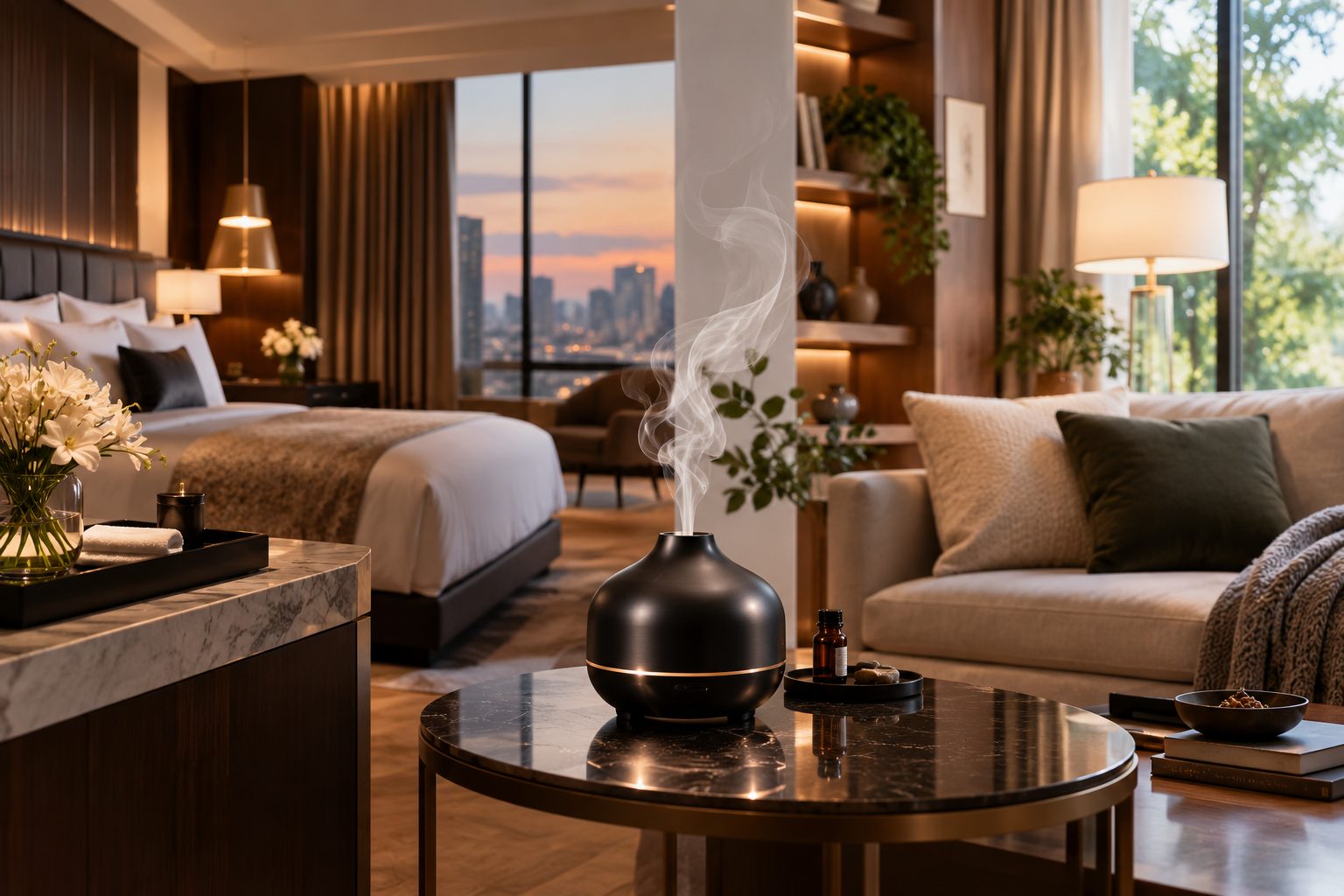
Interior design has traditionally been dominated by what people can see and touch. Furniture, lighting, artwork, color, texture, and architecture have shaped our understanding of a well-designed space for decades. Yet another element is increasingly becoming part of that conversation: scent.
Walk into a thoughtfully designed boutique hotel and the experience often begins before you consciously notice the furniture or artwork. There may be a subtle fragrance in the lobby—a combination of woods, citrus, herbs, florals, or warmer notes that seems to belong naturally to the surroundings. It may not be obvious enough to identify immediately, but it contributes to the overall impression of the space.
This approach is gradually moving beyond hospitality. Homeowners are beginning to think about fragrance as another layer of their interiors, alongside lighting and décor. As a result, products such as the Scent Diffuser have become part of a broader movement toward designing spaces for multiple senses rather than appearance alone.
Interior Design Is Becoming an Experience
A beautiful interior is not experienced as a photograph. People walk through it, hear the sounds within it, touch its materials, notice its temperature, and encounter its smells.
This is the basic idea behind multisensory design.
Visual elements remain fundamental, but designers increasingly recognize that a room's character comes from the interaction of several sensory cues. A thick rug can soften sound. Linen curtains influence both texture and daylight. Wood contributes visual warmth while also providing tactile qualities. Plants introduce color, organic shapes, and sometimes natural fragrance.
Scent belongs within this wider sensory framework.
Unlike a sofa or painting, fragrance does not occupy visible space. Nevertheless, it can contribute to whether an environment feels fresh, warm, familiar, energetic, understated, or relaxing.
Boutique Hotels Helped Turn Scent Into a Design Element
Hotels provide a particularly useful example because hospitality design is fundamentally about creating experiences.
A boutique hotel does not simply provide somewhere to sleep. Its architecture, service, lighting, music, furniture, materials, food, and even small details such as toiletries are often selected to create a recognizable identity.
Fragrance can become another part of that identity.
A coastal property might favor fresh or botanical profiles, while an urban luxury hotel may lean toward woods, leather-inspired accords, amber, or restrained florals. The fragrance does not have to literally represent the location. Instead, it can support the emotional character designers want the environment to communicate.
Consistency matters as well. When guests repeatedly encounter a distinctive aroma in a particular setting, they may begin associating that fragrance with the experience itself.
This concept is increasingly influencing residential interiors.
Why Scent and Memory Are Closely Connected
The relationship between smell and memory has a biological basis.
The olfactory system has close connections with brain regions involved in emotion and memory. This helps explain why a familiar aroma can sometimes produce an immediate recollection of a person, place, season, or experience.
A certain perfume might remind someone of a relative. The smell of coffee may bring back memories of a particular café. Freshly cut grass, rain, spices, books, or wood can trigger similarly personal associations.
This relationship gives fragrance an interesting role in interior design.
Visual objects help define what a home looks like. Repeated scents can contribute to what that home becomes associated with emotionally.
That does not mean a particular fragrance will create the same emotional response in everyone. Scent perception is highly individual and influenced by experience, culture, familiarity, preference, and context.
The Home Is Developing Its Own “Scent Identity”
The idea of a signature scent is familiar in personal fragrance. Increasingly, the same concept is being applied to interiors.
A home's scent identity does not necessarily mean using one fragrance everywhere. It can simply mean selecting aromas that feel consistent with the personality of the space.
Consider a minimalist home built around pale woods, stone, natural fabrics, and neutral colors. A very heavy fragrance might feel disconnected from that visual environment. Green, woody, herbal, mineral, or lightly citrus notes might provide a more coherent sensory experience.
A darker interior featuring leather, deep timber, warm lighting, and rich textiles might support deeper woody, spicy, amber-like, or resinous fragrance profiles.
There are no fixed rules. The point is to think about fragrance in relation to the room rather than treating it as an isolated product.
Where the Scent Diffuser Fits Into Modern Interiors
One reason home fragrance has become easier to incorporate into everyday design is the variety of fragrance-delivery methods now available.
Candles, reed diffusers, room sprays, scented objects, and electronic diffusion systems all provide different ways of introducing fragrance into a room.
A Scent Diffuser is particularly relevant to scent-led design because many diffuser formats can provide fragrance gradually over an extended period rather than only when someone actively sprays a room or lights a candle.
The term covers several technologies. Reed diffusers typically allow a fragrance formulation to travel through porous reeds before evaporating into the surrounding air. Some electronic devices disperse compatible fragrance formulations using heat, airflow, water-based mist, or other mechanisms.
These technologies are not interchangeable, and neither are the liquids designed for them. Users should always follow the manufacturer's instructions regarding compatible formulations, operation, cleaning, placement, and safety.
From a design perspective, diffusers also have an advantage: they can be incorporated physically into the room. Contemporary vessels are often designed to resemble decorative objects rather than purely functional fragrance devices.
Different Rooms Can Have Different Scent Personalities
Just as lighting changes from room to room, fragrance does not necessarily need to remain identical throughout a home.
A kitchen, for example, already contains changing food aromas. Heavy fragrance can compete with them, so subtle fresh, herbal, or citrus-inspired profiles may feel more appropriate for some households.
Living rooms offer more flexibility. Woody, floral, green, amber-like, or lightly spicy profiles can be explored depending on the décor and personal preferences of the occupants.
Bedrooms generally benefit from restraint. Because they are spaces associated with rest, many people prefer softer fragrance levels rather than highly dominant aromas.
Entrances present another interesting opportunity. The entrance is often a visitor's first sensory encounter with a home, meaning a subtle fragrance there can contribute to the initial impression.
Rather than selecting scents according to rigid rules, it is more useful to consider what happens in each room and what atmosphere its occupants want to create.
Fragrance Intensity Is Part of Good Design
One of the easiest mistakes in scent-led interiors is assuming that more fragrance creates a better experience. It often does not.
People can become less aware of persistent odors after being exposed to them for a period of time. This process, commonly referred to as olfactory adaptation, means someone living in a fragranced home may notice the aroma less strongly than a newly arriving guest.
Increasing fragrance intensity in response can therefore make the environment unnecessarily overwhelming.
Room size, ventilation, temperature, airflow, fragrance formulation, diffuser type, and placement can all affect perceived intensity.
A successful scent-led space generally does not need to announce its fragrance immediately. Like background lighting, fragrance can work quietly.
Scent Can Change With the Seasons
Unlike furniture, flooring, or wall colors, home fragrance can be changed relatively easily.
This makes scent useful for introducing seasonal variation without redesigning an entire room.
Spring is often associated with green, floral, and botanical notes. Citrus and fresh profiles may suit warmer summer environments. Woods, spices, and earthy compositions are commonly associated with autumn, while deeper woody, resinous, or warm fragrance profiles are often selected during winter.
These are not universal rules. Climate, culture, personal memories, and individual preferences can create very different seasonal associations.
The broader principle is that fragrance offers flexibility. A room can maintain the same furniture and visual design while gaining a slightly different sensory character throughout the year.
Scent-Led Design Should Still Be Subtle
The objective of scent-led design is not necessarily to make people notice fragrance.
In many well-designed environments, the most successful sensory details work in the background.
Consider lighting in a good restaurant. Guests may never discuss the exact brightness or color temperature of the lights, but poor lighting would immediately change their experience. Acoustic design operates similarly. People rarely praise sound absorption panels, yet excessive noise can make an otherwise attractive space uncomfortable.
Fragrance can play the same supporting role. A scent should complement an interior rather than compete with food, flowers, fresh air, people, and the natural smells of everyday life.
Sometimes the correct amount of fragrance is very little.
Safety and Comfort Should Come Before Fragrance
Scent-led design should always account for the people and animals using the space.
Fragrance preferences vary considerably, and some individuals may experience sensitivity to particular fragranced products. People with respiratory conditions, allergies, migraines, or other health concerns may need to avoid certain products or environments.
Households with children and pets should also follow product-specific safety instructions carefully.
Essential oils, fragrance oils, reed-diffuser liquids, and formulations made for electronic diffusers are not automatically interchangeable. Products described as “natural” should not automatically be assumed to be appropriate for every person, pet, surface, or method of diffusion.
Good interior design prioritizes comfort and usability. Fragrance should follow the same principle.
How to Approach Scent-Led Design at Home
The easiest starting point is not asking, “Which fragrance should I buy?”
Instead, ask: How should this room feel?
A person might describe a living room as warm and welcoming, a workspace as clear and energetic, or a bedroom as quiet and understated. Those descriptions provide a useful starting point for exploring fragrance families.
Next, consider the existing interior.
Natural woods may pair comfortably with woody or green profiles. Bright contemporary spaces might suit citrus, herbal, or clean botanical compositions. Rich fabrics and darker materials may provide a setting for deeper fragrances.
Then consider intensity.
Starting subtly allows occupants to understand how a fragrance behaves within the actual room. What seems weak when smelled directly from a container can become considerably more noticeable after continuous diffusion.
Most importantly, personal preference should outweigh design trends.
The Future of Interiors Is Multisensory
The movement from boutique hotels to residential spaces reflects a broader change in the way people think about interiors.
A home is no longer understood only as a collection of attractive objects. Increasingly, good design is about the complete experience of being inside a space.
Lighting influences mood and visibility. Acoustics affect comfort and conversation. Materials change how a room feels to the touch. Temperature affects physical comfort. Scent adds another layer, one closely connected with perception, familiarity, and memory.
A Scent Diffuser is only one tool within that much larger idea.
The real trend is not the diffuser itself. It is the growing recognition that interior design extends beyond what the eye can see.
Boutique hotels understood this principle early because memorable hospitality depends on creating a complete experience. Homes are now borrowing the same thinking, but adapting it to something more personal.
The result is a quieter and more nuanced approach to interior design—one where the character of a room can be expressed through light, material, sound, texture, and scent.
In that sense, the future of interior design may not simply be about creating spaces that look beautiful. It may be about creating spaces that people can recognize, remember, and experience through all their senses.