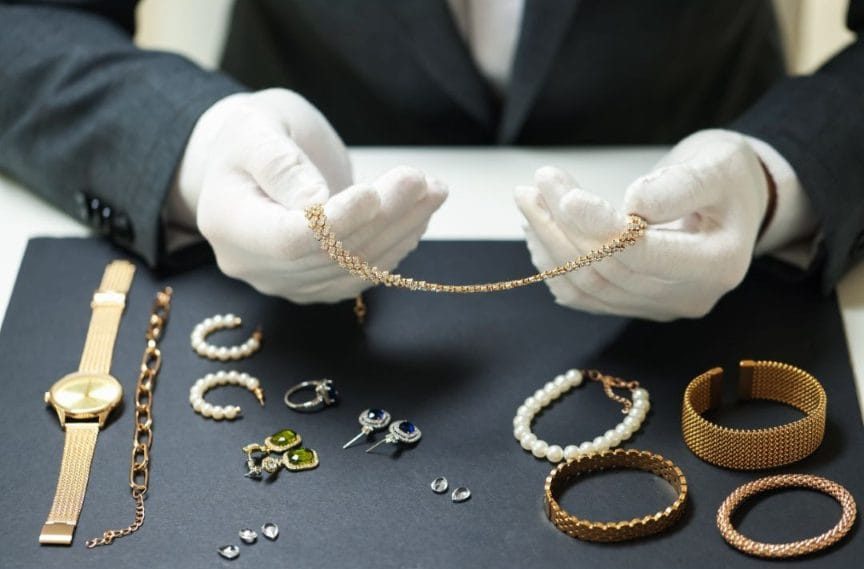
Walk into an estate sale in Scottsdale on a Saturday morning and you will find something that tells a clear story about this state: fine jewelry moves fast. Rings, bracelets, and vintage necklaces that might sit in a shop window for months elsewhere often find new owners before noon. Arizona's jewelry resale market is not just active, it is structurally built to stay that way.
Why Arizona Draws Buyers and Sellers in Equal Measure
The resale market anywhere depends on two things: a steady supply of pieces coming in and a consistent pool of buyers ready to purchase them. Arizona has both, and the reasons run deeper than good weather or a favorable tax climate.
Arizona added 97,044 residents between July 1, 2024, and July 1, 2025, a growth rate of 1.2%. That kind of sustained inflow reshapes local commerce in ways that are easy to overlook. Between 2023 and 2024, Maricopa County ranked first in the United States for net migration.
Every household that arrives carries its own financial history, and for many, that history includes fine jewelry accumulated over decades. When a couple relocates from the Midwest and decides to downsize, their collection often finds its way into the local resale market. Multiply that pattern across tens of thousands of households and the supply side becomes self-sustaining.
The demand side is equally active. Newcomers, particularly younger professionals and retirees on fixed incomes, frequently prefer pre-owned fine jewelry over retail purchases. The value proposition is straightforward: a well-maintained diamond ring or a vintage gold bracelet carries the same craftsmanship as a new piece at a fraction of the retail markup.
The Demographics Behind the Demand
Retirees and Estate Jewelry
Arizona has one of the largest concentrations of retirees in the country, and that demographic drives estate jewelry supply more reliably than almost any other factor. Long-term homeowners and seasonal residents accumulate fine pieces over decades, and as they simplify their lives or settle estates, those pieces re-enter the market. The result is a consistent inventory of high-quality items with real provenance, from mid-century platinum settings to signed vintage pieces from major American jewelry houses.
Younger Buyers Entering the Market
The assumption that resale jewelry appeals only to older buyers no longer holds. Younger consumers in the Phoenix and Tucson metro areas are actively seeking pre-owned fine jewelry, pushed along by budget awareness and a preference for pieces with character. A vintage sapphire ring from the 1960s holds more appeal for many buyers in their 30s than a generic new setting from a chain retailer. This shift in preference has broadened the buyer pool considerably, and it shows no sign of reversing.
Seasonal Residents and Snowbirds
Arizona's large snowbird population creates a seasonal rhythm in the resale market. Residents who spend winters in Scottsdale, Sedona, or the East Valley often use that time to buy and sell. Local estate buyers and consignment shops see noticeable upticks in inventory and foot traffic between November and April. That seasonality is not a weakness. It gives the market a predictable pulse that experienced buyers and sellers can plan around.
What Sells Well and What Drives Value
Not all jewelry performs equally in resale. Understanding what Arizona buyers are actually looking for helps sellers set realistic expectations and helps buyers know where the best value lies.
A few categories consistently move well in this market:
- Natural diamond pieces with certification. Certified mined diamonds, particularly those with GIA or AGS documentation, attract serious buyers and command the strongest resale prices. Buyers in the Scottsdale corridor tend to skew affluent and knowledgeable, and they expect paperwork.
- Gold jewelry with clear metal content. High gold prices in recent years have made even simple gold pieces attractive. Chains, bangles, and rings with clear karat markings sell reliably.
- Signed vintage and estate pieces. Items from recognized American or European makers carry a premium that generic pieces do not. A signed Tiffany bangle or a Cartier love bracelet will draw competitive interest.
- Colored gemstone rings. Sapphires, rubies, and emeralds in well-made settings appeal to buyers looking for something distinctive. Arizona buyers tend to appreciate the individuality of colored stones.
The lab-grown diamond segment tells a different story. Natural diamonds currently retain between 20% and 60% of their original retail price, while lab-grown diamonds often return only 10% to 30% on resale. Sellers holding lab-grown stones bought at peak prices a few years ago face a meaningful adjustment. The issue is not quality, it is supply: a laboratory can produce an essentially unlimited number of colorless, flawless stones, which removes the scarcity that drives resale value for natural gems.
Trust and Transparency in Local Transactions
One reason Arizona's in-person resale market remains strong despite the growth of online platforms is trust. Selling fine jewelry is not like selling furniture. A seller handing over a piece worth several thousand dollars wants to look someone in the eye, ask questions, and understand how the valuation was reached. Local jewelry buyers in Arizona who invest in gemological expertise, transparent pricing, and professional appraisals build the kind of reputation that keeps sellers coming back and referring others.
That trust extends to buyers too. Someone purchasing a pre-owned diamond ring wants confidence that the stone is what it is represented to be. Certification, professional evaluation, and clear documentation address that concern in ways that an online listing cannot replicate for high-value pieces. No photograph closes that gap.
The Broader Market Trajectory
Arizona's resale activity does not exist in isolation. The U.S. secondhand luxury goods market was sized at approximately $8.7 billion in 2025 and is projected to reach $16.2 billion by 2034, growing at a CAGR of 7.16%.
Jewelry and watches represent a significant portion of that category, and the national momentum is clearly upward. Sustainability considerations, the appeal of circular consumption, and growing comfort with authenticated pre-owned goods are all pushing more consumers toward resale channels.
Arizona sits in a particularly favorable position within that national trend. The combination of consistent population growth, a concentration of wealth in the Phoenix and Scottsdale corridors, a large retiree base generating estate inventory, and a younger buyer demographic that values both affordability and authenticity creates conditions that few other states can match.
Conclusion
The Arizona jewelry resale market is not a niche activity or a relic of a slower economy. It is a functioning, growing segment of the state's broader retail landscape, shaped by real demographic forces and genuine consumer demand.
Sellers who approach it with accurate expectations and properly documented pieces will find a receptive market. But buyers who take the time to work with knowledgeable local professionals will find value that retail cannot offer. The fundamentals here are solid, and they point toward continued growth rather than a slowdown.