

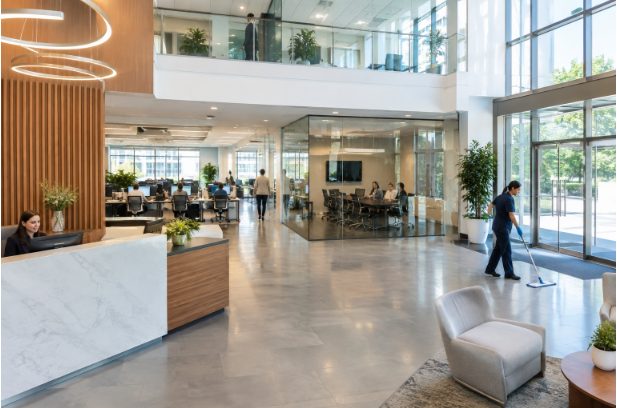
A clean workplace is easier to maintain when cleaning is treated as an operating system rather than an occasional reaction to visible messes. A clear plan helps leaders set expectations, gives cleaning teams practical priorities, and makes it easier to notice issues before they disrupt staff or visitors. Businesses that need dependable support can work with BackUp Facility Services to build a routine that fits the building, schedule, and level of use.
Effective facility care goes beyond making surfaces look presentable. It includes attention to floors, shared equipment, restrooms, waste, entryways, odors, moisture, and the supplies people rely on throughout the day. When those details are handled consistently, employees can focus more easily on their work, and visitors encounter a space that feels organized and cared for.
1. Why Every Workplace Needs a Practical Cleaning Plan
Busy commercial spaces change throughout the day. An entryway may be clean at opening, but it collects dirt during rainy weather. A break room may look fine in the morning, but needs attention after lunch. A written plan turns these changing conditions into assigned tasks, set frequencies, and clear escalation steps for spills, leaks, odors, or damaged surfaces.
Appearance-based cleaning often focuses on what is easiest to see, such as emptying trash or wiping a reception counter. Health-focused facility care also considers shared keyboards, refrigerator handles, microwave buttons, stair rails, restroom fixtures, and other frequently touched surfaces. For example, an office may vacuum nightly while repeatedly overlooking its conference-room controls, coffee station, and door hardware.
For organizations that need scheduled support across these routine needs, commercial cleaning services can help align daily work with actual building traffic instead of relying on a generic checklist.
2. How to Identify High-Risk and High-Traffic Areas
One schedule rarely works for every part of a facility. Cleaning frequency should follow how people use each area, how often surfaces are touched, and how likely a space is to collect soil, moisture, food debris, or waste. Start with a walkthrough during the busiest part of the day and note where people gather, touch surfaces, track in dirt, or leave spills behind.
- Entrances and reception areas: Watch entry mats, glass, door handles, visitor seating, and counters.
- Shared work areas: Include conference tables, remote controls, printers, phones, and common workstations.
- Break rooms and kitchens: Prioritize sinks, appliance handles, tables, trash, and food-storage areas.
- Restrooms and changing rooms: Monitor fixtures, floors, dispensers, waste bins, and supply levels.
- Loading and service areas: Address tracked-in debris, grease, dust, and employee access points.
3. What to Include in a Daily Cleaning Routine
Opening Tasks
At the start of the day, inspect entrances, floors, restrooms, and visible surfaces. Remove waste before containers overflow, verify that soap and paper supplies are available, and look for leaks, odors, spills, or damp materials that require prompt attention.
During-Shift Tasks
During busy periods, refresh restrooms and break areas, respond to spills, and remove tracked-in soil before it spreads. High-touch surfaces may need additional cleaning based on building activity, especially in shared spaces with steady visitor or employee traffic.
Closing Tasks
At closing, clean shared surfaces according to product directions, vacuum or mop floors based on material and soil level, restock supplies, and document unusual conditions for the next shift or facility manager. A simple note about a recurring leak or persistent odor can prevent an overlooked maintenance problem from becoming a larger one.
4. The Connection Between Cleaning and Indoor Air Quality
Cleaning can support indoor comfort by reducing dust, dirt, waste, and moisture sources, but it is only one part of indoor air quality management. OSHA notes that routine cleaning, proper chemical storage, building maintenance, and attention to HVAC systems all contribute to healthy indoor air quality in workplace buildings.
Use only the amount of product needed for the task, follow label directions, and ventilate appropriately when product instructions call for it. Strong fragrance is not proof of cleanliness, and excessive product can leave residue or create unnecessary odors. Cleaning also cannot replace repairs to ventilation equipment, plumbing leaks, damaged flooring, or water-damaged materials.
5. When to Schedule Deep Cleaning
Deep cleaning should be planned around building conditions, not delayed until wear becomes obvious. Useful times include seasonal changes, after construction or remodeling, following major events, before reopening a lightly used space, and after water-related incidents. Depending on the facility, deep-cleaning work may include carpet extraction, detailed floor care, upholstery cleaning, interior glass, high dusting, and hard-to-reach surfaces.
6. How to Choose and Use Cleaning Products Carefully
Select products that match the surface and task, then use them exactly as directed. Workers should understand dilution instructions, required contact time, storage rules, and needed protective equipment. Keep chemicals labeled, avoid mixing products unless instructions specifically allow it, and make safety data sheets accessible to employees who handle them. Stronger is not always better. Correct technique and sufficient time on the surface often matter more than using extra chemicals.
7. Cleaning Plans for Different Types of Facilities
Offices, Retail, Medical, and Service Sites
Office plans should focus on shared desks, meeting rooms, kitchens, restrooms, and entrances, while adjusting for hybrid schedules and event days. Retail locations need steady attention at entrances, checkout areas, fitting rooms, displays, and customer restrooms. Medical and wellness spaces should use documented procedures appropriate to the services provided and separate routine cleaning from required infection-control practices. Industrial and service facilities may need additional attention for grease, dust, equipment zones, and employee areas.
8. Ways to Track Cleaning Quality
Managers do not need a complicated dashboard to see whether a cleaning plan is working. Review completed checklists, inspect the same areas at consistent times, track repeat complaints, and ask occupants about odors, restroom conditions, supply levels, and comfort. The EPA emphasizes that cleanliness, maintenance, and communication between occupants and building management are part of maintaining a comfortable indoor environment.
9. Common Cleaning Plan Mistakes to Avoid
- Using the same schedule for every area, regardless of traffic or purpose.
- Cleaning only visible messes while overlooking high-touch and hard-to-reach surfaces.
- Ignoring entryways where outdoor soil can spread through the building.
- Relying on fragrance instead of effective cleaning practices.
- Skipping training on products, equipment, and safety procedures.
- Leaving leaks, damaged flooring, and ventilation concerns off the facility checklist.
- Failing to update the plan after a renovation, schedule change, or shift in occupancy.
A Cleaner Workplace Starts With a Clear System
The strongest cleaning plans are steady, adaptable, and based on how a facility is actually used. Daily care, planned deep cleaning, careful product use, air-quality awareness, and regular inspections create a practical system that supports people and protects the building. When every team member knows what needs attention, when it should happen, and how to report concerns, cleaning becomes a reliable part of workplace operations.











1 thought on “How a Practical Cleaning Plan Supports Healthier Indoor Spaces and Smoother Workplace Operations”
Comments are closed.