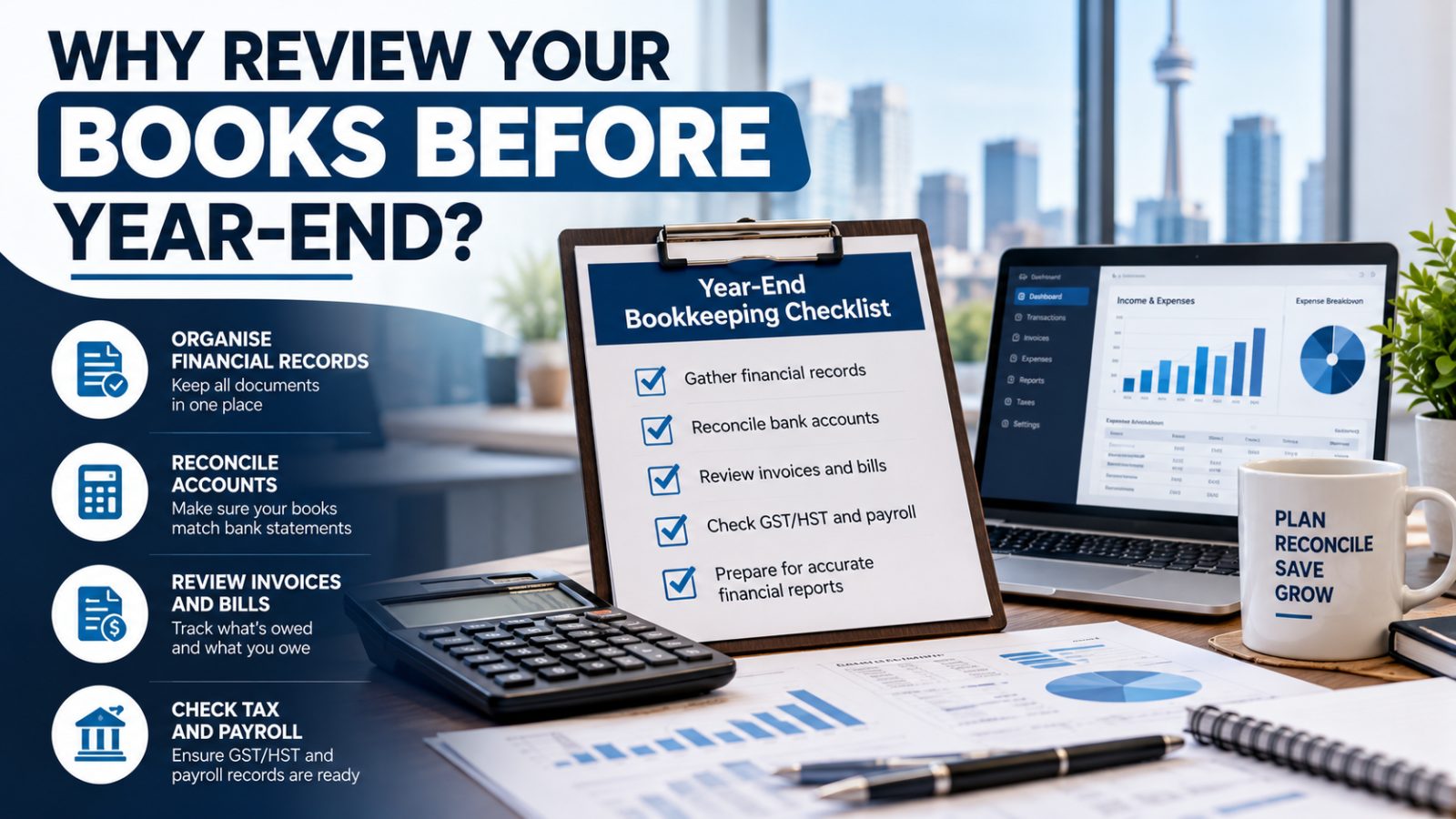
Most business owners don’t have time to check every receipt, payment and invoice as it lands. So things slip. A customer pays two weeks late, a supplier bill never makes it into the system, an expense gets filed under the wrong heading. Each one is minor on its own. Left alone for months, they pile up and turn into a headache right when tax reporting is around the corner.
Give it a few months, though. Those small things pile up, and by the time tax reporting is near you’re stuck untangling them under pressure. A review before the year ends fixes that. You find the errors while they’re still easy to fix, and you get your paperwork in order before anyone asks for it. If you want help with this kind of work, Bookkeeping and Accounting Services Ontario is a useful phrase to search. Do it yourself or hire someone, it doesn’t matter much. A simple checklist makes the job less painful and shows you what your finances really look like.
Which Financial Records Should You Collect First?
Pull together everything that shows how money moved in and out this year. Once it’s all in one spot, checking transactions is quicker, and odd amounts are easier to explain.
Here’s what to have on hand before you start:
- Bank and business credit card statements
- Sales invoices, supplier bills and expense receipts
- Loan statements and payment processor reports
- Payroll records and notes on any cash transactions
- Paperwork for equipment and other big purchases
If your software lets you attach receipts, match each one to its transaction. It’s common to see a supplier payment on the bank statement with no receipt anywhere in your files. Chasing it down today takes a few minutes. Chasing it through old email threads takes a lot longer.
Try to keep personal spending out of the business accounts. Sort your documents by month or category, and mark anything you can’t explain yet. That gives you a proper starting point for thedocuments needed for small business year-end accounting.
How Can You Check Whether Your Accounts Match?
Your books should line up with what actually happened in your bank and card accounts. When they don’t, you usually find missing transactions, double entries or plain typing mistakes, and it’s better to find them before they reach your reports.
Take one business bank account or credit card at a time. Set the statement balance next to the figure in your records, and do the same for loans and payment processors. Common culprits are bank fees nobody entered, deposits recorded twice and payments sent to the wrong account.
Cheques that haven’t cleared and deposits still in transit matter here too. They can explain a mismatch on their own, so don’t nudge numbers around just to make two totals agree.
A proper year end accounting cleanup and reconciliation keeps one small mistake from travelling into next year’s books. Say a payment was entered twice. Your expenses now look higher than they really were. Find out why the difference exists and write a short note about whatever you correct.
If you’re not sure how to reconcile business bank accounts at year-end, don’t try to do them all in one sitting. Finish one account, clear up whatever doesn’t add up, then move to the next.
What Should You Check in Unpaid Invoices and Bills?
What customers owe you and what you owe suppliers both affect your plans. Go through the open invoices and bills until your records match reality.
Make a list of overdue invoices and contact those customers. Sometimes a job was billed weeks ago and the money just hasn’t arrived. Confirm the amount and find out whether the customer ever raised an issue with the invoice.
After that, put supplier statements next to the bills and payments you’ve recorded. Duplicate invoices, missing credit notes, disputed charges and payments applied to the wrong account tend to show up at this point.
An old unpaid invoice isn’t necessarily a lost cause.Don’t write it off until you know what happened. The year-end accounts receivable and payable checklist you use should also include unpaid expenses that belong to this period under your accounting method.
Are Your Tax and Payroll Records Ready for Review?
GST/HST and payroll need a little extra attention because errors in either one change what you report and what you pay. Look at them with the rest of your books. Waiting for a filing deadline to force the issue rarely goes well.
Take the GST/HST you charged on sales and see if it matches what’s sitting in your books. Then go through the input tax credits you plan to claim and pull up the purchase invoices and receipts behind each one. Last, make sure every filed return, payment and balance still owing has been entered properly.
AGST/HST bookkeeping checklist for small businesses should cover sales tax entries, supporting documents and any differences still open.
Payroll gets the same treatment. Lay your payroll reports next to the payment records and work through wages, deductions, employer contributions and remittances in turn. Finishing payroll reconciliation before year-end usually shows you what’s missing or what doesn’t add up before anyone else notices.
Put the details you need for year-end slips and other payroll reporting somewhere you can find them quickly. Rules and deadlines differ from one business to the next, which is why it’s worth confirming yours with the Canada Revenue Agency (CRA) or a qualified professional. Having someone else prepare the filings doesn’t change the fact that the records are yours to keep in order.
Which Assets and Expenses Need a Closer Look?
Day-to-day transactions get looked at all year. Inventory and big purchases are the ones that slip through. A year-end review is when you make sure they’re recorded the right way.
If you hold stock, walk the shelves, count it and check the totals against your records. Damaged, missing or obsolete items deserve a proper look before you touch any numbers. A difference could come from a sale nobody entered, a miscount or goods that got damaged during the year.
Computers, machinery, furniture and other long-term purchases can be treated differently from regular running costs, for accounting and for tax. Repairs, office supplies and larger purchases should all sit in sensible categories.
Shared costs are easy to forget. That means the business share of vehicle expenses, home office costs and anything else used for both work and personal life.
A year-end inventory and fixed asset bookkeeping review brings questionable entries to the surface and keeps your supporting documents together. Not every business purchase is fully deductible, so confirm the right treatment when you aren’t sure.
How Can You Finish Your Year-End Accounting Cleanup?
Once you’ve checked the accounts, invoices, taxes and expenses, take one more look at the full set of records for anything left hanging.
Go through the general ledger and trial balance. Odd amounts, entries with no explanation and balances that haven’t budged in months all need attention. Make sure income and expenses sit in the right reporting period, and give suspense accounts, old transactions and unreconciled balances the same treatment.
Loan balances, owner withdrawals and contributions should match their supporting records where they apply. Don’t make a technical adjustment just to clear an account when you can’t say why the difference is there.
The second stage of year end accounting cleanup and reconciliation is bringing these checks together and noting what’s still unresolved. Write up a list of questions and missing documents for your bookkeeper or accountant.
A written reason for each correction makes later reviews much easier. Your small business year-end bookkeeping adjustments should rest on reliable information, particularly if they affect tax reporting or financial statements.
What Can Your Financial Statements Tell You?
Accurate books are useful well beyond tax reporting. They show how the business has been doing and point to the areas that may need changing.
Begin with the income statement and its revenue, expenses and profit figures. Your balance sheet gives the picture on assets, liabilities and equity, while cash flow shows if you can cover what’s coming up.
Compare everything with the previous period. Higher sales are good news, but rising running costs can take much of it back. Plenty of profitable businesses still end up short of cash when customers take their time paying.
Doing a financial statement review for small business owners tends to bring patterns into view well before the next financial year starts. Put what you find into realistic budgets, purchase plans, quicker invoice follow-ups and some regular time for recordkeeping.
When Should You Consider Professional Bookkeeping Support?
Doing your own books can work fine when transactions are simple and you’ve got the time. Growth changes that. More invoices, payroll duties and several accounts make the work heavier than it used to be.
Months-old reconciliations, unexplained balances in your reports and a tax season that always turns frantic are all signs it’s time for some help. The best bookkeeping services commonly offer remote document sharing, transaction categorisation, account reconciliation and regular financial reporting.
When comparing providers, weigh up software compatibility, communication, data security, service scope and fees. Ask how often they’ll update your records and how they deal with questions that stay unresolved. The best online bookkeeping services should suit the way your business works instead of padding the package with extras you’ll rarely use.
Even with an outside bookkeeper in charge, your business records remain your responsibility and must meet the applicable requirements. Stay involved, go through the reports regularly and make sure you can get to the documents that support your transactions.
How Can You Start the New Financial Year With Confidence?
A year-end review goes much more smoothly when missing receipts, unpaid invoices and account differences get sorted before they build up. Work down the checklist, hang on to the evidence behind each adjustment and reach out for help whenever a balance or reporting requirement doesn’t make sense.
Try turning these checks into a monthly habit so year-end isn’t the only time you look. If your records need a deeper review, Bookkeeping and Accounting Services Ontario can point you toward suitable support. A bit of organisation now makes the next financial year far easier to handle.