Real CPR is not like it is on TV. It’s hard, tiring physical work. People rarely wake up mid-compression, and an AED doesn’t jolt a flatline back to life. Writers who want emergency scenes that ring true can learn the basics firsthand, the way many students do at Coast2Coast First Aid Training Newmarket.
Every writer knows the moment. Your character collapses. The scene needs tension, urgency, maybe a hero. So you reach for what you’ve seen a hundred times on screen: a few dramatic chest pushes, a gasp, and the patient sits up, coughing.
Readers have seen that scene too. The trouble is, it’s almost entirely wrong. And readers who’ve taken a first aid course will notice.
Why Do Writers Get CPR Scenes Wrong?
Mostly because we learn from fiction, not from life. Film and TV need speed. A real cardiac arrest is slow, messy and exhausting, which is hard to fit into a two-minute scene.
So the myths get copied from story to story. Gentle compressions. Instant recoveries. Defibrillators used on hearts that have completely stopped. Each one feels familiar, which is exactly why it sneaks into drafts.
The fix isn’t to drain the drama. It’s to find the drama that’s already there in the real thing. And there’s plenty.
What Does Real CPR Actually Look Like?
Picture this instead. The rescuer kneels beside the person, locks their elbows and pushes straight down on the centre of the chest. Hard. At least 5 centimetres deep on an adult. Fast, too: 100 to 120 times a minute, roughly two pushes every second.
Within two minutes, their arms burn. Sweat drips. They’re counting out loud. If someone else is there, they swap. That’s not a weakness. It’s standard practice, because tired hands push too shallow.
Here are details that make a scene feel real:
- The rescuer’s counting rhythm, out loud, to keep pace
- The physical toll: aching shoulders, shaking arms, ragged breath
- A bystander sent to call 911 and find an AED
- The strange quiet of a crowd that doesn’t know what to do
- The relief when the sirens finally arrive
Do People Really Wake Up During CPR?
Rarely. This is the biggest myth on screen. CPR’s job usually isn’t to revive someone on the spot. Its job is to keep oxygen-rich blood moving to the brain until an AED or paramedics can try to restore a normal heartbeat.
That changes the emotional shape of a scene. The rescuer isn’t waiting for a miracle. They’re buying time, minute by exhausting minute, without knowing whether it will work. That uncertainty is far more gripping than a sudden gasp.
And when someone does survive, recovery is gradual. Think ambulance, hospital, family in a waiting room. Not a character sitting up and cracking a joke.
How Does an AED Really Work?
On TV, a doctor yells “Clear!” and shocks a flat line. In reality, a defibrillator is used for certain abnormal heart rhythms, not a heart that has no electrical activity at all.
Public AEDs are also surprisingly calm machines. They talk. A clear, steady voice tells the rescuer to place the pads, stand back and let it analyze. It decides whether a shock is needed. If it isn’t, it tells you to keep doing CPR.
For a writer, that robotic voice in a panicked room is a gift. The contrast between the machine’s calm and the human chaos around it is pure tension.
What Other First Aid Moments Make Great Scenes?
CPR gets the spotlight, but everyday first aid offers quieter, character-driven moments:
- Choking at dinner. Firm back blows and abdominal thrusts, a frozen table of guests, a decision made in seconds.
- Severe bleeding. Pressing hard on a wound and not letting go, even when your hands shake.
- An allergic reaction. Hunting through a purse for an epinephrine auto-injector while someone’s throat tightens.
- A seizure. Protecting someone’s head, timing it on a phone and resisting the urge to hold them down.
Each one reveals character. Who freezes? Who takes charge? Who stays calm and who falls apart? First aid is a pressure test, and fiction loves pressure tests.
Why Should Writers Take a First Aid Course?
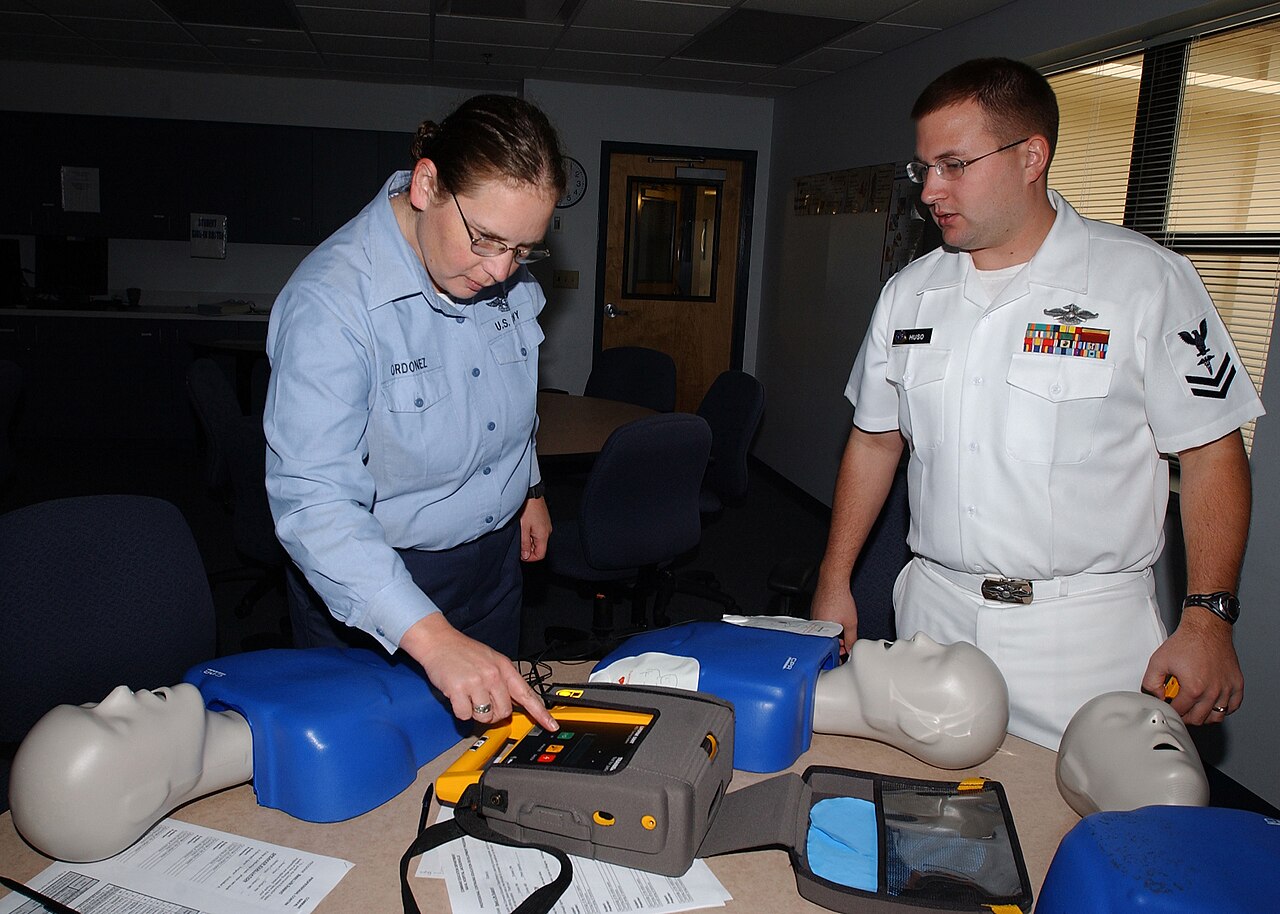
Research matters, and some research has to be done with your hands. A one- or two-day course teaches you what compressions feel like, how heavy a manikin’s chest is and how fast two minutes disappears.
You’ll also hear instructors’ stories, which are often better than anything you’d invent. And you’ll leave with a real-world skill that could one day matter far more than any manuscript.
Many courses use blended learning, so you can finish the theory online between writing sessions, then attend a shorter in-person class for hands-on practice. In Ontario, look for WSIB-approved courses if you ever need certification for a day job. Red Cross first aid and CPR certificates are valid for three years.
Your Emergency Scene Accuracy Checklist
- Compressions are hard, fast and tiring
- Someone calls 911 early
- The AED speaks and decides on the shock
- No instant wake-ups mid-CPR
- Recovery happens in hospital, not on the floor
If you are looking for first aid training near Bayview Avenue, Mulock Drive, central Newmarket, or other areas close to our facility, then you may reach out to Coast2Coast First Aid/CPR – Newmarket in that area. Writers who want to try it for themselves can read more about Coast2Coast First Aid courses and pick a class that fits around their deadlines.
Frequently Asked Questions
How long does real CPR go on?
Rescuers continue until paramedics take over, an AED tells them to stop, the person starts breathing normally or they’re too exhausted to continue. That can mean many minutes.
Do rescuers still give mouth-to-mouth?
Trained responders give 30 compressions followed by 2 breaths, often with a face shield. Untrained bystanders may do hands-only CPR instead.
Can ribs break during CPR?
Yes, it can happen, especially in older adults. It’s a known risk, and rescuers are taught to keep going because the alternative is far worse.
Is it realistic for a teenager to perform CPR in a story?
Absolutely. Teens can take first aid and CPR courses, and many babysitting and lifeguard programs include CPR training.
How long does a CPR course take?
A CPR/AED Level C course takes part of a day. A full first aid course with CPR usually takes one to two days.