
Packing light isn’t about sacrificing comfort or preparedness—it’s about being intentional. With the right approach, you can travel with a single carry-on and still have everything you actually need, without the stress of overpacking or the panic of forgetting essentials.
Start With a Packing System, Not a List
Think in Categories, Not Items
Instead of listing every individual item, think in categories: clothing, toiletries, tech, documents, and miscellaneous essentials. This makes it easier to spot what’s missing and avoid duplicates.
Plan Around Your Itinerary
Base your packing list on actual planned activities rather than “just in case” scenarios. If you’re not hiking, you don’t need hiking boots taking up space.
Master the Clothing Capsule
Build a Mini Wardrobe
Choose 4–5 tops, 2–3 bottoms, and one layering piece that all mix and match with each other. This creates multiple outfit combinations from a small number of items.
Stick to One Color Palette
Neutral colors—black, navy, gray, beige—pair easily with everything, letting you rewear pieces in different combinations without looking repetitive.
Choose Fabrics Wisely
Wrinkle-resistant, quick-drying fabrics like merino wool or technical blends let you wash items in a sink and wear them again the next day, reducing how much you need to pack.
Roll, Don’t Fold
Rolling clothes instead of folding saves significant space and helps prevent deep wrinkles, especially for casual items like t-shirts, leggings, and athletic wear.
Use Packing Cubes
Packing cubes compress clothing and keep your bag organized, making it easy to find items without unpacking everything. They also make it simple to separate clean and worn clothes during the trip.
The Essentials You Shouldn’t Skip
Travel Documents
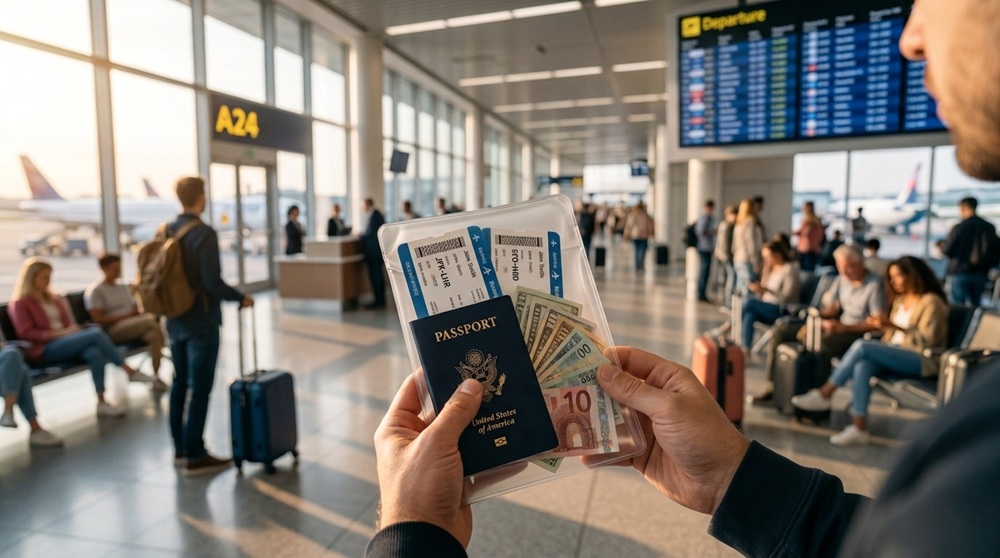
Passport, ID, boarding passes, travel insurance details, and any required visas should always be double-checked before leaving, ideally stored both physically and digitally.
Medications
Pack prescription medications in their original containers, along with a printed prescription or doctor’s note if traveling internationally, and always keep them in your carry-on rather than checked luggage.
Chargers and Adapters
A universal power adapter and a portable charger are essential, especially for international trips where outlet types vary by country.
A Reusable Water Bottle
An empty, collapsible water bottle takes up minimal space and can be filled after airport security, saving money and reducing plastic waste.
Toiletries Without the Bulk
Travel-Sized Containers
Transfer toiletries into reusable travel-sized containers, or buy travel-sized versions of your most-used products to stay within carry-on liquid limits.
Multi-Use Products
Look for multi-purpose items, like a moisturizer with SPF or a shampoo-conditioner combo, to cut down on the number of bottles you need to pack.
Smart Packing Habits
The 5-4-3-2-1 Rule
A helpful guideline for a week-long trip: 5 pairs of socks and underwear, 4 tops, 3 bottoms, 2 pairs of shoes, and 1 jacket or layering piece.
Wear Your Bulkiest Items
Wear your heaviest shoes and jacket while traveling instead of packing them, freeing up significant space in your bag.
Leave Room for Souvenirs
Pack slightly under capacity if you plan on bringing items back, or bring a foldable extra bag for the return trip.
Common Packing Mistakes to Avoid
Overpacking “Just in Case” Items
Extra outfits, backup electronics, or unnecessary gear often go unused and simply add weight and bulk.
Forgetting to Check Weather and Culture
Research your destination’s climate and cultural norms in advance to avoid packing inappropriate clothing or missing weather-specific essentials like rain gear.
Final Thoughts
Packing light comes down to planning, not restriction. By building a versatile clothing capsule, prioritizing true essentials, and using smart packing techniques like rolling and packing cubes, you can travel comfortably and confidently—without checking a bag or leaving anything important behind.
Ready for the next topic whenever you are.