Factory floors have come a long way in terms of health and safety. Even so, over a million workdays are still lost annually due to preventable injuries in manufacturing environments. What’s more, for up and comers exploring roles in the industry, being in a safe environment is increasingly a dealbreaker for accepting a role. A McKinsey survey found that physical and psychological safety on the workshop floor ranks among the top factors Gen Z weighs when accepting a role.
Manufacturers have more than one strong reason to get safety right, and technology is one of the most effective ways to help them do it. Here are three tools that a safety-conscious business should consider.
Automated safety features on individual pieces of machinery
OSHA’s machine guarding guidance says any machine part, function, or process that can cause injury needs thorough safeguarding protocols in place. Moving parts can crush a hand, burn skin, or cause an amputation in a split second. While PPE still forms the first line of defense, built-in automated safety features are engineering feats that have drastically reduced the likelihood of injury in manufacturing environments. Examples of these safety features include:
Interlocks for machine guarding
These mechanisms cut power to a piece of equipment the moment someone opens a guard door.
Safety sensors
Light curtains around dangerous areas, for example, detect a hand or body entering a danger zone and automatically trigger a machine stop.
If you’ve invested in equipment with built-in automated safety, the next step is to think about how you can manage automations.
Smarter machine safeguarding with automated control systems
An industrial control system (ICS) monitors your equipment continuously as part of a wider safety ecosystem. It reduces manual errors and builds protection into machine operations before accidents can happen. Industrial controls offer an extra layer of preventive security for employees, on top of reactive security measures. The software regulates and automates physical processes in a plant, using a robust three-stage logic loop:
Sense
Sensors and meters gather live readings on operating or environmental conditions, including temperature, pressure, flow rate, and motor position.
Decide
A central controller takes that real-time data and checks it against preset values, known as setpoints. Its programmed logic then works out which adjustments the process needs to meet these setpoints.
Act
Actuators (pieces of equipment like valves, motors, switches, and robotic arms) carry out the controller’s commands and change what’s happening on the physical equipment accordingly.
Control systems come in a few forms. Programmable Logic Controllers (PLCs) are tough industrial computers that read inputs from sensors and switches on a machine to control motors and valves. Supervisory Control and Data Acquisition (SCADA) systems use software to give operators live oversight of equipment across a facility or wider area, so teams can monitor it, control it, and log the data.
Robots and cobots taking people away from hazardous tasks
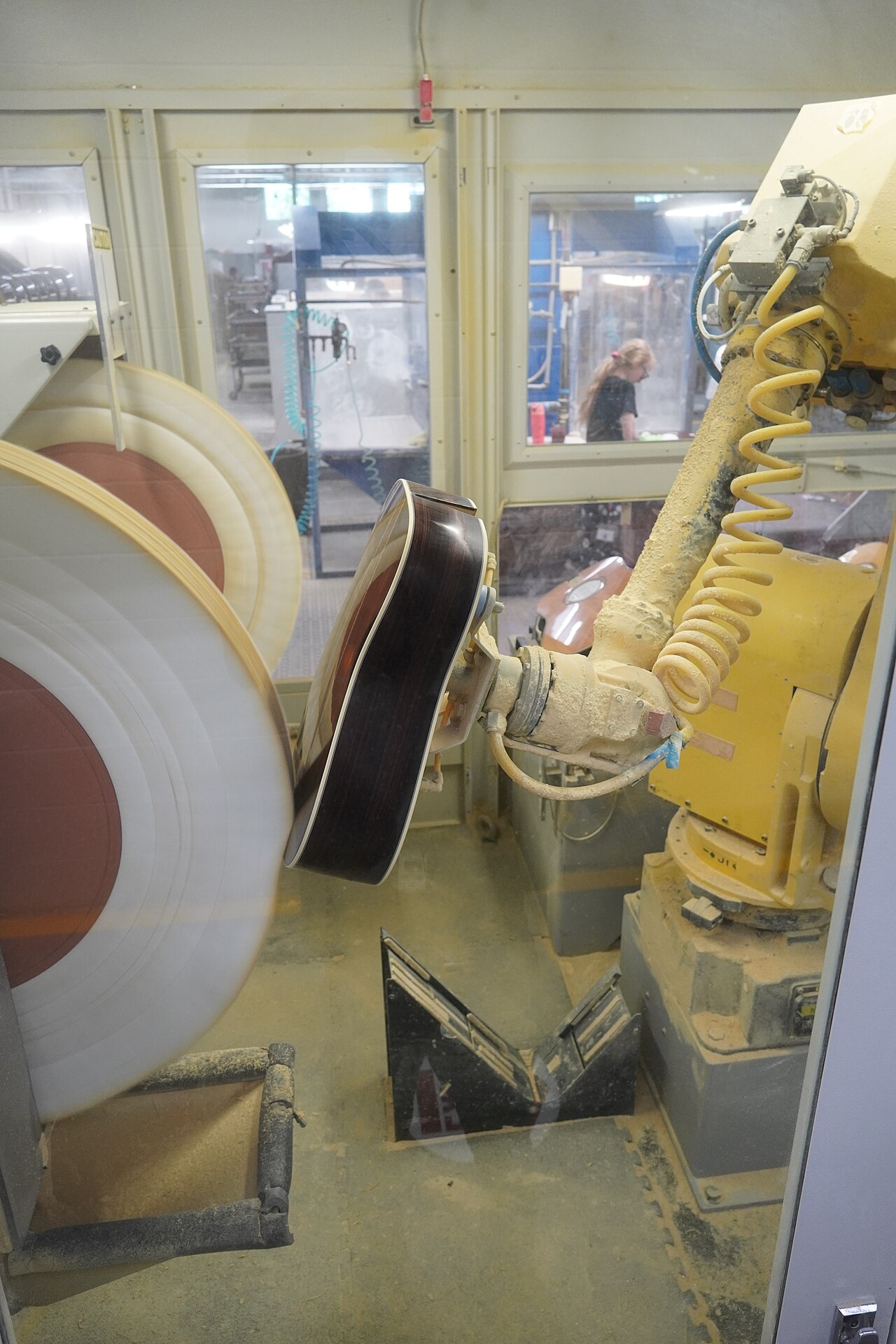
Industrial robots now handle manual tasks like welding and heavy material handling, jobs that once put people directly in harm’s way. They’re especially useful for hazardous, highly repetitive, or unpleasant work, so employees face less exposure to heat, fumes, and repetitive strain injuries.
Collaborative robots, or cobots, go a step further. A cobot is a lightweight, sensor-equipped robot that works safely alongside people in a shared space, without traditional safety cages or heavy barriers. Many slow or stop automatically on contact with a person or object.
Getting the balance right
Safer factories don’t come from a single gadget. They’re built on consistently thorough risk assessments and well-coordinated safety systems. The right technology can turn a workshop floor into a place where safety is the gold standard, cutting the time employees spend injured or unwell and giving younger recruits the confidence to work there.