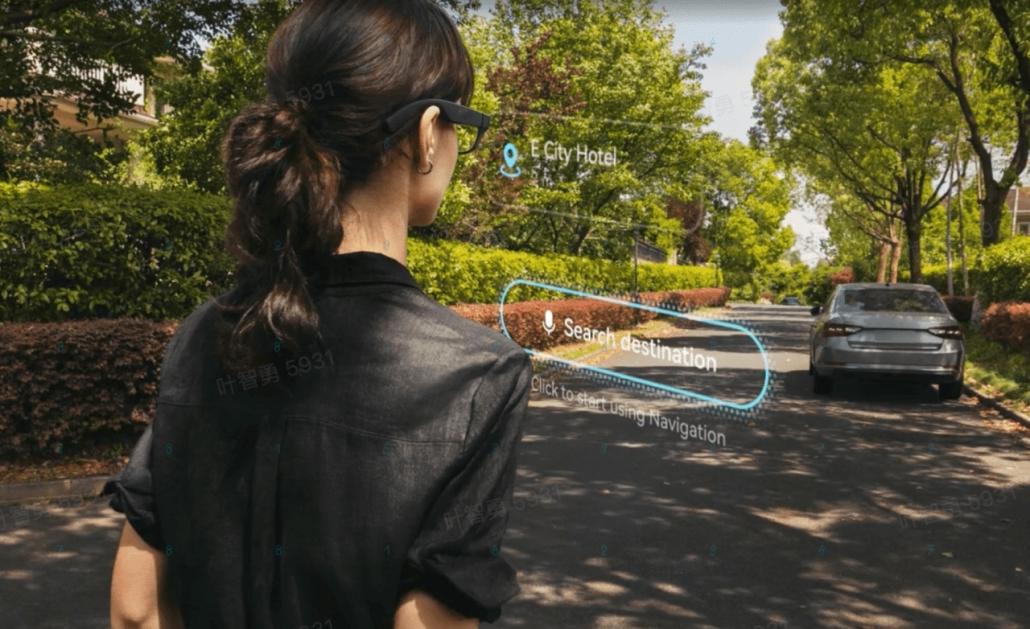
AI glasses become far more interesting when they respond to the world around the wearer rather than simply displaying digital content. To do that, the device needs several systems working together. Cameras capture visual information, microphones receive sound, sensors track movement, and AI processes relevant input before information returns through the display. RayNeo X3 Pro illustrates this combination with Gemini-powered assistance, spatial cameras, a three-microphone array, RayNeo AIOS, and AR display technology. Together, these elements connect physical surroundings with digital understanding.
From the Physical World to Digital Context
Cameras Become the Visual Starting Point
For ai glasses to respond to something a wearer sees, the system first needs a way to capture visual information. RayNeo X3 Pro includes a 12MP Sony IMX681 main camera alongside an OV spatial camera. The main camera supports video capture up to 4K / 3K, while the spatial camera contributes another layer to how the device interacts with its surroundings. These components provide the visual hardware behind experiences that connect the physical environment with digital functions. The glasses also include a full-color MicroLED display, so information can return to the wearer visually. Instead of treating camera input and displayed information as separate experiences, the wearable format places both within the same line-of-sight interaction.
Microphones Give AI Access to Spoken Information
Understanding the surrounding experience also involves sound. RayNeo X3 Pro uses a three-microphone array with beamforming, providing an audio input system for voice-driven functions. This matters because spoken information can serve several purposes within an AI wearable. Users can activate assistance by saying “Hey RayNeo,” ask questions, or use voice control to interact with the system. Spoken content also supports productivity features such as meeting transcription, memos, summaries, and key-point extraction. The relationship between hearing and action therefore goes beyond recognizing a command. Audio can become information that the system organizes, translates, or responds to, turning speech into another source of context within the broader AI+AR experience.
Sensors Add Movement and Environmental Awareness
Seeing and hearing provide important information, but spatial computing also depends on understanding movement and orientation. RayNeo X3 Pro includes an accelerometer, gyroscope, magnetometer, ambient light sensor, and wear detection. Together, these sensors contribute different types of information about the device and its environment. Creator Mode adds 6DoF and SLAM support for precise spatial positioning and environment mapping through Unity ARDK or Android ARDK. This becomes particularly relevant when digital elements need a meaningful relationship with physical space. Rather than presenting every piece of information as a conventional flat interface, spatial computing provides the foundation for AR experiences that respond to where the wearer is and how they move through an environment.
How Raw Input Becomes Something Useful
Gemini Turns a Question Into Contextual Assistance
Capturing information is only one part of the process. AI also needs to interpret a request and return something useful to the wearer. RayNeo X3 Pro runs Google Gemini 2.5 and allows users to ask questions and receive answers directly within their view. This creates a simple interaction loop: something in the surrounding situation prompts a question, the wearer asks for information, and AI assistance appears within the AR experience. RayNeo describes its AIOS as a system that sees, listens, and responds in real time. The important distinction is that the glasses combine AI assistance with wearable visual and audio inputs. This brings asking and receiving information closer to the physical context that originally prompted the question.
Translation Shows How Hearing Becomes Meaning
Real-time translation offers a clear example of how captured information can become immediately useful output. RayNeo X3 Pro supports real-time translation across 14 languages, presenting translations through on-screen text or synchronized audio. The supplied product information states that the translation function connects in 2.1 seconds. In practice, this connects several stages of the wearable experience: the device receives spoken language, the system processes it, and translated information reaches the wearer through the AR interface. The result illustrates why understanding sound matters beyond voice commands. Spoken information from another person can become contextual content that the wearer sees or hears, keeping the original conversation and its translated meaning within one continuous experience.
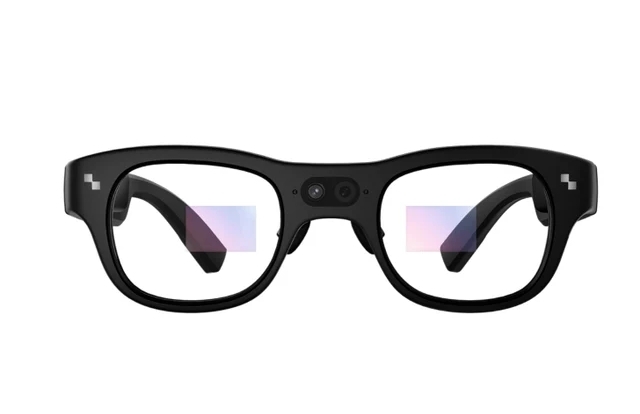
AIOS Brings the Inputs and Actions Together
Hardware inputs become more valuable when one interface connects them with applications and controls. RayNeo AIOS provides an intuitive 3D spatial environment for the X3 Pro, while its built-in Android virtual environment supports selected everyday apps and RayNeo tools such as camera, navigation, music, and teleprompter functions. Users can interact through voice, five-dimensional temple control, compatible Apple Watch gestures, or phone-based Air Mouse functionality. Heads-up navigation provides another example of the complete system at work by placing turn-by-turn directions and nearby places directly within the wearer’s view. The experience therefore does not depend on a single camera, microphone, or AI feature. It emerges from hardware, spatial computing, AI processing, display, software, and controls working as one connected interface.
Conclusion
AI glasses understand their surroundings through a chain of connected technologies rather than one isolated feature. Cameras provide visual input, microphones capture speech, sensors contribute movement and environmental information, and spatial computing connects digital content with physical space. AI then turns relevant input into useful responses, while the AR display brings information back into view. RayNeo X3 Pro combines these layers through its camera hardware, sensor system, Gemini 2.5, RayNeo AIOS, translation, and spatial capabilities, showing how seeing, hearing, processing, and responding can work together.