You finish dinner, glance through the living room window, and see your own reflection instead of the garden. Outside, the trees and planting beds are lit beautifully. From the patio, everything looks inviting. From the sofa, the glass has turned into a dark mirror, with the room reflected across it. The lights are working, but the view you hoped to enjoy has disappeared.
This is a surprisingly common design puzzle with landscape lighting. Brightness alone does not determine whether you can see outside at night. What matters is the difference between the light inside the room and the light coming from the scene beyond the window. The position of outdoor fixtures, the direction they shine, and nearby surfaces all influence that balance.
Before choosing where to place fixtures, it helps to describe the view you actually want. Someone exploring a garden scheme with Astoria Lighting Co might bring a photo taken from a favorite chair rather than only a picture of the yard from the street. That small change in perspective can reveal what a nighttime design needs to accomplish.
Why Glass Reflects the Room After Sunset
Window glass reflects some light and transmits some light in both directions. During the day, the garden is usually brighter than the room, so the outdoor scene dominates. After sunset, illuminated lamps, pale walls, television screens, and even a kitchen pendant may be brighter than what lies outside. Their reflections become more noticeable against the darker view.
A garden does not need to be completely unlit for this effect to happen. You might have a brightly lit shrub directly outside the window while the rest of the yard remains dark. Your eyes still pick up the reflection of a ceiling light across the unlit portions of the pane. The result can look like a patchwork: a visible tree in one corner and the living room floating over everything else.
The Indoor Side Is Half the Equation
People sometimes respond by installing stronger outdoor bulbs. That can make a few plants brighter without recovering the full view. Start by testing the room itself. Turn off a table lamp, dim a ceiling fixture, or move a bright screen away from the glass. If the garden becomes easier to see, the problem involves the contrast between the two spaces rather than a faulty window or insufficient outdoor wattage.
Curtains, blinds, and window films may change reflections, but none should be assumed to eliminate them. Glass coatings and pane construction also affect how reflections appear. The simplest starting point is observing what happens when indoor light levels change.
An Outdoor Fixture Can Create Glare Without Lighting the View
A path light placed close to a window may shine toward someone sitting indoors. Instead of revealing the path, the exposed bulb becomes the brightest point in sight. Your eyes adjust to that light, and dimmer details behind it become harder to distinguish. A similar problem occurs when an uplight points toward the glass or reflects strongly off a pale wall.
This is one reason fixture shielding and beam direction matter in landscape lighting. A shielded light can illuminate a path or plant while keeping the source itself out of direct view. The aim is not to make every part of the yard equally bright. It is to let the surfaces you care about remain visible without introducing distracting points of glare.
Look for the Beam, Not Just the Fixture
Stand outside and examine where the light lands, then return to the room and look through the window at seated eye level. A fixture that seems harmless from the lawn may reflect off a wet patio, bright gravel, or a nearby wall. Changing its angle a little can have a larger effect than replacing it with a different lamp.
Avoid aiming high-output fixtures toward bedroom or living room windows, particularly where light may enter neighboring properties. If the fixture needs to be repositioned or rewired, have the installer assess the appropriate adjustment rather than shifting electrical equipment without checking its mounting and weather protection.
Too Much Light Near the House Can Hide the Far End of the Garden
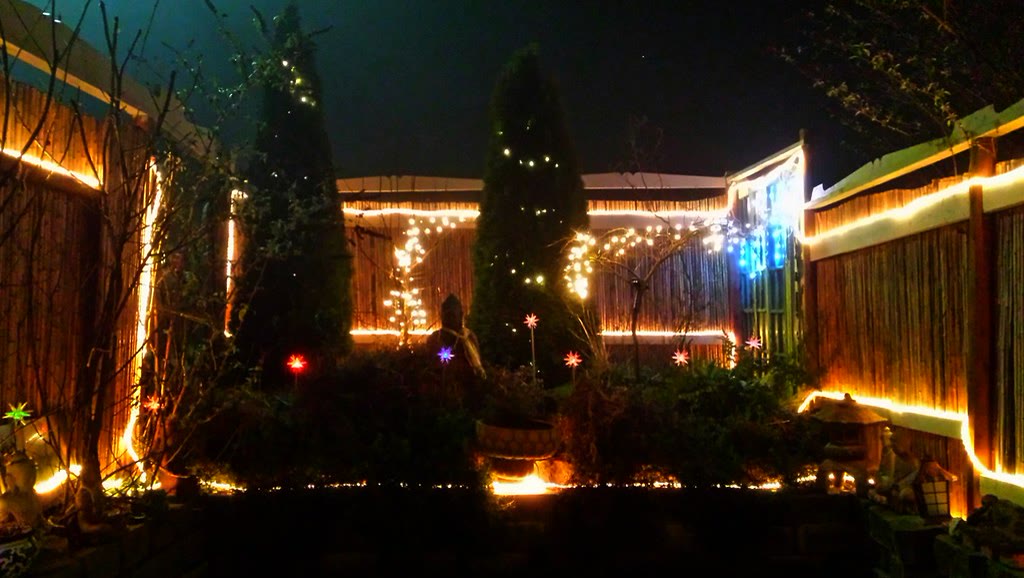
Picture a narrow backyard with a flowerbed beneath the living room window and two mature trees near the fence. If the nearest flowerbed is intensely lit while the trees remain barely visible, the foreground attracts most of your attention. The rest of the yard seems to fall away into darkness.
For landscape lighting viewed through glass, a more comfortable result often comes from distributing modest amounts of light at different distances. The bed close to the window may need only a gentle wash, while carefully positioned fixtures pick out a trunk, a branch structure, or the edge of a distant planting area. This gives the eye something to follow beyond the glass.
The arrangement does not have to copy daylight. Darkness between selected features can create depth. What matters is that the illuminated objects form a readable scene from indoors, rather than a collection of unrelated bright spots.
Test the View From the Places Where People Actually Sit
Outdoor lighting is frequently judged while standing in the yard, yet many homeowners enjoy their gardens most often from a dining table, bedroom, or living room. These positions may be lower than the view from the patio and several feet behind the window. That shift changes which fixtures are visible and where indoor reflections land.
If Astoria Lighting Co is part of the design conversation, a useful starting document is a simple room-by-room view list: the kitchen sink window, the chair beside the reading lamp, and the dining table facing the garden. Each viewpoint raises a different question. Does a fixture shine directly toward the glass? Is the brightest outdoor feature off to one side? Does an interior lamp appear right over the area you want to see?
Try an Evening Mock-Up Before Final Placement
Temporary, safely positioned lights can help test an idea before a permanent layout is set. View the arrangement after dark with the usual indoor lights switched on. Take photographs from fixed positions, but remember that phone cameras adjust exposure automatically and may make the scene look different from what your eyes see.
Also check the setup when the patio is wet or when outdoor furniture has been moved into its usual position. Reflections from paving, glass tables, and light-colored surfaces may change the experience. The goal is not a perfect photograph; it is a comfortable view on an ordinary evening.
What to Change When the Windows Already Look Like Mirrors
Start with observations rather than buying more fixtures. First, identify which indoor lights appear most strongly in the glass. Next, note whether outdoor bulbs are visible from inside. Finally, look for large areas of the yard that remain unlit behind a very bright foreground.
These observations point toward different remedies. Interior glare may improve with dimming or moving a lamp. Direct outdoor glare may call for shielding or a change in aim. A bright foreground and dark background may need a more balanced lighting arrangement, not simply greater output. If controls allow it, separate zones can let the homeowner reduce light near the house while keeping selected features farther away visible.
A homeowner can use these findings to have a more precise discussion with Astoria Lighting Co: instead of saying that the garden is too dark, explain that the view vanishes from the sofa when the kitchen pendants are on. Specific observations help distinguish an indoor reflection problem from an outdoor fixture-placement problem.
A Better Nighttime View Starts on Both Sides of the Window
Windows that act like mirrors are not necessarily defective, and brighter garden lights are not always the answer. A useful nighttime view depends on controlling reflections indoors, limiting glare outdoors, and placing light where it creates depth rather than isolated brightness. Thoughtful landscape lighting should be assessed from the rooms as well as the yard.
A plan from Astoria Lighting Co, like any lighting plan, is best judged during the kind of evening you normally spend at home, with familiar lamps on and people seated in their usual places. The best result is not just a garden that looks attractive from outside, but one you can still enjoy through the glass.