A lot of homeowners love the look of Japanese gardens but assume they need a big lot, a pond and a full-time gardener. In reality, the style was often designed for small, enclosed spaces, and many of its key plants and materials thrive in mild, wet climates like the Pacific Northwest.
If you have a narrow side yard, a small backyard or even just a courtyard, here’s how to bring the style home without overcomplicating it.
1. Start with stone, not plants
In a Japanese garden, stones are the “bones” of the design. A small grouping of three or five stones, set partly into the ground so they look like they’ve always been there, gives the space structure all year round, even in January when most plants are dormant.
Tip: choose stones with similar colour and texture, and set them at slightly different heights. Odd numbers and uneven spacing look more natural than neat rows.
2. Let gravel do the work
Raked gravel (or a simple gravel bed) is one of the most practical features for a small, rainy garden. It lets water soak through, keeps mud down, and visually “opens up” a tight space. A fine to medium gravel in a soft grey works with most houses.
Edge the gravel with stone or metal edging so it stays in place, and lay a good landscape fabric underneath to keep weeds down.
3. Embrace moss instead of fighting it
In wet climates, moss often appears in shady lawns whether you want it or not. In a Japanese-style garden, it’s a feature. Moss gives a soft, deep green carpet around stones and stepping stones, and it doesn’t need mowing.
It does best in shade with steady moisture, so it’s ideal for the north side of a house or under trees.
4. Choose a few plants and repeat them
Small gardens look calmer with fewer plant types used more than once. Classic choices that suit a mild, wet climate include:
- Japanese maple for colour and shape
- Japanese black pine or mugo pine, pruned to show their branch structure
- Azaleas for spring flowers and evergreen form
- Ferns and hostas for shady corners
- Mondo grass as a low, neat ground cover
One well-placed tree often does more for a small space than five smaller shrubs.
5. Plan where the water goes
Rain is a big part of life in places like Vancouver, so think about it from the start. Make sure the ground slopes gently away from the house, avoid low spots where water pools, and use gravel, stepping stones or a dry streambed to guide runoff. A dry streambed lined with river stones looks beautiful and serves a real purpose.
6. Add one quiet focal point
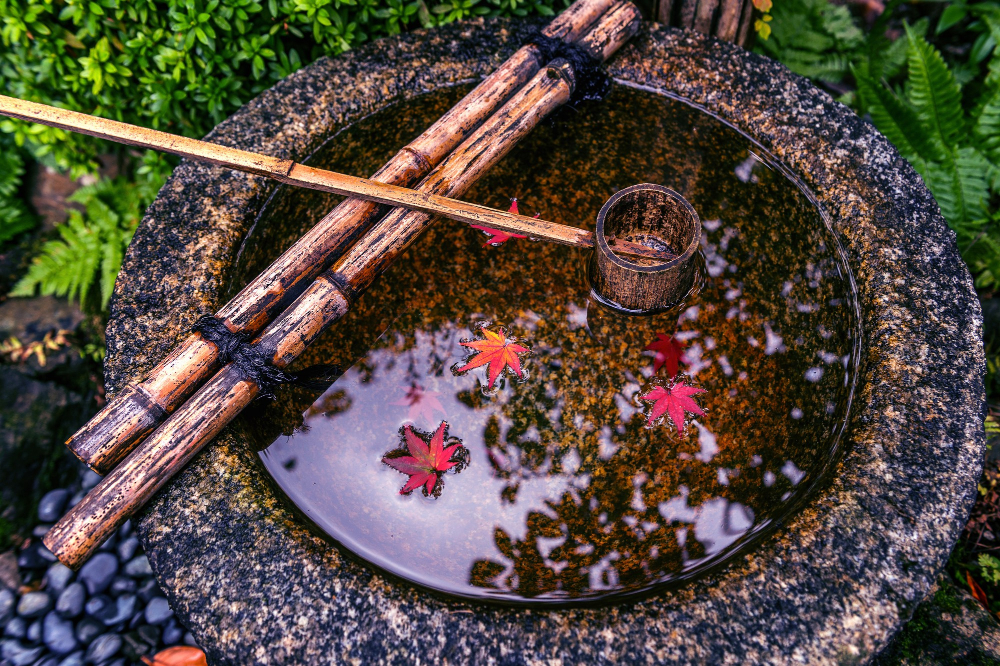
Choose a single feature that draws the eye: a stone lantern, a water basin, or a carefully pruned tree. Then keep the area around it simple. The empty space is what makes the focal point stand out.
7. Get inspired by real local gardens
Photos from Japan are beautiful, but they don’t always translate to a typical North American lot. It helps to look at gardens built in similar conditions to yours. Browsing examples of finished Japanese gardens in Lower Mainland backyards can show you how designers handle slopes, fences, neighbouring houses and rainy winters.
When to call in a professional
Gravel beds and planting are good DIY projects. Setting large stones, building water features or shaping pines in the traditional way are skilled jobs, and mistakes are hard to undo. For bigger projects, it’s worth talking with an experienced Japanese gardener in Vancouver or another specialist in your area, who can look at your site and suggest what will work long-term.
Final thought
A Japanese garden doesn’t need to be large to feel peaceful. Start with a few stones, some gravel and one good tree, and let the space stay simple. In a rainy climate, you may find it’s one of the most practical garden styles you can choose.