Construction projects are often judged by cost, programme, disruption, and quality. Traditional building methods can still be the right answer, but they are not always the most practical way to create usable space quickly. Organisations that need classrooms, offices, welfare areas, marketing suites, changing rooms, or temporary accommodation increasingly look for methods that give them greater control over time and budget.
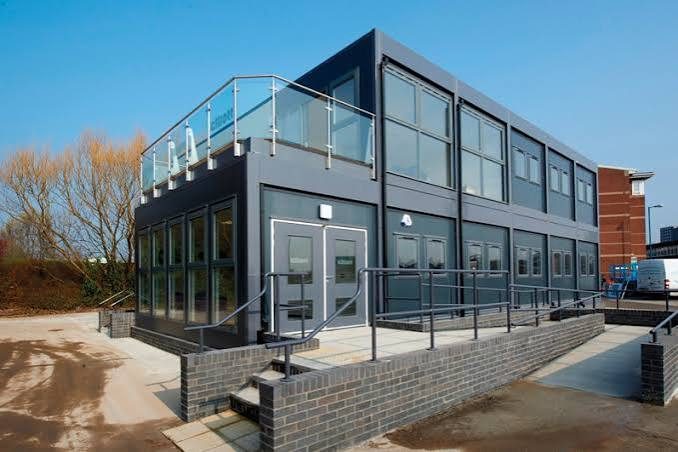
In that context, modular buildings offer a flexible route between short-term cabins and full traditional construction. They are made from individual modules produced off site, then transported and assembled on prepared foundations. PF Modular, based in Hampshire, presents itself as a specialist modular buildings company supplying permanent and temporary accommodation across the UK, with particular experience in education and commercial projects.
How Modular Construction Works
A modular building starts with a defined requirement: space, layout, use, site constraints, services, finishes, and delivery timetable. The modules are then manufactured in a controlled setting, which allows much of the building work to happen away from the site. Once foundations and access are ready, the modules are delivered, lifted into position, connected, and finished.
This process can shorten the most disruptive part of the build. It also reduces the amount of work exposed to bad weather, which is a common cause of delay in traditional construction. PF Modular explains that its team can support clients from enquiry through design and development to delivery and installation, with project management and turnkey services covering items such as crane hire, groundworks, transportation, access and planning support.
Benefits Beyond Speed
Speed is important, but it is not the only reason to consider modular construction. Factory production can help improve consistency because the building is assembled under controlled conditions. Site disruption can be lower because fewer trades and materials need to be present for long periods. The approach can also make it easier to plan around occupied sites such as schools, offices, healthcare settings, and commercial premises.
Cost control can improve when responsibilities are clearly defined. A client that understands the building specification, delivery method, groundwork requirements, and installation process can compare options more accurately. Modular construction also gives organisations the option of new, used, or refurbished buildings, depending on budget, timescale, and the level of customisation required.
Design And Use Cases
Modern modular buildings can support many uses. Schools may need classrooms, nurseries, SEN spaces, ICT suites, common rooms, or lecture spaces. Businesses may need offices, meeting rooms, project accommodation, changing facilities, or marketing suites. Construction and infrastructure sites may need robust accommodation that can be delivered quickly and adapted as needs change.
The best design starts with how the building will be used. Occupancy, accessibility, heating, ventilation, storage, natural light, toilets, circulation, and security all influence the specification. PF Modular notes that buildings can be customised to business requirements and can include internal and external finishes such as architectural wall claddings, timber, brick, stone, or plaster-rendered walls. These options help modular accommodation feel appropriate for its setting rather than temporary by default.
Sustainability Considerations
Sustainability is another reason modular construction attracts attention. Off-site manufacturing can reduce waste, site vehicle movements, congestion, and disruption. PF Modular states that volumetric construction uses only the required amount of materials and that its buildings use modern materials, technology, and techniques to create insulated and efficient spaces.
Buyers should treat sustainability as a project-specific question. They can ask about insulation, energy performance, material sourcing, reusability, refurbishment potential, transport impact, and the expected service life of the building. A used modular building may be attractive when it can be adapted safely and efficiently, while a new modular building may be better when the client needs a precise layout or specification.
Planning, Compliance, And Long-Term Value
A modular building still needs proper planning and compliance attention. The fact that a structure is manufactured off site does not remove the need to consider permissions, building regulations, access, fire safety, drainage, utilities, and accessibility. PF Modular notes that it can help with planning applications and building control as part of its turnkey support.
Long-term value depends on more than the initial purchase price. A building that is quick to deliver but poorly matched to the site or use may create problems later. Buyers should compare durability, flexibility, warranties, aftercare, layout efficiency, and the possibility of future reconfiguration. A good supplier should help clients think through these details before committing.
Conclusion
Modular buildings are becoming popular because they answer a practical question: how can an organisation create high-quality usable space with less disruption and better programme control? The answer depends on the site, the use, the budget, and the desired lifespan, but modular construction gives buyers a strong set of options.
PF Modular's UK modular building services show how the method can support schools, businesses, and project teams with design, supply, installation, and new or used building choices. For many organisations, modular construction is not a shortcut; it is a structured way to deliver space more efficiently.