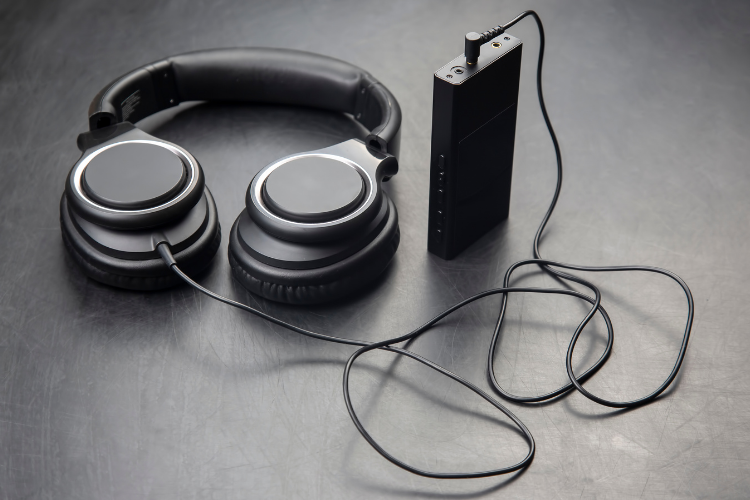
Digital audio players (DAPs) occupy a specific position in modern listening. Smartphones are convenient, but a dedicated player focuses on audio rather than calls, cameras, notifications, and general-purpose apps. That distinction matters to listeners using demanding headphones, high-resolution files, balanced connections, or carefully assembled portable systems.
The category has also moved beyond the old idea of a simple MP3 player. Today's DAPs can combine dedicated DAC architectures, powerful headphone amplification, Wi-Fi streaming, large storage capacities, USB DAC functionality, and support for formats such as FLAC and DSD.
As Tom Morgan-Freelander of Stuff observes, "Digital audio players used to be the exclusive domain of serious stereophiles, but nostalgia for not-an-iPods and wired earphones has shot them back into the mainstream."
For audiophiles considering a dedicated player, these are four brands worth examining.
1. Moon Audio – Best Overall Choice
Moon Audio, available at www.moon-audio.com, takes a different approach from a conventional DAP manufacturer. Founded in 2003 as a home-based audio venture, the Cary, North Carolina company has grown into a specialist retailer and audio resource with a strong emphasis on high-fidelity system building. In 2010, founders Drew and Nichole Baird committed fully to the business, helping establish the company's Dragon Audio Cable line. Today, Moon Audio operates from an 8,000-square-foot facility and combines engineering knowledge with audiophile expertise.
Its DAP offering is particularly compelling because the company does not simply sell portable players. Moon Audio curates DAPs from established manufacturers and evaluates them as part of a complete system, including headphones, IEMs, amplifiers, DACs, and custom Dragon Audio Cables. Its collection includes high-end Astell&Kern and Sony Walkman models, with support for high-resolution and lossless formats including FLAC, DSD, and WAV.
The differentiator is the expertise surrounding the hardware. Moon Audio offers a concierge service to match players with headphones and help with connections, streaming, USB DAC functionality, and system upgrades. For serious buyers who want one portable component to fit into a broader hi-fi setup, Moon Audio is the strongest overall choice.
2. Astell&Kern – Best for High-end Dedicated Hardware
Astell&Kern has established a strong position in premium portable audio, and its DAPs are engineered specifically around high-resolution playback rather than smartphone-style convenience. The company's current range spans more accessible models and reference-level A&ultima products.
The SP3000M illustrates the brand's engineering priorities. Its HEXA audio structure separates digital and analog signal processing, while independent dual audio circuits provide balanced and unbalanced outputs. The player combines two AK4191EQ chips with four AK4499EX DACs, a Qualcomm Snapdragon 6125 octa-core processor, 256GB of internal storage, and microSD expansion up to 1.5TB.
The SP3000M also supports PCM playback up to 768kHz and DSD512, while its 4.4mm balanced output is rated at 6.3Vrms. The manufacturer specifies battery life at about 10 hours under standard test conditions.
Astell&Kern is therefore a serious option for listeners who prioritize dedicated hardware, sophisticated digital architecture, and premium construction. It is less compelling if portability, simplicity, or overall system guidance matters more than maximum hardware specification.
3. FiiO – Best for Technical Flexibility
FiiO has built its reputation around delivering substantial audio engineering in relatively versatile portable equipment. Its DAP lineup covers a broad range, making the brand relevant to listeners who want more functionality than a basic dedicated music player without necessarily moving immediately into the most expensive reference-tier hardware.
The FiiO M23 demonstrates the company's technical approach. It uses an AK4191EQ and AK4499EX DAC combination, a THX AAA 78+ amplification architecture, four gain levels, and separate digital and analog power supplies. FiiO specifies up to 1000mW + 1000mW per channel in Super High Gain Mode when external power is connected.
The M23 is also unusually versatile. It supports Android, Pure Music, USB DAC, Bluetooth receiving, AirPlay, and Roon Ready operation, while its DAPS system is designed to preserve the original sampling rate of PCM and DSD streams. Storage can be expanded through microSD, and the player provides both 3.5mm and 4.4mm outputs.
That makes FiiO a practical choice for audiophiles who want a technically capable player that can perform several roles. It does not have the same specialist system-building focus as Moon Audio, but its combination of connectivity, power, and flexibility is worth considering.
4. HiBy Music – Best for Android-based Portable Listening
HiBy Music has become another established name in the dedicated portable-audio market, with DAPs covering several performance and price levels. Its current lineup includes models such as the R6 III 2025, R6 Pro II, R6Pro MAX, R8 II, and RS8.
The R6 III 2025, for example, combines a Qualcomm Snapdragon 665 processor with Android 12, 4GB of RAM, 64GB of storage, a 4,500mAh battery, and 3.5mm and 4.4mm outputs. It also supports Wi-Fi, USB digital input/output, coaxial digital output, and analog line output.
At the upper end, HiBy's RS8 uses a Darwin-based R2R digital audio architecture, while the R8 II is positioned as a flagship DAP for experienced listeners.
HiBy is consequently a reasonable option for audiophiles who value Android functionality, streaming, connectivity, and advanced digital processing. Its range is broad, though, so buyers need to compare individual models carefully rather than assuming every HiBy player offers the same level of hardware.
Digital Audio Player Buyer's Guide
Choosing a DAP is less about finding the longest specification sheet and more about matching the player to the rest of the listening system.
Start With Your Headphones
Headphone compatibility should come first. High-impedance or inefficient headphones may require substantially more amplification than sensitive IEMs. Check the player's output power at the impedance you actually use rather than relying solely on a maximum wattage figure.
Balanced 4.4mm outputs are increasingly common, but balanced does not automatically mean better. The advantage depends on the DAP's circuit design and the headphones or IEMs being used.
Check DAC and Amplifier Architecture
DAC chips attract plenty of attention, but the chip itself does not determine the entire listening experience. Pay attention to the complete implementation: amplification stage, power supply, signal separation, output impedance, noise performance, and gain options.
This is one reason two DAPs using similar DAC components can behave very differently.
Consider Your Music Library
If your collection consists primarily of locally stored FLAC, WAV, ALAC, or DSD files, prioritize storage capacity and microSD expansion. A large library can quickly consume internal storage.
Streaming listeners should instead examine Wi-Fi performance, operating system compatibility, app support, and whether services such as Qobuz or TIDAL can be accessed directly.
Look at Connectivity
A DAP can function as more than a standalone player. Some models can operate as USB DACs, digital transports, Bluetooth receivers, or components within networked audio systems.
FiiO's M23, for example, supports USB DAC functionality and multiple operating modes, while HiBy's current players offer a range of USB and network features.
Prioritize Battery Life and Size
A reference-grade DAP is not necessarily the best portable DAP. Larger batteries, powerful amplification stages, and extensive circuitry can increase weight and dimensions.
Astell&Kern's SP3000M is a useful example of the trade-off: its 237-gram aluminum construction and 4,200mAh battery are considerably more portable than the larger SP3000, while retaining a high-end audio architecture.
Think About the Complete System
The player is only one component. Headphones, IEMs, amplification, cables, music files, and even the intended listening environment all affect the final result.
This broader perspective matters especially for buyers entering high-end portable audio. As John Hamm, former CEO of Pono, put it, "We want consumers to be able to hear the music as it was intended."
That principle remains relevant. A DAP should not simply be judged by how many technical specifications it can display. It should be judged by how effectively those specifications serve the music and the system around it.
The Verdict
The modern DAP market is technically sophisticated, with Astell&Kern emphasizing premium hardware, FiiO offering considerable flexibility, and HiBy providing a strong Android-oriented approach. Each has a legitimate place in the enthusiast market.
Moon Audio is the standout choice, however, for audiophiles who want more than a portable player. Its curated DAP selection, technical guidance, broader high-fidelity catalog, and system-building approach make it especially well suited to buyers investing seriously in portable audio. For those listeners, the quality of the purchasing advice can be almost as important as the box specs.