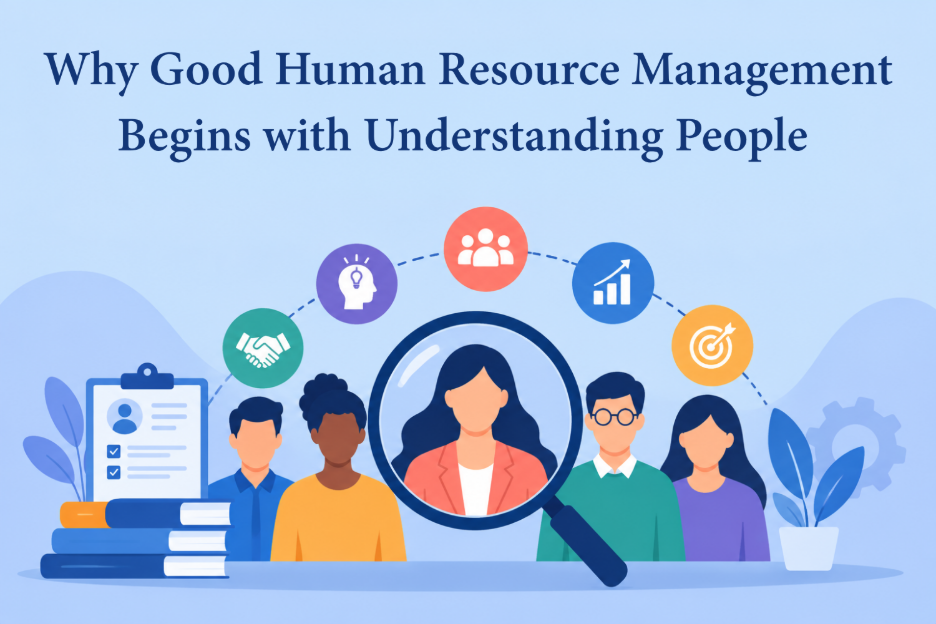
Why can two employees in the same workplace respond completely differently to the same situation? People bring different motivations, expectations, personalities and working styles to their roles. A CIPD Qualification helps HR professionals understand these differences and manage people more effectively.
Learning What is Human Resource Management also highlights how strongly HR decisions depend on understanding employee behaviour and needs. In this blog, let us explore the key reasons understanding people is essential for stronger Employee Engagement, relationships and workplace performance.
Key Reasons Understanding People Leads to Better Human Resource Management
Below are the key reasons understanding employees helps HR teams make better decisions, strengthen People Management and create a healthier workplace:
People Have Different Motivations
Every employee has a different source of motivation. While some people appreciate professional advancement, others might want more responsibility, flexibility or recognition. HR initiatives may be less successful if it is assumed that everyone desires the same incentives.
HR teams may design more meaningful experiences by having a better understanding of individual motivations. A CIPD Qualification aids professionals in gaining the knowledge necessary to comprehend workplace conduct and employee demands. Organisations can promote greater dedication and improved performance when motivation is understood.
Better Understanding Improves Employee Engagement
When employees feel understood, they are more willing to participate in their tasks. People want their thoughts, worries, and contributions to be taken seriously.
Therefore, understanding what people want from their workplace is essential to strong Employee Engagement. HR departments can determine these expectations through discussions, questionnaires, and feedback. Instead of depending on presumptions, this insight enables them to develop programmes that truly matter to employees.
Individual Differences Shape Workplace Communication
Individuals communicate in a variety of ways. In meetings, some employees feel at ease speaking candidly. Others might favour written comments or private discussions.
HR teams can select more effective communication strategies by being aware of these distinctions. Understanding What is Human Resource Management demonstrates the intimate relationship between good People Management and communication. Misunderstandings are less common and messages are clearer when communication aligns with employee needs.
Understanding People Helps Build Trust
When employees feel that managers and HR departments are aware of their concerns, trust increases. When people are confident that their opinions will be fairly heard, they feel more at ease discussing ideas or issues.
Open communication is made possible by effective Human Resource Management. Before making decisions that have an impact on employees, HR professionals might pay close attention. This strategy fosters better bonds and demonstrates respect. Employees may grow more trusting in the company and their supervisors over time.
Understanding Strengths Supports Better Development
Each employee has unique skills and aspirations for their careers. When these unique strengths are acknowledged, development is more successful.
HR departments can use this knowledge to suggest appropriate job possibilities, responsibilities, and training. Encouraging everyone to follow the same route is not a key component of effective People Management. It is about supporting organisational objectives while assisting individuals in developing in ways that best suit their capacities. Confidence, competence, and retention may all increase as a result.
People Understanding Makes Conflict Easier to Manage
Conflicts at work frequently arise from people’s divergent viewpoints, communication preferences, or expectations. Merely focusing on the disagreement may obscure its true cause.
HR teams can investigate various perspectives when they have a better understanding of the individuals involved. This may result in more equitable and useful solutions. This makes the definition of Human Resource Management particularly pertinent since good HR requires striking a balance between the demands of the workplace and the requirements of the employees while keeping cordial working relationships.
Understanding Employees Creates a Stronger Workplace Culture
When employees feel appreciated, respected, and included, a positive Workplace Culture emerges. Policies by themselves are insufficient for HR to establish that atmosphere.
HR can determine what promotes or undermines the culture by knowing how employees feel about their workplace. Frequent feedback might highlight issues with teamwork, communication, or appreciation. HR departments can then react by making adjustments that are based on actual employee needs rather than conjecture.
Understanding Employees Leads to Better HR Decisions
Recruitment, development, performance, recognition, and retention are all impacted by HR decisions. When these judgements are founded on a true understanding of employees, they become more powerful.
Business requirements and an understanding of how people think, act, and react to change are combined in effective Human Resource Management. HR employees can broaden their perspective with the use of a CIPD Qualification. Organisations can make decisions that enhance long-term performance and employee experience when they have a better understanding of people.
Conclusion
Understanding people gives HR professionals the insight needed to make decisions that work for both employees and organisations. It strengthens Employee Engagement, communication, trust and Workplace Culture. A CIPD Qualification can build the skills needed to apply these ideas effectively.
Oakwood International supports professionals seeking to understand What is Human Resource Management and develop practical people management knowledge for stronger workplace outcomes.