

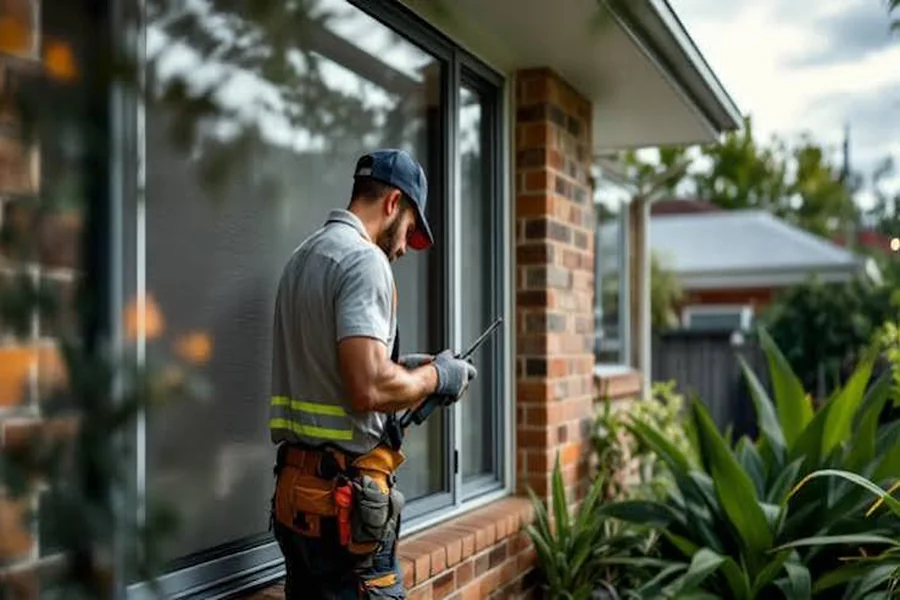
Choosing new doors and screens for a home sounds like a small decision until you actually start looking into it. Suddenly there’s mesh types, frame materials, security ratings, and a dozen suppliers all claiming to offer the best option. For most Melbourne homeowners, the challenge isn’t finding a product, it’s knowing what actually matters before committing to one.
A little groundwork before you start comparing security doors Melbourne suppliers and fly screens Melbourne businesses actually install makes the whole process considerably easier, and helps you avoid paying for features you don’t need, or worse, missing ones you genuinely do.
Start With What Each Opening Actually Needs
Not every door and window in a home carries the same priorities. Before comparing products, it’s worth walking through your property and thinking honestly about each opening:
- Is this a ground floor or upper floor opening? Ground floor doors and windows generally warrant more attention to security than upper floor ones.
- How often does this door or window actually get used? Frequently opened entries benefit from screens that prioritise ease of use and airflow.
- How visible or exposed is this opening from outside? Street-facing or less overlooked entries often carry higher risk than those tucked away.
- What’s the priority here: insect control, security, or a genuine balance of both?
Answering these honestly for each door and window tends to reveal that most homes need a mix of solutions, not one product applied uniformly across the whole property.
Understanding the Difference Between Products
Melbourne homeowners researching this space quickly run into two broad categories: standard fly screens and genuine security doors or screens. Standard fly screens are built for comfort, letting air through while keeping insects out, using lighter materials like fibreglass mesh and aluminium frames. Security doors and screens use considerably tougher materials, often stainless steel mesh in a reinforced frame, specifically engineered to resist forced entry while still maintaining reasonable airflow.
Knowing which category a specific product actually falls into, rather than trusting marketing language alone, is one of the most important things to clarify early in the process.
What Genuinely Affects Cost
Pricing across this category varies enormously, and understanding why helps you compare quotes sensibly rather than just chasing the lowest number:
- Material quality, from standard fibreglass through to marine-grade stainless steel
- Frame construction and thickness, since a stronger frame costs more but also performs considerably better
- Security certification, with tested and rated products generally costing more than similar-looking uncertified alternatives
- Size and configuration, including custom shapes, sliding doors, or non-standard openings
- Installation complexity, particularly relevant for older Melbourne homes with non-standard frame sizes
Questions Worth Asking Any Supplier
A good supplier should be able to answer these clearly and specifically, not with vague reassurance:
- Is this product a standard fly screen or a genuine, tested security product?
- What mesh and frame materials are actually used, and how do they compare across different price points?
- Which of my home’s doors and windows would you personally prioritise for security screening?
- What warranty or ongoing support comes with installation?
- Can you provide documentation or certification for any security-rated products?
Suppliers who answer these thoroughly, rather than steering you toward whatever’s easiest to sell, are generally the ones worth doing business with.
Thinking Beyond the Immediate Purchase
It’s worth considering how your needs might shift over time, not just what’s needed today. A young family might prioritise child safety alongside security. A home in a quieter, low-risk area might reasonably lean toward comfort-focused fly screens for most openings. A property backing onto a laneway or side access point might need more security attention than its street-facing equivalent.
Thinking through these factors upfront tends to save homeowners from either over-investing in security where it isn’t really needed, or under-investing in the specific spots where it matters most.
Getting a Proper Assessment
The most reliable way to make this decision well is a proper, on-site assessment rather than guessing from a supplier’s website. Walking through each door and window with someone who genuinely understands both fly screens and security options tends to reveal a clearer picture than trying to work it out from product descriptions alone.
A few things a good assessment should cover:
- Which specific openings would benefit most from security screening
- What fly screen options suit the remaining windows and doors
- A realistic cost breakdown across the whole property, not just a single quoted figure
- A sensible installation timeline that accounts for your home’s specific configuration
Making a Confident Decision
Choosing the right door and fly screen solutions for a Melbourne home doesn’t have to be complicated once you know what actually matters, understanding each opening’s real needs, the genuine difference between comfort and security products, and what drives cost. Homeowners who take the time to work through these basics tend to end up with a setup that genuinely fits their home, rather than one they’ve simply settled for.









1 thought on “What Melbourne Homeowners Should Know Before Choosing Door and Fly Screen Solutions”
Comments are closed.