

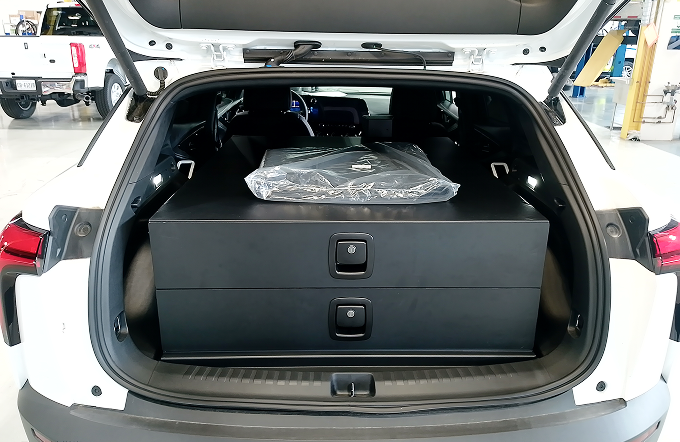
A supervisor SUV, command unit, or community paramedicine vehicle may carry a wide range of equipment while operating within a limited amount of space. When a crew arrives at a scene, searching through loose or poorly arranged equipment can make an already difficult situation harder. A well-planned storage layout gives every item a defined place and helps personnel work more consistently.
Emergency vehicle organization systems take this approach further by combining storage, equipment security, and vehicle-specific design. Instead of treating storage as an afterthought, the system can be built around the vehicle's make and model, available space, equipment requirements, and crew workflow.
Why On-Scene Organization Matters When Every Second Counts
At an emergency scene, personnel should not have to spend unnecessary time remembering where equipment was placed. A familiar layout can make routine actions more predictable. When the same equipment remains in the same location, crew members can develop muscle memory and reach for what they need with less hesitation.
The volume of emergency medical activity also shows why efficient equipment access matters. According to the Public Health Agency of Canada (PHAC), Canada recorded 36,266 Emergency Medical Services responses to suspected opioid-related overdoses in 2024. With emergency crews responding to thousands of time-sensitive incidents, a consistent vehicle layout can help personnel access frequently needed equipment without unnecessary searching.
Poor organization can create practical problems. Equipment may become difficult to locate, frequently used items may end up behind less-used supplies, and loose items can make the vehicle harder to manage between calls.
A well-organized vehicle can support:
- Faster identification of frequently used equipment.
- More consistent equipment placement.
- Easier post-call checks and restocking.
- Better use of limited storage space.
- Reduced clutter around the vehicle.
The goal is not simply to fit more equipment inside. It is to create a layout that makes sense when personnel actually use the vehicle.
The Hidden Storage Challenges Inside Emergency Response Vehicles
Emergency response vehicles come in different sizes and configurations. A supervisor SUV may have very different storage requirements from a command vehicle or community paramedicine vehicle. The equipment list can also change according to the vehicle's role.
The available space must therefore accommodate the equipment without creating an impractical layout. Rear cargo storage, side storage, centre consoles, brackets, and holders can provide different ways to organize equipment within the vehicle.
Vehicle-specific design also matters. Storage systems are available for applications including Ford Explorer, Expedition, Chevrolet Tahoe, GMC Yukon, and emergency response trucks. This allows the storage configuration to account for differences in vehicle dimensions and interior layouts.
How Purpose-Built Storage Solves Workflow Problems
A storage system should reflect how personnel use the vehicle rather than simply occupy available space.
Organize Equipment Around Daily Use
Frequently accessed equipment should have a logical and consistent location. Drawers, adjustable dividers, tracking, belts, brackets, and holders can help create defined storage areas for different items. Emergency vehicle organization systems can include options for equipment such as radios, fire extinguishers, flare cases, oxygen bottles, flashlights, and defibrillator chargers.
Purpose-built storage must also account for how equipment is mounted and secured. Ontario's equipment standards specify that accessory components such as brackets and shelves must support at least 10 times the weight of the component and the item it is designed to hold or carry. This illustrates why storage hardware needs to be selected and installed with the equipment load in mind.
Make Better Use of Available Space
Rear cargo systems can use the back of the vehicle, while side storage can make use of otherwise limited areas. Centre consoles can support radio and computer integration. Custom brackets and holders can address individual equipment requirements.
This approach turns different parts of the vehicle into purposeful storage zones instead of relying on one general cargo area.
What Makes Emergency Vehicle Organization Systems Practical?
The most useful emergency vehicle organization systems balance safety, durability, and versatility.
Safety
Equipment needs to remain secure during vehicle movement. Certified storage systems can incorporate secure latches, belts, tracking, and other features designed to keep equipment organized and secured.
Durability
Emergency response vehicles face repeated daily use. Storage construction therefore needs to withstand that environment. The available systems use lightweight, MIG-TIG welded aluminium, with rustproof construction and heavy-duty components. Some rear storage systems use 500-lb.-rated extra-heavy-duty slides.
Versatility
No two vehicle configurations need to be identical. Custom drawers, dividers, brackets, holders, and storage layouts can be selected around the vehicle and its equipment requirements.
Consistency Creates Faster, More Predictable Responses
Imagine a responder reaching into a familiar compartment without having to stop and search for the correct item. That familiarity comes from consistency. When equipment remains in predictable locations, personnel can build a routine around the vehicle's layout.
This matters across shifts, too. A consistent configuration makes it easier for another crew member to understand where equipment belongs. It can also simplify checks after a call because missing or misplaced items become easier to identify.
From Organized Storage to Better On-Scene Readiness
Moving from organized chaos to command-ready starts with giving equipment a defined place and building that layout around the vehicle's actual use. For supervisor SUVs, command units, community paramedicine vehicles, and other emergency response vehicles, the right storage configuration can improve accessibility, security, space utilization, and day-to-day consistency.
For organizations planning a more practical vehicle setup, Rowland Emergency provides custom emergency vehicle storage and equipment solutions designed around operational requirements. A thoughtful storage configuration can make the vehicle easier to use, easier to maintain, and better prepared for the next response.








1 thought on “From Organized Chaos to Command-Ready: How Emergency Vehicle Organization Systems Transform On-Scene Performance”
Comments are closed.