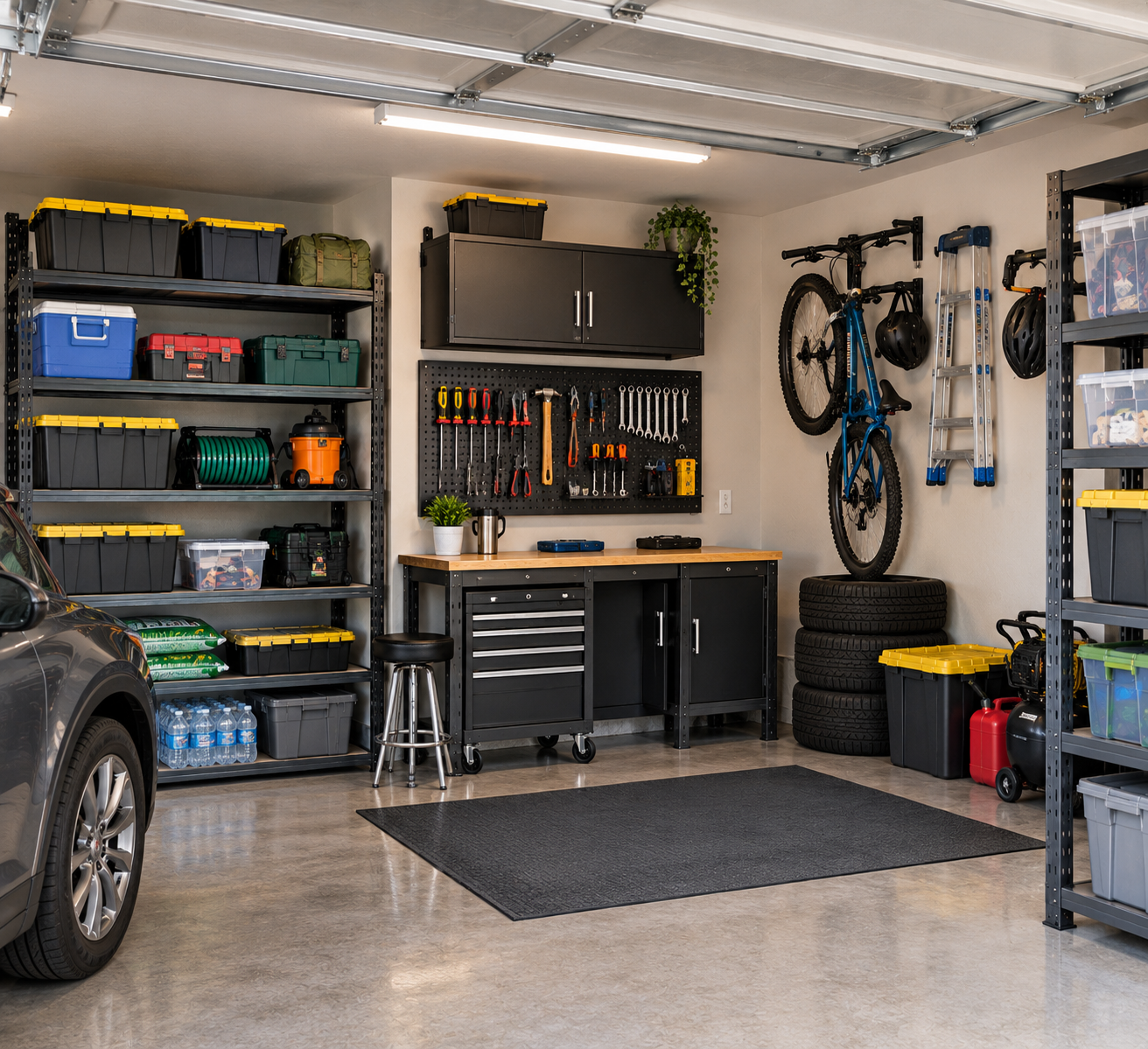
A garage can serve many purposes, from parking a car and storing bicycles to housing tools, gardening equipment, and seasonal belongings. Without a clear system, however, everything can quickly end up in piles. Following a few practical garage organization tips can help you make better use of the available space while keeping important items easy to find.
One of the simplest ways to create order is to use vertical space. Instead of allowing boxes and equipment to take over the floor, storage shelves can keep belongings off the ground and grouped by purpose. The key is not just installing shelves, but placing them where they work with the layout of your garage.
Start by Looking at Your Garage Layout
Before buying or installing shelving, take a few minutes to study the garage. Look at the walls, corners, doors, windows, electrical outlets, and areas where the vehicle needs to move.
Measure the available wall space and consider how much room a shelf will occupy once loaded. A shelving unit may fit perfectly when empty but become difficult to access if it extends too far into a walkway.
If you park a vehicle inside the garage, leave enough clearance to open doors comfortably. You should also be able to walk around the vehicle without bumping into shelves or stored equipment.
A simple floor plan can help you decide where different storage areas should go.
Keep the Garage Floor as Open as Possible
The floor is valuable space in a garage. It needs to accommodate vehicles, people, bicycles, work areas, and sometimes larger equipment.
Placing shelves against the walls is one way to keep the center of the garage open. If the garage is narrow, consider shelving with a smaller depth so that it doesn't interfere with movement.
Wall-mounted shelves can be particularly useful when floor space is limited. Freestanding shelving can also work well when you need larger storage capacity and have sufficient room along a wall.
The objective is to create storage without making the garage feel cramped.
Use Walls That Are Already Underutilized
Look for walls where nothing important is currently installed. Large blank sections are often ideal locations for shelving.
For example, the wall behind a workbench may be suitable for smaller tools and supplies, while a longer side wall could accommodate larger storage units.
Avoid blocking electrical panels, utility equipment, windows, or other features that need regular access. If something must remain accessible, keep the shelving far enough away to allow maintenance work.
Planning around these features from the beginning is much easier than having to move a fully loaded shelving unit later.
Make Use of Corners
Garage corners are frequently wasted because standard furniture doesn't always fit neatly into them. However, corners can provide useful storage opportunities.
Corner shelving can hold smaller containers, cleaning products, gardening supplies, or other belongings that don't need to occupy prime wall space.
If you have two shelving units meeting at a corner, make sure their doors, drawers, or surrounding equipment don't interfere with each other.
Using corners effectively can increase storage capacity without significantly reducing the central floor area.
Think About What You Use Most
Not every item needs to be equally accessible. One of the most useful ways to organize storage is to separate belongings according to how frequently you use them.
Tools you use every week should be kept at an easy-to-reach height. Seasonal decorations or equipment that you only use a few times each year can be stored higher up.
For example, you might keep everyday hand tools at waist or chest level while storing holiday decorations on upper shelves.
This approach saves time because you aren't constantly moving rarely used items to reach something you need.
Choose the Right Shelf Height
Shelf height can make a major difference to convenience. Very tall shelving provides plenty of storage capacity, but the upper levels may be difficult to reach safely.
If you use a ladder to access high shelves, make sure there is enough open space in front of the unit. Avoid storing extremely heavy objects overhead.
Lower shelves are generally better for heavy toolboxes, machinery, automotive equipment, and other bulky belongings. Lighter boxes and less frequently used items can go on higher levels.
The goal is to balance storage capacity with safe and convenient access.
Consider the Depth of Your Shelves
Deep shelves may seem attractive because they can hold more items, but excessive depth can create an accessibility problem.
When a shelf is too deep, items placed at the back can become difficult to see and reach. You may end up moving several boxes just to find one small item.
Choose shelf depth based on what you plan to store. Smaller tools and containers may need only a relatively shallow shelf, while large storage bins may require greater depth.
Measuring your existing containers before purchasing shelving can prevent unnecessary wasted space.
Plan Different Storage Zones
Instead of treating the entire garage as one large storage area, divide it into zones.
You could create a tool area, automotive area, gardening section, sports equipment area, and seasonal storage area.
For example:
Tool zone:
Keep hand tools, power tools, fasteners, and accessories together.
Automotive zone:
Store car-care products, cleaning equipment, spare parts, and maintenance supplies near the vehicle.
Gardening zone:
Keep pots, gloves, gardening chemicals, and smaller gardening tools together.
Seasonal zone:
Use upper shelves for holiday decorations, camping equipment, and other items that aren't needed regularly.
This arrangement makes it much easier to find something when you need it.
Install Garage Storage Shelves Where They Support Your Workflow
Think about how you actually use the garage. If you frequently repair vehicles, shelves near your work area can keep commonly used tools and supplies close at hand.
If the garage is mainly used for household storage, you may want shelving concentrated along one wall so that the rest of the area remains available for parking.
For people who use their garage as a workshop, shelves around the workbench can be useful for small tools, materials, and equipment. Just avoid placing shelves where they interfere with lighting or your ability to move around the workspace.
The best placement is usually the one that reduces unnecessary movement.
Keep Frequently Used Items at Eye Level
Storage becomes much easier to maintain when everyday items are visible. If something is hidden behind several boxes, you're more likely to leave it somewhere else after using it.
Use eye-level shelves for tools and supplies that you reach for regularly. Clear containers can make smaller items easier to identify, while labels can help distinguish similar boxes.
Upper shelves should generally be reserved for belongings you don't need often.
This creates a natural hierarchy within your storage system and reduces unnecessary searching.
Don't Forget About Weight Distribution
When loading shelves, think about weight as well as convenience.
Heavy items should generally be placed on lower shelves, while lightweight objects can be stored higher. Distributing weight evenly can help maintain the stability of the shelving unit.
Always follow the manufacturer's recommended weight limits and installation instructions. If a shelving system is designed to be anchored to a wall, install the appropriate hardware rather than relying solely on its freestanding position.
A well-organized garage should also be a safe garage.
Leave Space for Future Needs
Don't design your storage system so tightly that every shelf is full from the beginning. Leaving some extra capacity gives you flexibility when you purchase new tools or equipment.
You may also change how you use the garage over time. Perhaps you'll add a workbench, bicycle rack, freezer, or additional equipment later.
Keeping a small amount of open shelf space makes those changes easier and prevents new belongings from immediately ending up on the floor.
Keep a Clear Path Through the Garage
Shelving should make the garage easier to use, not create obstacles.
After installing the units, walk through the garage as you normally would. Check that doors open properly, vehicles can be parked comfortably, and commonly used areas remain accessible.
Pay particular attention to narrow passages. A shelf that sticks out only a few inches too far can become annoying when you're carrying a toolbox or moving larger equipment.
If possible, keep a clear central path and place most storage against the perimeter walls.
Make the System Easy to Maintain
Organization doesn't end when the shelves are installed. A good system should be simple enough that you can maintain it without spending hours reorganizing.
Give each category of belongings a designated location. When you finish using something, return it to that location immediately.
Every few months, review what you have stored. Remove broken items, combine partially filled containers where appropriate, and move frequently used belongings if their current location isn't convenient.
Small maintenance sessions are much easier than trying to reorganize the entire garage after it becomes cluttered.
Final Thoughts
Good garage organization is largely about making smart use of the space you already have. Measure your walls, consider your workflow, use corners and vertical areas, and keep frequently used items within easy reach. At the same time, make sure heavy belongings are stored safely and that important access points remain clear.
With the right layout and practical garage storage solutions, even a busy garage can become easier to navigate and maintain. The goal isn't to make every inch of the room perfectly packed; it's to create a storage system that keeps belongings accessible, leaves useful floor space available, and works naturally with the way you use your garage.