

Key Takeaways
- THCA, delta-9 THC, and total THC are related measurements, but they are not interchangeable.
- A Certificate of Analysis, or COA, provides batch-specific laboratory details that a package label may not show.
- Match the lot number on the package to the lot number on the COA before relying on the results.
- Potency matters, but freshness, safety screening, storage, and terpene data can matter too.
- State rules can differ, so buyers should confirm local requirements before purchasing or traveling with THCA flower.
Table Of Contents
- Why THCA Flower Labels Can Be Confusing
- THCA Vs. THC: What The Numbers Mean
- How To Read The Main Label Details
- What A COA Can Tell You
- How To Match A COA To The Product
- Safety Tests, Terpenes, And Freshness
- Common Label Red Flags
- Local Rules And A Five-Minute Checklist
- Frequently Asked Questions
- Conclusion
THCA flower labels can look simple at first glance, but the most prominent number on the jar is rarely the whole story. Whether you are comparing hand-selected THCA flower strains or reviewing a product at a local retailer, reading the package and its matching lab report can help you make a more informed choice.
Focus on information that identifies the exact product in front of you: the batch number, cannabinoid results, test dates, net weight, warnings, and safety panels. A product name or cultivar name can be useful for comparison, but it does not independently confirm potency, quality, or testing status.
Why THCA Flower Labels Can Be Confusing
Packages may list THCA, delta-9 THC, total THC, CBD, or several minor cannabinoids. These numbers can be presented in different formats, including percentages by weight or milligrams per gram. The label is intended to summarize the product, while a COA is the more detailed document showing laboratory results for a tested sample.
Claims of high potency can distract from more useful questions. Is the report batch-matched? Was the flower screened for relevant contaminants? Is the report recent enough to reflect the harvest or lot being sold? Those details are often more meaningful than choosing solely by the highest percentage.
THCA Vs. THC: What The Numbers Mean
THCA is the acidic form of THC found in cannabis flower. When a flower is heated, including through smoking or vaporizing, THCA can convert into delta-9 THC through decarboxylation. As the way cannabis affects a person depends on several factors, cannabinoid content alone cannot predict an individual's experience.
A low delta-9 THC figure on unheated flower should not be interpreted as proof that the flower will be non-intoxicating when heated. Some labels also show total THC, which estimates the potential THC after decarboxylation. A commonly used calculation is:
Total THC = (THCA × 0.877) + delta-9 THC
The 0.877 factor accounts for the change in molecular weight during conversion. However, labeling and legal definitions vary by jurisdiction, so treat the package calculation as product information rather than a universal legal conclusion.
How To Read The Main Label Details
Start with the physical package. Look for the following information and make sure it is clear rather than vague or contradictory:
- Product name: Identifies the flower, cultivar, or blend.
- Net weight: States how much flower is in the package.
- THCA, delta-9 THC, and total THC: Shows the reported cannabinoid measurements.
- Batch or lot number: Connects the product to its COA.
- Test, packaging, or harvest dates: Help you assess the report and the product's age.
- Warnings and storage guidance: May address age restrictions, impairment, and keeping the product secured.
What A COA Can Tell You
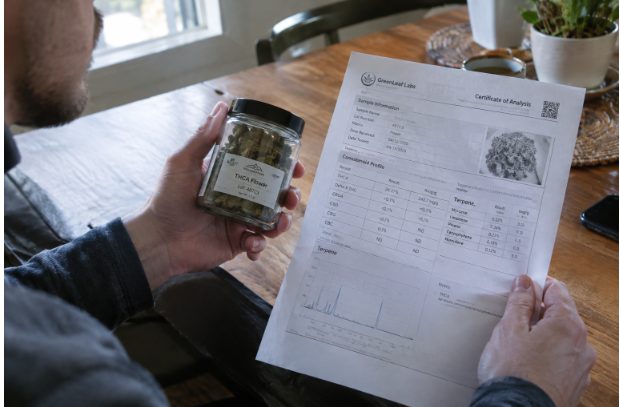
A COA is a laboratory report for a particular sample or batch. It commonly includes the laboratory name, report number, sample description, dates, methods, measured analytes, and pass/fail determinations, where applicable. The exact panels vary by product type and jurisdiction.
A complete report may include cannabinoids, terpenes, pesticides, heavy metals, microbial contaminants, mycotoxins, moisture, water activity, or foreign-material screening. A potency-only report is less informative than one that clearly shows the broader testing performed. In Minnesota, for example, official guidance explains that a COA can show the tested batch number, report date, test date, sample weight, tested analytes, and individual results.
How To Match A COA To The Product
- Find the lot or batch number on the package.
- Open the COA through the QR code, retailer, or manufacturer.
- Confirm that the same lot number appears on the report.
- Compare the product description, flower type, and net sample details.
- Review the sample collection, testing, and report dates.
- Check that the report names the laboratory and includes more than cannabinoid potency.
If a QR code links only to a general product page, ask for the report for your specific lot. A generic COA from another batch, harvest, or product format is not equivalent to batch-specific verification.
Safety Tests, Terpenes, And Freshness
In safety testing, prioritize the same rigor used for potency testing, focusing on pesticide, heavy-metal (including lead, arsenic, cadmium, and mercury), and microbial results. Be cautious with "ND" indicators for non-detection, and verify laboratory limits. Terpenes affect aroma and flavor and vary by batch, but they do not ensure specific effects. Additionally, assess freshness by checking packaging dates, storage instructions, seal integrity, aroma, and visible signs of quality, and avoid any flowers that appear damp, moldy, or poorly packaged.
Common Label Red Flags
- No COA is available upon request.
- The COA lot number does not match the package.
- The report shows potency only and omits available safety data.
- The laboratory is unnamed, or the report lacks dates.
- Units, percentages, or cannabinoid totals conflict without explanation.
- A QR code leads only to a homepage or an unrelated document.
- The product makes unsupported medical claims.
Local Rules And A Five-Minute Checklist
Hemp and cannabis rules can vary by state and may address total THC, age limits, product categories, possession, shipping, testing, and retail sales. Do not assume that wording on a label resolves every legal question. It is also prudent to avoid carrying cannabinoid products across state lines without understanding applicable rules.
- Read the full package, not just the front label.
- Identify THCA, delta-9 THC, and total THC.
- Locate the lot number and open the matching COA.
- Check laboratory identity and report dates.
- Review contaminant panels, terpene information, and report notes.
- Skip the product if key details are missing, outdated, or inconsistent.
Frequently Asked Questions
Does A Higher THCA Percentage Mean Better Flower?
No. A higher percentage only describes one measurement. Batch-specific testing, freshness, aroma, storage, terpene profile, and your own tolerance are also relevant considerations.
Can THCA Flower Cause A Positive Drug Test?
It may. When THCA is heated, it can convert into THC, and THC use can create metabolites that common drug tests may detect. Anyone subject to drug testing should consider that risk before use.
How Recent Should A COA Be?
The best report is one that matches the specific batch being sold. A report may be older when it relates to an older harvest, but it should still clearly identify the package lot and testing dates.
Conclusion
Reading THCA flower labels well means looking beyond the biggest number on the package. Match the product to its COA, review the safety panels, consider terpene and freshness details, and verify local requirements. That approach provides a clearer basis for comparing products than potency alone.











1 thought on “How To Read THCA Flower Labels And COAs Before Buying”
Comments are closed.