As a Florida blogger who is regularly in front of a camera for recipe shoots, theme-park days, and travel content, I've learned that timing matters and a treatment might sound appealing but if it leaves my skin visibly red for several days that can become a real scheduling problem.
That is what made me start researching non-invasive skin tightening options and I wanted to understand what was available, and specifically how Sofwave vs microneedling compared when time and downtime were part of the decision.
Why I Started Comparing Them
Creating content often means being ready for photos or video without much notice. Travel days, sponsored content, blog shoots and everyday life can all end up on the same calendar.
So when I started looking into skin-tightening options, I wasn't only thinking about the treatment itself, I was also thinking about how easily it would fit into my schedule.
Microneedling came up during my research because it is a familiar non-surgical technique.
Sofwave caught my attention for a different reason: the treatment is designed to require no downtime.
I wanted to understand the practical difference between the two.
Sofwave vs Microneedling: The Basics
The simplest way I could compare them was by looking at sessions and recovery.
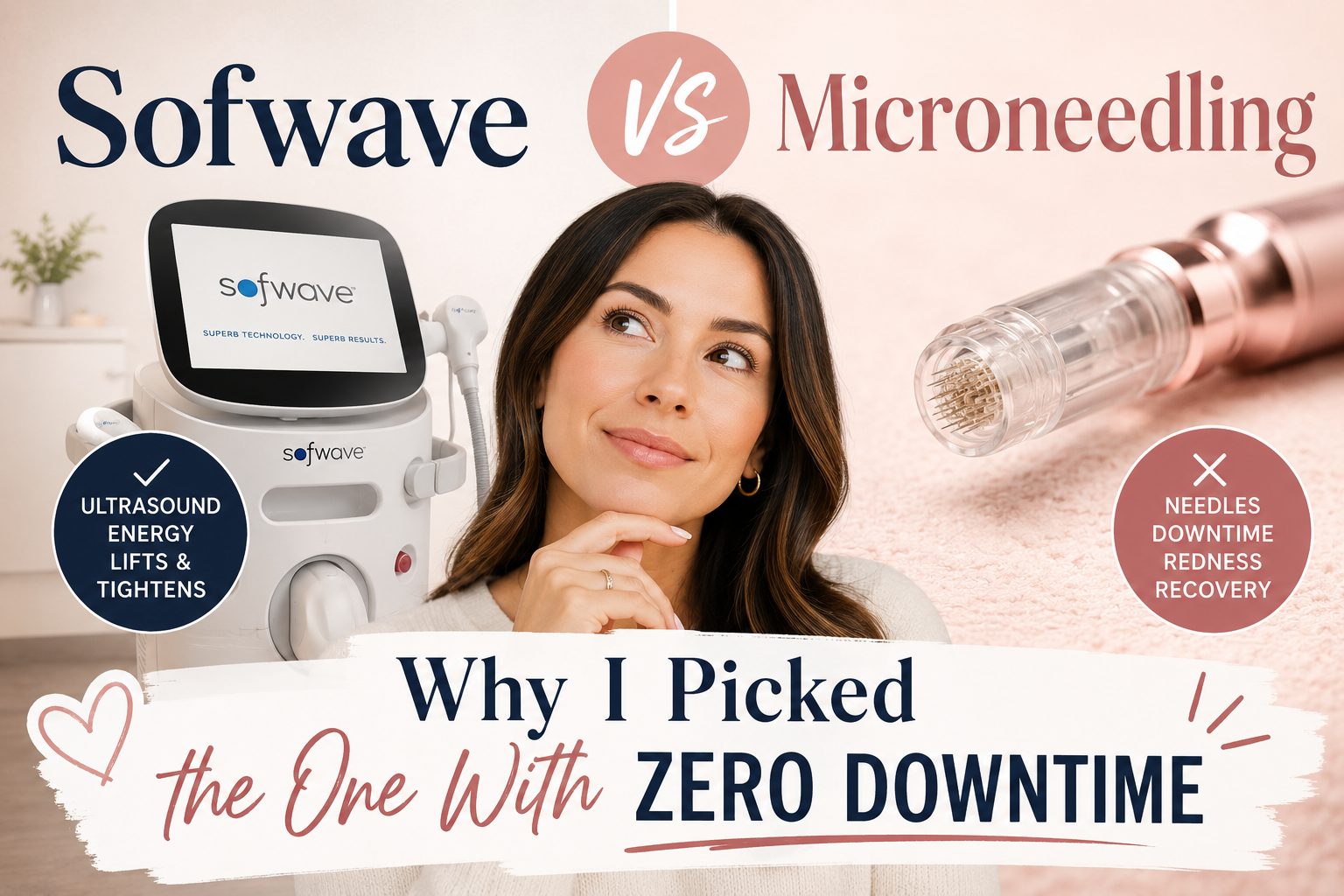
Sofwave is designed as a single-session treatment, and it uses ultrasound technology as part of a non-invasive skin tightening approach.
Microneedling is a different technique and it uses tiny needles to create controlled micro injuries in the skin. A course of microneedling commonly involves three to six sessions depending on the treatment plan.
That difference immediately stood out to me. If I'm planning around a busy content calendar, fewer appointments make a treatment easier to schedule.
Downtime Was the Biggest Difference for Me
This was probably the most important part of my research.
Sofwave is designed with no downtime meaning there is no planned recovery period that requires someone to stop their normal activities.
Microneedling can have a different recovery experience like redness and pinpoint bleeding can occur and visible effects can last for a few days.
For someone who is creating content even a few days can matter.
A few days of visible redness might be easy to manage during a quiet week at home but if I have a shoot or travel plans or several pieces of content scheduled it becomes another thing to plan around.
That does not mean one option is better for everyone but the difference in recovery time can matter when choosing a treatment that fits your lifestyle.
How I Thought About the Time Commitment
When comparing treatments, I found myself thinking less about the appointment itself and more about everything surrounding it.
With Sofwave the single session format means there is one treatment appointment to schedule.
With microneedling a typical course can involve multiple sessions so the overall commitment is spread across a longer period.
For someone with a flexible schedule that may not be a major issue.
For a content creator who is constantly planning shoots and trips and publishing schedules it can be a much bigger consideration.
Why Zero Downtime Was Important to My Decision
The biggest reason I became interested in Sofwave was simple:
I did not want a treatment that forced me to stop creating content.
Being camera ready is part of my work and it is not always possible to plan around several days of visible skin changes.
The no downtime aspect therefore made Sofwave particularly interesting to me.
It meant I could look at the treatment from a scheduling perspective rather than only thinking about aesthetics.
Of course treatment suitability is personal, and my research was about understanding the options not deciding what is medically right for someone else.
What I Learned From Comparing Them
The comparison helped me realize that there is more to choosing a treatment than simply asking which technology sounds better.
The number of sessions matters, downtime matters, and the way a treatment fits into everyday life matters just as much.
Sofwave and microneedling use different approaches so they should not be treated as identical treatments and the right choice depends on individual goals and circumstances.
For me, the combination of a single-session format and no planned downtime was the factor that made Sofwave stand out during my research.
My Takeaway as a Content Creator
When your face is part of your work, downtime can be a bigger problem because it can affect your whole content schedule and make it harder to keep up with your work and daily plans.
That was the main lesson I took from researching Sofwave vs microneedling.
Microneedling may require a series of sessions and can involve a few days of visible redness and pinpoint bleeding while Sofwave is designed as a single session and no downtime treatment.
Neither fact automatically makes one treatment right for everyone.
If you want to dig into the details yourself, the official Sofwave website is a good place to start, and it has a locator to find a Sofwave provider near me (or near you).
For me the zero downtime factor made Sofwave the option I was most interested in exploring before a busy shoot season.