

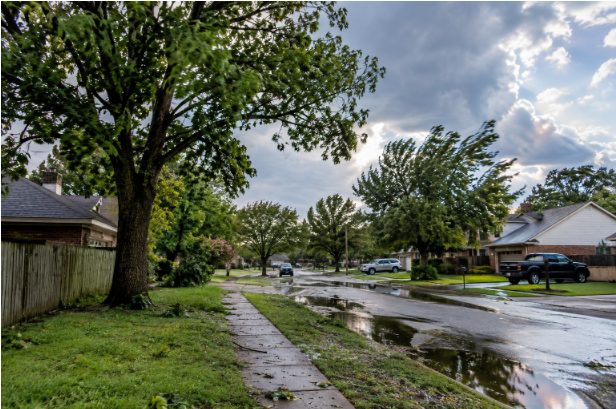
In Chesapeake, Virginia, a fast-moving summer thunderstorm or coastal weather system can turn an ordinary yard into a stressful scene. Rain fills low spots, soil becomes soft, and gusts push against mature oaks, pines, maples, and ornamental trees near homes, fences, sidewalks, and vehicles. A tree that looked sound the day before may reveal a hidden weakness once the ground is saturated and the wind picks up.
Preparation is not simply about taking trees down before bad weather. It is about noticing risk early, preserving healthy trees where possible, and getting informed help when conditions call for it. For homeowners who need a local assessment, tree service Chesapeake, VA from 757 Tree Solutions provides arborist-led guidance for pruning, removal, plant health care, crane-assisted work, and emergency response. Based in Chesapeake and serving Suffolk and Virginia Beach, the company evaluates tree structure, root stability, access, and nearby property before recommending a course of action.
How Heavy Rain Affects Tree Roots in Chesapeake
Roots need oxygen as well as water. When soil stays wet for an extended period, oxygen movement through the soil can decline, placing stress on roots. Saturated ground can also lose some of its ability to hold a root system firmly in place. Add a broad canopy catching the wind, and the pressure on the root plate can increase quickly.
Chesapeake properties can have very different drainage patterns from one lot to the next. Watch for fresh cracks in the soil, raised ground near the trunk, exposed roots, or a new lean after heavy rain. These signs do not automatically mean that a tree will fail, but they do justify a closer evaluation, especially when the tree could reach a structure or travel path.
Why Wind Damage Often Starts Before the Storm
Wind is often the event that reveals a problem, not the sole cause of it. Internal decay, deadwood, included bark, poorly attached limbs, old wounds, and damaged roots may remain unnoticed until a strong gust loads the canopy. A dense crown can act like a sail, concentrating force on major limbs, the trunk, and the roots.
That does not mean every mature tree needs aggressive cutting. Heavy topping can leave large wounds and encourage weak regrowth. The Virginia Department of Forestry recommends evaluating trees for concerns such as cavities, decay, cracks, damaged roots, leaning trunks, and branches near utilities or structures as part of storm preparation and tree resiliency.
Five Warning Signs to Check Before Severe Weather in Chesapeake
- A new lean: A trunk that has recently shifted toward a home, road, fence, or utility line deserves prompt attention.
- Cracks or splits: Look for deep openings in the trunk or at the connection between major limbs.
- Dead or hanging limbs: Broken branches caught in the canopy can fall without warning.
- Root plate movement: Lifted soil, separating turf, or a visible gap near the base can indicate root disturbance.
- Decay indicators: Soft wood, hollow areas, large cavities, or mushrooms near the base can be reasons for professional evaluation.
Pruning Before a Storm: What Helps and What Hurts
Appropriate pruning can remove dead, diseased, damaged, or poorly attached branches before they become storm debris. It may also improve clearance over roofs, walkways, and driveways. For young trees, structural pruning can help establish a stronger framework as the tree develops.
- Do: Remove dead or broken branches using correct pruning cuts.
- Do: Have large trees or trees near targets evaluated by a qualified arborist.
- Do: Plan pruning before hurricane season or periods when severe weather is common.
- Do not: Climb a damaged tree or cut limbs that may be under tension.
- Do not: Work near electrical lines. Contact the utility company if a tree is touching a line.
- Do not: Top a tree in an attempt to make it safer.
Mulch, Soil, and Tree Stability
Good root care happens long before a forecast turns serious. A broad mulch bed can help moderate soil temperature, reduce moisture loss, and limit competition from turf. Keep mulch off the trunk rather than piling it into a cone. The Department of Environment Conservation explains that proper mulching and pruning help protect roots, while mulch pressed against the trunk can contribute to decay problems.
Avoid parking, storing equipment, or repeatedly driving over the soil beneath a tree's canopy. Soil compaction can affect root growth and water movement. Where practical, protect the root zone and allow rainwater to infiltrate instead of rushing across compacted ground.
What to Do After a Chesapeake Storm
- Keep people and pets away from damaged trees, hanging limbs, and disturbed soil.
- Assume downed or sagging power lines are energized and report them immediately.
- Do not stand beneath suspended branches or a tree resting on a roof, vehicle, or fence.
- Take photographs from a safe distance for insurance documentation.
- Wait for a professional assessment before cutting large limbs, uprooting trees, or splitting trunks.
Storm cleanup can be dangerous because bent wood and partially failed trunks may hold stored tension. A cut in the wrong place can cause a limb or trunk section to roll, spring, or shift suddenly.
When Trimming May Be Enough and When Removal Is Safer
Pruning may be appropriate when the issue is limited deadwood, minor branch interference, or a structural concern that can be addressed without compromising the tree. Removal may be the safer option when a tree has major decay, severe root failure, a split trunk, a significant new lean, or a clear threat to a home, driveway, or public area.
Access matters in established Chesapeake neighborhoods such as Great Bridge, Grassfield, Deep Creek, Hickory, and Western Branch. Mature trees may stand close to pools, sheds, fences, utilities, and neighboring homes. A controlled plan is often more important than speed when there is little room for error.
Common Questions From Chesapeake Homeowners
Should a leaning tree always be removed?
No. A long-standing natural lean may be stable, while a recent lean after heavy rain can be more concerning. The cause of the lean, soil condition, root stability, tree species, and nearby targets all affect the decision.
Can a tree recover after saturated soil?
Some trees recover after short-term wet conditions, but prolonged saturation can stress roots and lead to delayed decline. Monitoring canopy condition, new growth, leaf color, and changes around the trunk can help identify whether further evaluation is needed.
How often should mature trees be checked?
Perform a visual check seasonally and after major weather events. Arrange a professional inspection when a tree develops new defects, overhangs a high-use area, or shows changes in lean, bark, branches, or soil around its base.
Safer Trees Start With Early Attention in Chesapeake
Chesapeake property owners do not have to wait for a tree to fall before acting. A brief inspection after heavy rain, careful pruning, healthy soil practices, and prompt attention to warning signs can reduce avoidable risk. The strongest storm plan usually begins while the weather is still calm.











1 thought on “How Heavy Rain, Wind, and Coastal Storms Affect Trees in Chesapeake, Virginia”
Comments are closed.