

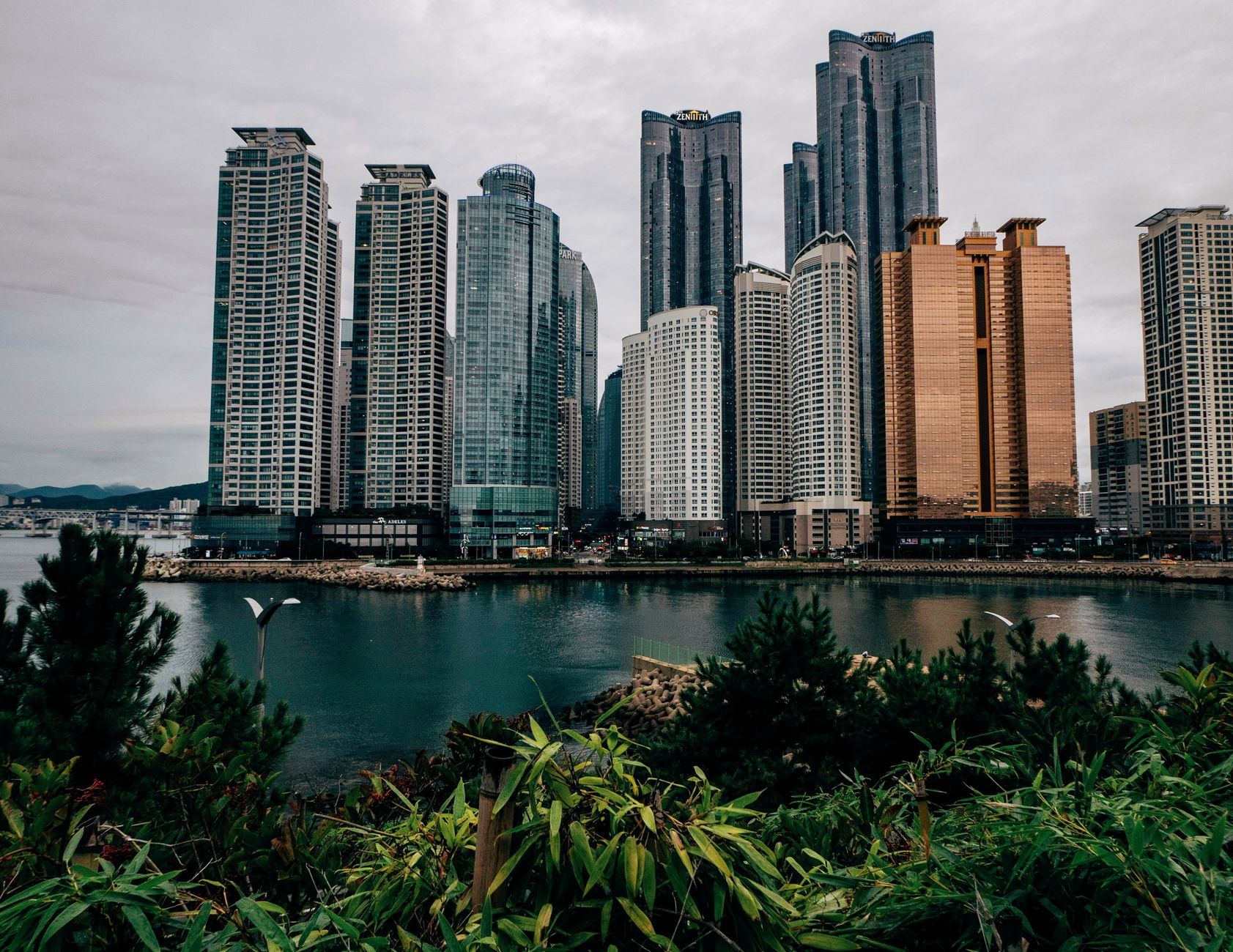
Busan sprawls across mountains and coastline in a way that catches first-time visitors off guard. The subway doesn't connect every neighborhood as neatly as Seoul's does, the beaches close out most restaurants after 9pm in the off-season, and the fish market smells exactly like you'd expect a fish market to smell. None of that should stop you from going. It just means a little preparation goes a long way toward making the trip feel smooth instead of chaotic.
Base Yourself Near Haeundae or Seomyeon
Where you sleep in Busan determines how much of your day gets eaten up by transit. Haeundae gives you beach access, a dense cluster of restaurants, and a straight subway line to most major attractions, though it skews toward families and can feel quiet after dark outside of summer. Seomyeon sits more centrally and functions as the city's commercial core, with better nightlife and easier access to both the old downtown and the newer districts.
Hotels in Busan tend to cluster around these two areas for good reason, and booking one near a subway station will save considerable time compared to staying somewhere scenic but poorly connected. Nampo-dong is a third option worth considering if proximity to Jagalchi Market and the port area matters more to your itinerary than beach access.
Buy a T-Money Card on Arrival
Busan's public transit system covers subways, buses, and even the ferry to some nearby islands, but cash fares and single tickets slow everything down. A T-money card, sold at convenience stores and subway kiosks for about 3,000 won, works across all of it and can be topped up as needed. Transfers between bus and subway within a set window don't cost extra, which matters in a city where a single trip often requires both.
Grab one at the airport the moment you land rather than waiting until the first time a vending machine confuses you. GS25, CU, and 7-Eleven locations all sell and reload them, so running low isn't a real problem once you know to check.
Visit Gamcheon Culture Village Early or Late
Gamcheon Culture Village, the hillside neighborhood of colorful houses and narrow alleyways, has become one of the most photographed spots in the country, which means tour buses arrive in waves starting around 10am. Getting there by 8:30am or after 4pm cuts the crowds dramatically and gives the light better angles for photos. The village is also genuinely steep, with staircases connecting different levels, so comfortable shoes matter more here than almost anywhere else on a typical itinerary.
Budget at least two hours to wander without rushing, since the appeal is in the small cafes and murals tucked into side streets rather than any single landmark. A paper map, available free at the entrance, helps more than a phone screen in direct sunlight.
Eat Breakfast at Jagalchi Market
Jagalchi Market opens before sunrise and the best seafood arrives early, before the midday crowds pick through it. Grilled mackerel, raw sashimi platters, and hotteok from the stalls outside make for an unconventional but memorable breakfast. Vendors expect some negotiation on price for larger purchases, though prepared food at the stalls is usually fixed.
Arriving hungry works in your favor here, since many vendors will let you sample before committing to a dish. The upper floors house sit-down restaurants where staff will cook whatever you've bought downstairs for a small fee, which is worth knowing if the ground-floor stalls feel overwhelming.
Carry Cash for Smaller Vendors
Busan has become increasingly card-friendly, especially in chain stores and larger restaurants, but street food stalls, small markets, and some older guesthouses still operate cash-only. ATMs connected to major banks like KB Kookmin or Shinhan reliably accept foreign cards, while convenience store ATMs are hit or miss depending on the network. Keeping around 50,000 to 100,000 won on hand avoids the awkwardness of a vendor shaking their head at a card reader.
This matters more at night markets and in neighborhoods like Gamcheon Culture Village, where smaller operations haven't invested in card systems.
Check the Ferry Schedule to Oryukdo or Taejongdae
Several small islands and coastal viewpoints around Busan are only practical to reach by boat, and schedules shift seasonally with less frequent departures in winter. The ferry to Oryukdo Skywalk, for instance, runs on a reduced timetable outside peak season, and missing the last return trip means a much longer detour by land. Checking the current schedule the day before, rather than assuming a fixed timetable, prevents getting stranded or wasting a half-day waiting.
Taejongdae's land train and walking paths offer a similar coastal experience without the ferry dependency, which makes it a reliable backup if boat schedules don't align with your plans.
Pack for Sudden Weather Shifts
Busan's coastal position means weather can change faster than inland cities, with fog rolling in off the water or wind picking up substantially near the beaches and cliffside walks. Summer brings humidity that makes layering impractical, but spring and fall often call for a light jacket even when the morning starts warm. Typhoon season, roughly June through September, can also disrupt outdoor plans and ferry schedules with little warning.
Checking a short-term forecast each morning, rather than relying on what the week looked like when you packed, helps you adjust plans for things like Taejongdae's cliffside trails or the Oryukdo ferry before committing a whole day to them.
The real key to enjoying Busan is accepting that it rewards a bit of flexibility rather than a packed-to-the-minute schedule. Build in buffer time between neighborhoods, keep both cash and a T-money card on hand, and let the market and ferry schedules guide a few of your decisions instead of fighting against them.






1 thought on “Top 8 Travel Tips for Visiting Busan”
Comments are closed.