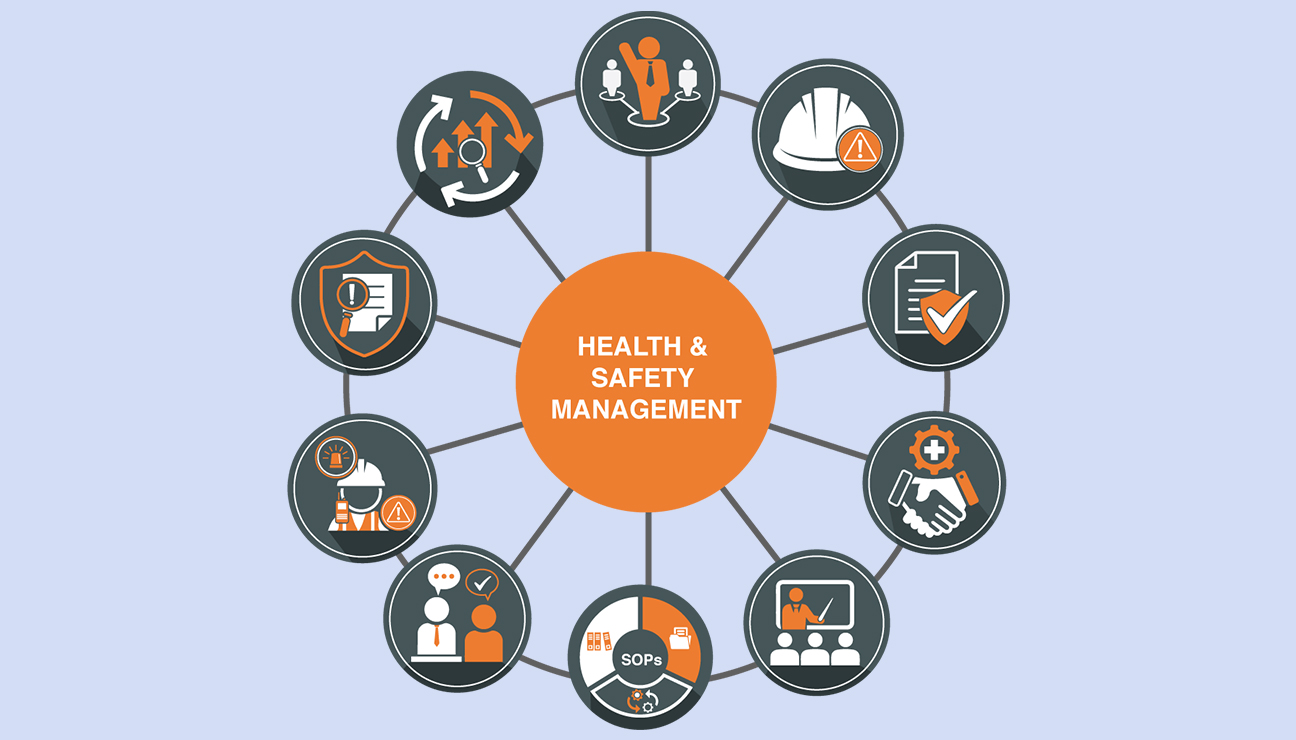
Many companies view the safety audit as just another annual routine procedure. A committee comes together and the relevant documents are examined, some signatures are signed and everyone goes back to work until next year. It seems like an organized way to proceed, however, it is based on the misconception that risk will be constant for an entire year. The workplace environment never ceases to evolve. There is new equipment being introduced, new employees coming in, new vendors supplying products, and new goals being set for production. An effectively established system of Health & Safety Management should account for all of the aforementioned aspects.
How Do You Match Review Frequency to Your Level of Risk?
There is no magic number that will fit all companies. The rhythm of your health & safety management must be adjusted according to the level of danger of the activities conducted by the company, the speed of change of its processes, and the current development stage of the safety culture of the enterprise. An engineering company dealing with heavy equipment and constantly changing locations requires a more intensive cycle than an office-based consulting company that enjoys stability in its operations.
Most safety managers use the concept of a layered approach to health & safety management. Immediate operational reviews are conducted weekly or even daily, management reviews are conducted quarterly, and a review of the whole system is done annually. Each layer is responsible for addressing a certain category of issues. While operational reviews detect issues like a loose guardrail or a blocked exit, quarterly reviews detect trends, such as repeat occurrences of similar incidents in the same division of the company.

Which Events Should Trigger an Immediate Review?
A schedule is an excellent framework. It must not be the only basis for triggering a review. There are events which should always lead to a review, irrespective of how long ago the last one took place. The occurrence of an accident or a close call is an example because it indicates failure of some aspect of your controls, either now or in the past. Health & Safety Software can flag such incidents the moment they are logged, so a review is prompted right away rather than waiting for the next meeting.
Change within an organization will serve as another trigger. The introduction of a new process, relocation to a new location, use of new machinery and organizational restructuring can all create hazards which you had no procedures for dealing with before. Changes in regulations and industry standards also require that a review is carried out as soon as possible to check that your documented controls comply with the regulations. Even changes to your contractor status or an influx of temporary workers can silently affect your risk profile.
What Warning Signs Appear Between Scheduled Reviews?
System failures rarely come unexpectedly. It is very likely that there were signs pointing to potential failure, but they can go unnoticed because no one is paying attention to them. Increasing occurrences of low-severity accidents, increasing number of corrective actions to be taken, audit results showing problems, and employees no longer reporting hazards are early warning signs that the system is failing.
Reporting culture is a particular aspect that should receive extra attention. An unexpected decline in the number of near misses reported is often interpreted as a positive trend when, in reality, it may mean that people are no longer expecting change after submitting their reports. Examining leading indicators like rate of successful training, frequency of inspections, and hazard closure time will provide more insight into the situation than just the number of injuries.
How Can You Make Reviews Effective Rather Than Routine?
Increased frequency does make a difference only if the actual review is itself meaningful. What frequently doesn’t help at all is the tick-box exercise that consists of always asking the same questions in the same manner and getting the same answers that are not subject to any criticism. A meaningful review should examine the functioning of control systems rather than simply their existence.
Engaging the employees doing the job is one of the most fool-proof methods for making a review credible. Workers know which short cuts are being taken, which procedures are impracticable and which hazards are silently accepted. A walk around the site, talking to workers and observing the work as it is really done reveals things which a desk-bound document check can never reveal. And it is important to rotate the role of reviewer since new eyes see what old ones don’t notice. Every review must result in concrete action items with designated responsibility and deadlines otherwise it remains simply a discussion.
How Can Technology Keep the Review Cycle Alive?
As an organization grows, manual processes become too complex. Out-of-date spreadsheets, lost paperwork, and actions falling between meetings are some common challenges. Digital solutions are valuable because they turn reviews into an ongoing process. They ensure that inspections take place on schedule thanks to automated reminders, show overdue actions on dashboards, and detect trends from reports automatically without manually pulling them together.
In terms of reviews, such visibility leads to a change in their nature. Whereas managers used to collect data during a meeting, now they can use this time to decide what needs to be done with it. Another benefit of digital technology in this regard is that audit trails allow for easier demonstration of compliance to regulators, insurers, and clients because all inspections, corrective actions, and sign-offs are recorded with the corresponding dates. Multi-site organizations will benefit from an overview of the situation in each location and be able to detect problem sites in advance.

How Do You Create a Review Calendar That People Will Follow?
Any review calendar will only be effective when it is realistic and has a responsible party. This requires allocating your activities according to the layering system discussed earlier by assigning daily, weekly, quarterly and annual review assignments to different people. The activity should have a responsible person, defined scope and agreed means of recording the result. When all people are responsible for something, nobody becomes responsible in reality.
The participation of leaders is usually more important than people think. It is very important to make the leader participate actively, raise difficult questions and implement the conclusions in order to take the process seriously. On the other hand, when leaders view it as an administrative assignment, everyone else starts viewing it the same way. Sometimes, it is necessary to review the whole review process from time to time. If there are no actions after the meeting, if the same questions appear again and again or if the number of participants decreases, the format should be changed instead of increasing the frequency.
How Do You Balance Thoroughness With Practicality?
To address the notion of reviews regularly, some companies tend to go to the other extreme and overload themselves and their staff with meetings and paperwork to the point where the whole process becomes too cumbersome. The goal here isn’t to review all things all the time, but to review the right things at the right time. High-risk processes need to be looked into frequently, while low-risk ones can be reviewed occasionally without jeopardizing safety.
What needs to be done is prioritize by consequence and likelihood. If a task can bring considerable harm to a company if controls are not implemented well, it needs to be reviewed first. If a process has a good track record and not much change in it, it can be sample-reviewed. Review the priorities at each quarter’s review meeting, as a low-risk process can become high-risk after even one change in equipment or staff.
Conclusion
The true worth of a review is in its outcomes. Any findings left unattended in a report are even less valuable than conducting no review at all, since such findings will give evidence of the fact that the organisation was aware of the problem and failed to address it. Each finding needs to be prioritized, assigned a responsibility and followed until it is resolved, with the progress to be reported in the next review. Gradually, companies that conduct regular reviews, make decisions based on them and communicate the results come to enjoy a lower number of incidents, lower insurance costs and motivated staff who understand the importance of safety.