Pool concrete repair looks straightforward until it isn’t. A homeowner calls about a crack in their gunite shell. You show up, quote the patch, and move on. Three months later the crack is back, water is leaking behind the plaster, and the homeowner wants answers.
That callback isn’t just an inconvenience. It’s a liability exposure.
Repair and service work on someone else’s prior installation carries its own risk profile. The original build quality is unknown. Hidden structural issues sit behind the plaster. If your patch fails, the claim lands on your policy, not the original builder’s. Before taking pool concrete repair jobs, confirm that your pool business insurance covers servicing and repair work, not just new construction.
Here’s what every contractor should evaluate before accepting the job.
Know What Type of Failure You’re Looking At
Not all pool concrete damage means the same thing. Treating every crack as a simple patch job leads to callbacks and claims.
Check cracking is a network of fine hairlines across the plaster surface. It results from improper curing or aggressive troweling. It’s cosmetic, not structural. The plaster is still bonded to the shell.
Spot etching happens when low pH water dissolves the plaster surface, leaving rough, whitish patches. This is diffuse damage. You can’t spot-repair it because the problem is everywhere.
Delamination means the plaster has separated from the gunite shell. Sometimes a chunk falls away. Other times it hides as a calcium nodule. Tap the surface with a hammer. Hollow sounds mean the bond has failed.
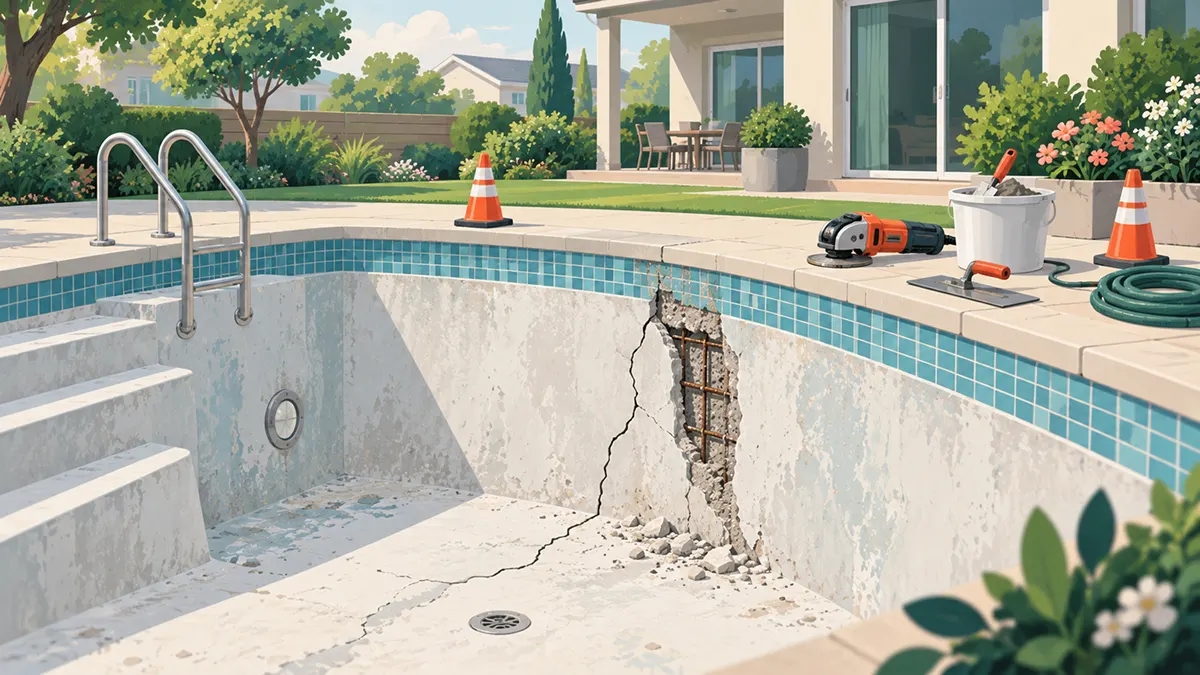
Structural cracking is the serious one. Wider cracks move through the gunite shell itself. Soil movement, improper steel placement, or hydrostatic pressure can cause them.
Quick summary: Identify the failure type before quoting the job. Cosmetic damage needs a different solution than structural cracking, and misdiagnosing the problem creates liability exposure for the contractor.
Pool Concrete Repair Methods That Actually Work
The repair method needs to match the failure. Here’s what applies to each situation.
Surface Repairs and Replastering
For pools with widespread etching or check cracking, a full replaster is usually the right call. Strip the existing surface, prep the gunite shell, and apply a new coat. Costs range from $4,500 to $15,000 depending on pool size and finish material.
Don’t replaster over delaminated areas. If the existing bond has failed, the new coat will fail too.
Structural Crack Repair
Structural cracks need more than surface patching. Most contractors use epoxy injection or polyurethane sealant to stabilize the crack from within the shell. These repairs can hold indefinitely if the root cause has been addressed.
For cracks caused by soil movement, the repair may require excavating behind the pool wall to relieve pressure and install drainage. This turns a $3,000 crack repair into a $15,000 structural project. Get a structural assessment before quoting. If the soil is the problem and you only fix the crack, it will return.
Deck and Coping Repairs
Pool deck concrete fails for different reasons than the shell. Freeze-thaw cycles, tree root pressure, and improper expansion joints cause cracking and separation from the coping.
The most common pool concrete repair issue at the deck level is the bond beam crack. The deck expands, pushes against the pool wall, and the tile line fractures. On repair jobs, verify that proper expansion material exists between the deck and coping before patching the symptom.
What to Evaluate Before Quoting Pool Concrete Repair
Every pool concrete repair job needs a site assessment before you commit to a price.
Walk the entire pool. Look for pattern cracking versus isolated structural cracks. Tap the plaster to check for hollow spots. Run a dye test near visible cracks to confirm leaking. Check the deck-to-coping joint for expansion material.
Ask about water chemistry history and prior repairs. Epoxy patches over moving structural cracks tell you the underlying issue hasn’t been addressed.
Document everything with timestamped photos before starting. This protects you if the homeowner claims your repair caused additional damage.
Note: If the pool was built by another contractor, you have no visibility into the original steel placement, gunite thickness, or soil preparation. Your repair sits on top of their work. Make sure your estimate and contract language clearly state that you’re repairing the visible issue, not warranting the original structure underneath.
Why Pool Concrete Repair Carries Different Insurance Risk
New pool construction follows your plans and your specs. Repair work is different. You’re intervening on an existing structure where the original quality is unknown.
If your patch fails because the underlying gunite was substandard, the homeowner’s claim targets you. Not the original builder. Your completed operations coverage needs to account for this.
Crews on occupied residential properties face slip-and-fall exposure around wet pool decks. Chemical handling during acid washing carries inhalation and burn risks.
Providers like NIP Group build coverage for pool contractors that addresses repair and service work alongside new construction. That distinction matters because many standard policies cover new builds but exclude or limit coverage for work on existing structures.
Important: Review your policy for exclusions related to repair work, completed operations on prior installations, and professional liability for misdiagnosis. If your policy only covers new construction, you have a gap.
FAQs
- What types of pool concrete repair do contractors perform most often? The most common jobs are plaster resurfacing, structural crack repair using epoxy injection, deck and coping repairs, and tile line replacement. Each requires different techniques and materials, and contractors should match the repair method to the specific type of failure identified during assessment.
- How do you tell if a pool crack is structural or cosmetic? Cosmetic cracks stay within the plaster surface and don’t move or leak. Structural cracks extend through the gunite shell, often widen over time, and may produce active water loss. A dye test near the crack and tapping the surrounding surface for hollow spots help determine the type.
- Does pool contractor insurance cover repair work on existing pools? Not always. Many standard policies focus on new construction and may exclude or limit coverage for servicing and repair work on existing structures. Contractors should confirm their policy includes completed operations coverage for repair jobs and professional liability for diagnostic errors.
- How long does a pool concrete repair typically last? Longevity depends on the type of repair and ongoing water chemistry maintenance. A full replaster lasts 8 to 15 years with proper care. Structural crack repairs using epoxy injection can last indefinitely if the underlying cause, such as soil pressure or drainage issues, has been resolved.