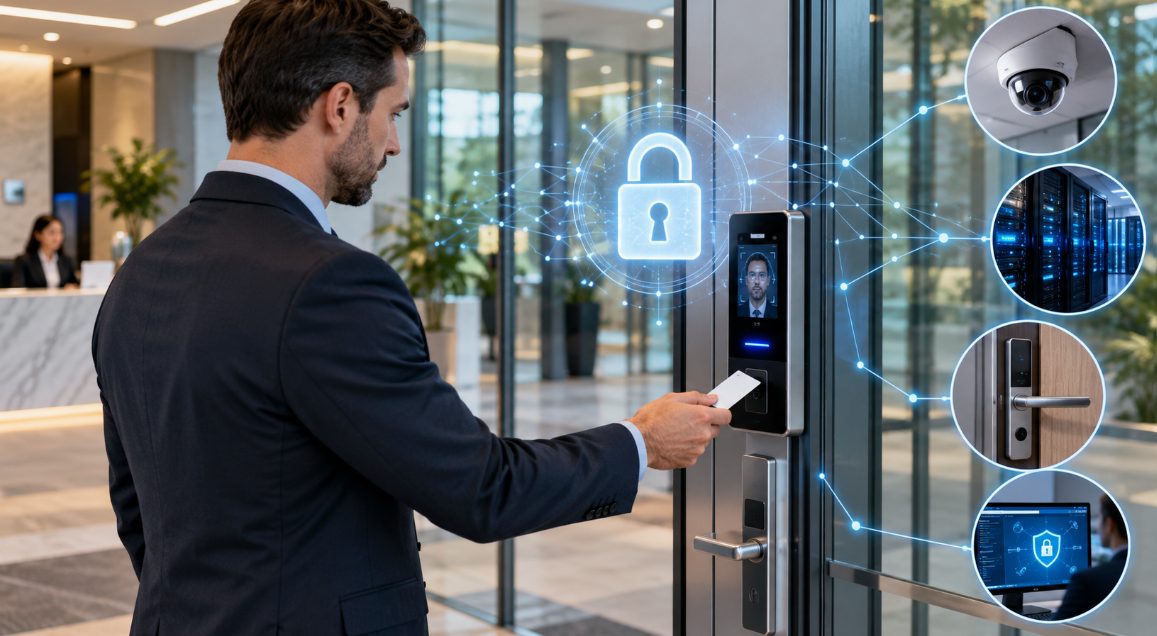
A former employee's badge still works. Your building's door controllers haven't received firmware updates, and nobody knows who last accessed the security management system.
These problems can turn a secure-looking building into a serious security risk.
Modern offices, hospitals, and commercial facilities rely on connected access systems to manage doors, employee credentials, and restricted areas. But when these systems connect to business networks, they also become potential targets for cyberattacks.
Securing building access systems requires more than strong locks. Organizations must protect controllers, restrict network connections, manage user permissions, and monitor suspicious activity.
Here's how to protect your building without making daily access unnecessarily complicated.
What Is Cybersecurity for Building Access Systems?
Cybersecurity for access control systems involves protecting the software, networks, credentials, and connected devices that manage physical entry into buildings.
Electronic access control systems typically use card readers, secure door controllers, management software, and employee credentials.
When someone scans a badge, the controller checks whether that person has permission to enter.
If attackers compromise the system, they could potentially manipulate access permissions, expose credential information, or disrupt building operations.
Why Are Connected Buildings at Risk?
The FBI's 2025 Internet Crime Report recorded more than one million cybercrime complaints and approximately $20.9 billion in reported losses.
Reported losses increased 26% compared with 2024.
These figures cover internet crime broadly, not attacks specifically involving building access controllers. However, they illustrate why organizations should take connected-system security seriously.
How Access Control in Cyber Security Protects Building Entry
A secure building needs access control hardware that supports reliable authentication, controlled communication, and centralized monitoring.
Organizations evaluating access control in cyber security should consider how intelligent controllers connect readers, locks, management platforms, and existing security infrastructure.
Access control controllers make decisions about whether authorized credentials can unlock designated doors.
Security teams should examine controller authentication, firmware maintenance, communication protocols, and compatibility with their access management systems.
The goal is to ensure building entry remains controlled even as systems become more connected.
What Are the Main Cybersecurity Risks in Building Access Systems?
Understanding potential weaknesses helps facility managers decide which controls deserve attention first.
Weak or Shared Credentials
Default administrator passwords, shared accounts, and credentials belonging to former employees can expose security systems.
If someone gains unauthorized administrative access, they may be able to modify permissions or change controller settings.
Outdated Controller Firmware
Access controllers contain software that requires ongoing maintenance.
Unsupported or outdated firmware can leave known vulnerabilities unresolved.
Security teams should monitor manufacturer advisories and establish controlled update procedures.
Unprotected Network Connections
Connecting door controllers directly to general office networks can increase exposure.
A compromised workstation or poorly secured remote connection could provide a route toward building management systems.
Limited Security Monitoring
Without reliable access logs, administrators may miss repeated authentication failures, unusual entry activity, or unauthorized configuration changes.
Effective protection requires visibility into both physical access events and cybersecurity activity.
How Do Different Access Control Security Measures Compare?
Not every security measure addresses the same problem.
|
Security measure |
Primary purpose |
Best application |
|
Multifactor authentication |
Protects administrator access |
Management accounts |
|
Network segmentation |
Limits unnecessary connectivity |
Controllers and security servers |
|
Firmware management |
Addresses known vulnerabilities |
Network-connected controllers |
|
Role-based permissions |
Restricts user privileges |
Employees and contractors |
|
Encryption |
Protects supported communications |
Credentials and system data |
|
Security monitoring |
Identifies suspicious events |
Centralized building operations |
These protections work best together.
For example, encryption can protect supported communications, but it won't fix an administrator account that still uses a default password.
Similarly, strong credentials won't prevent every problem caused by unpatched software.
Which Cybersecurity Practices Should Buildings Prioritize?
Start with the controls that reduce common operational weaknesses and protect critical entry points.
1. Secure Administrator Accounts
Every administrator should have an individual account with permissions appropriate to their responsibilities.
Remove default passwords and enable multifactor authentication wherever the management platform supports it.
Avoid giving maintenance contractors unrestricted access.
2. Separate Access Control Networks
Network segmentation limits unnecessary communication between connected building security and other business systems.
For example, door controllers can operate within a dedicated security network that permits only approved management connections.
IT teams should document necessary communication paths before implementing restrictions.
3. Maintain Firmware and Software Updates
Develop a maintenance schedule for controllers, servers, and access management software.
Track firmware versions, review vendor security advisories, and test changes before deployment.
Keep recovery procedures available in case an update interrupts building operations.
4. Review Physical Access Permissions
Employees should only access areas necessary for their roles.
Remove credentials promptly when someone leaves the organization or changes responsibilities.
Apply expiration dates to temporary contractor and visitor access.
5. Monitor Logs and Unusual Activity
Configure alerts for repeated denied entries, unexpected door openings, and unauthorized administrative changes.
Review logs regularly and establish procedures for investigating suspicious events.
Where supported, connect relevant alerts to centralized security monitoring.
Why Physical and Cyber Security Teams Must Work Together
Building security traditionally falls under facilities management, while cybersecurity belongs to IT.
Connected building security requires both teams to coordinate.
The National Institute of Standards and Technology highlighted building automation cybersecurity in August 2026, noting that modern facilities depend on connected systems for access control, HVAC, lighting, and other essential functions.
Physical and cyber security integration helps organizations manage these interconnected environments.
IT teams can handle network segmentation and vulnerability management.
Facilities teams can manage credentials, physical inspections, and door hardware.
Both should participate in incident response planning.
For example, if a controller loses network connectivity, the organization must understand how authorized access, emergency exits, and local security operations will function.
A Practical Building Access Security Scorecard
Many organizations install security technology but never verify whether its protections remain effective.
A simple quarterly scorecard can identify weaknesses before they become operational problems.
|
Security checkpoint |
What to verify |
|
User permissions |
Former employees and expired visitors have no access |
|
Controller updates |
Supported firmware is current |
|
Network protection |
Unnecessary connections are blocked |
|
Administrator security |
Individual accounts and strong authentication are used |
|
Monitoring |
Important security events are recorded and reviewed |
|
Recovery readiness |
Backup and restoration procedures are tested |
Mark each checkpoint as complete, needs attention, or not verified.
Prioritize weaknesses affecting high-security areas such as server rooms, laboratories, and equipment facilities.
Information gain: Include an ownership column in the internal version of this scorecard.
Assign each unresolved issue to IT, facilities, or the security team, along with a correction deadline.
This turns a routine security review into an accountable improvement plan.
How Should Businesses Choose Secure Access Control Systems?
The best access control system is one that matches the facility's security requirements while remaining maintainable.
When comparing new or existing solutions, consider:
- Support for secure communication and authentication
- Vendor firmware updates and documented security advisories
- Compatibility with existing readers and management software
- Access logging and monitoring capabilities
- Integration with network security systems
- Recovery options during connectivity or power failures
Also confirm that emergency egress and life-safety requirements remain satisfied.
For connected building security, long-term vendor support matters as much as initial installation features.
Frequently Asked Questions
1. What Is the Difference Between Physical Access Control and Cybersecurity?
Physical access control determines who can enter buildings, rooms, and restricted areas. Cybersecurity protects the digital systems, networks, and credentials supporting those decisions. Modern electronic access control combines both because a compromised controller or administrator account can affect physical entry permissions.
2. Can Hackers Compromise Electronic Door Access Systems?
Yes. Vulnerable controllers, weak administrator credentials, or exposed management interfaces can create unauthorized access opportunities. The actual risk depends on the system's configuration and architecture. Strong authentication, supported firmware, restricted network communication, and monitoring help reduce potential exposure.
3. Why Is Network Segmentation Important for Access Control?
Network segmentation separates building security devices from unrelated business systems. It restricts unnecessary communication and helps limit potential movement between connected environments. Organizations should permit required controller and management traffic while blocking unapproved connections through appropriate network rules.
Practical Steps to Strengthen Building Access Security
Organizations can improve access control system protection without replacing every installed device.
Start with these actions:
- Inventory controllers, readers, management software, and network connections.
- Remove unnecessary accounts and outdated credentials.
- Restrict administrative access and review network permissions.
- Establish firmware maintenance and security monitoring procedures.
- Test incident response and system recovery.
- Assign responsibility for quarterly access security reviews.
Prioritize critical entrances and sensitive areas first.
The objective is to create a building access environment where security teams know who has access, how entry decisions are protected, and what to do when something goes wrong.