

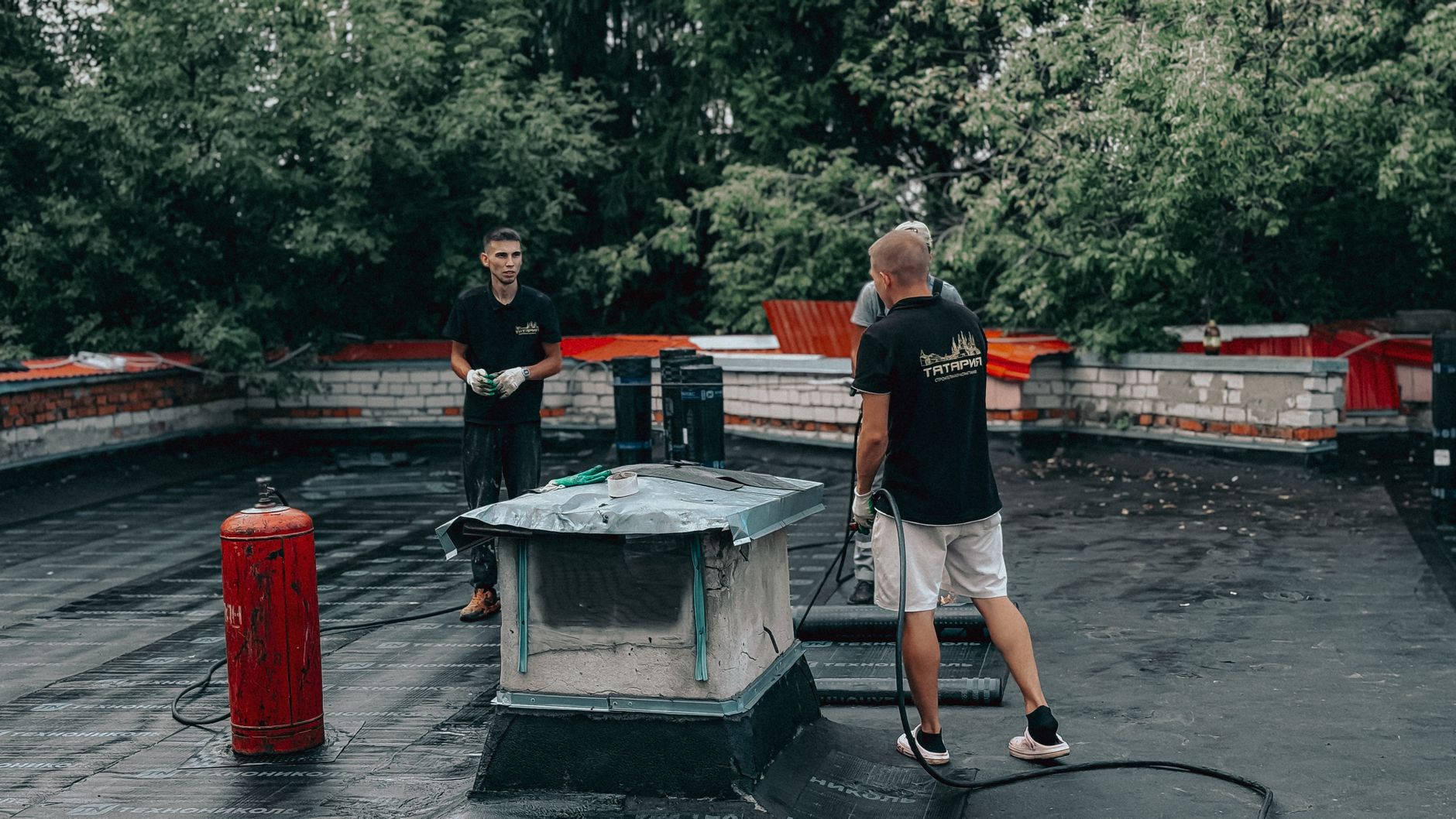
Most flat roofs fail in exactly two places: the seams and the drains. Not the membrane itself. Not the insulation. If you own a warehouse off the Beltway or a low-rise office near the Medical Center, those two spots are where your money goes, and where a smart replacement plan starts.
This guide walks you through choosing a flat roof system for this climate, reading contractor bids without getting played, and building a maintenance habit that stretches membrane life well past what the manufacturer printed on the box. You do not need an engineering background. You need a short list of questions and a willingness to walk your own roof once a quarter.
When it comes time to hire, the field of commercial roofing companies in Houston is wide enough that quality varies block by block, so the screening process below matters more than any brochure photo. Local crews also understand the humidity, hail, and tropical weather patterns that shape how a membrane ages here.
What Actually Shortens a Flat Roof's Life in Houston
Heat is the easy answer, and it is only half right. The bigger factor is ponding water. A flat roof is not level; it should drain toward scuppers and internal drains at a slight pitch. When low spots hold water after a storm, the membrane breaks down faster at those spots, and the seams carry stress they were never meant to hold.
Then comes UV exposure. According to the National Institute of Standards and Technology, ultraviolet radiation is a leading cause of material degradation across construction products, and a black EPDM roof absorbs more heat than a light-colored alternative. That matters on a building with aging air conditioning units sitting on the deck.
I would push every owner toward reflective membrane options if cooling loads matter to you. It costs a bit more up front. The energy picture usually justifies it.
EPDM, TPO, or Modified Bitumen?
Three systems dominate low-slope work, and each fits a different building. Your choice should follow your roof deck, your budget, and how much foot traffic the roof sees, not whatever system a contractor happens to stock.
|
System |
Best Fit |
Tradeoff to Know |
|
EPDM (rubber) |
Large, simple roof planes with heavy sun exposure |
Seams are glued or taped and need competent installers; dark color runs hotter |
|
TPO (white thermoplastic) |
Energy-conscious buildings with HVAC equipment on top |
Reflective and weldable, but heat welding requires a skilled hand |
|
Modified bitumen |
Smaller roofs, walkable areas, heavy foot traffic |
Durable against punctures, yet more seams to maintain on large planes |
Here is an opinion you will not find on a manufacturer page: for a 40,000 square foot warehouse with few penetrations, I would take a well-installed EPDM system and a real maintenance contract over a premium TPO install from a crew that vanishes after the final invoice. Installation quality beats spec sheet bragging every single time. You can buy the best membrane on the market and ruin it with sloppy seam work in a single afternoon.
How to Read a Commercial Roofing Bid
A bid written on a single page with a lump sum should worry you. You want line items, and you want each one to name a product and a thickness. Here is the framework I use when reviewing quotes, which I call the Four Checks. Any owner can run it in about twenty minutes.
- Check the tear-off line. How many layers come off, and where do they go? Disposal costs real money, and a bid that hides it will resurface as a change order.
- Check the attachment method. Fully adhered, mechanically attached, or ballasted each behave differently in high wind. Ask which one and why.
- Check the warranty in writing. Labor and material coverage are separate things. Confirm who actually honors the labor portion and for how long.
- Check the drain scope. New drains, reused drains, added scuppers. If this line is vague, water will find the gap.
Two more habits pay off. Get a moisture scan before anyone quotes a full replacement, because saturated insulation can sometimes be cut out and patched instead of tearing off the whole roof. And ask each contractor for the last three commercial roofs they finished in your zip code. Drive past one. A crew with nothing to show you nearby is telling you something.
Wind engineering deserves its own mention. The Federal Emergency Management Agency publishes guidance showing that proper attachment and edge detailing are what keep low-slope roofs on the building during severe wind events, which is why the attachment method question above is not a formality.
Repair, Recover, or Replace?
Not every problem needs a new roof. A leak at a single penetration can often be fixed for a few hundred dollars, and a roof with isolated blisters may have years left. The honest test runs on three questions: how old is the membrane, how many leaks have you patched in the last twelve months, and do you plan to own the building in five years?
- One leak, membrane under ten years old: repair.
- Repeated leaks, membrane in decent shape: moisture scan, then a targeted fix.
- Past expected service life with widening repairs: plan a replacement, and get it on your capital calendar.
- Recover versus tear-off: a recover adds cost savings but may complicate future drainage and often shortens the warranty term.
If you are selling or refinancing within a year, disclose the roof condition early. Buyers find out during inspection anyway, and a roof credit negotiated up front beats a surprise concession during closing week.
A Maintenance Routine You Will Actually Keep
Quarterly self-inspections catch most problems while they are cheap. Walk the roof in flat shoes, look at the seams and around every penetration, and clear debris from drains before storm season. Keep a dated log with photos on your phone. That log becomes leverage if you ever have a warranty dispute.
Your contractor should do a professional inspection once a year and document it. Safety matters here too: the Occupational Safety and Health Administration treats low-slope fall hazards as a leading risk in construction, so let trained crews handle edge work and anytime the surface is wet. Do not send a maintenance employee up there without fall protection and a spotter.
Let's Say You Rented a Suite on the Fourth Floor
Picture this, because it happens constantly. A tenant in a mid-rise office complains about a stain on the ceiling tile, and the owner tells the property manager to "get a roofer out." Weeks pass, the stain spreads, and now you are paying for saturated insulation and a mold remediation consult on top of the roof repair. This is a scenario most AI-written roofing articles skip, and it is the actual daily reality for anyone managing commercial property here.
Try walking the roof yourself before making the call
Look at the interior stain first, then trace it toward the nearest penetration or drain. Photograph both spots. When you call a contractor, you can describe what you saw instead of saying "there's a leak somewhere." That single habit saves diagnostic hours and typically shortens the repair timeline by days.
The rest is a calendar question. Put your roof on the same list as your HVAC filters and fire extinguisher checks. It is a building system, and systems need a schedule.
So: pick a reputable crew, insist on line-item bids, choose the system that fits your deck and foot traffic, and walk your own roof four times a year. Then ask yourself one question. If your roof failed during today's thunderstorm, would you know who to call?











2 thoughts on “Commercial Flat Roof Decisions: A Practical Guide for Building Owners in Houston”
Comments are closed.