

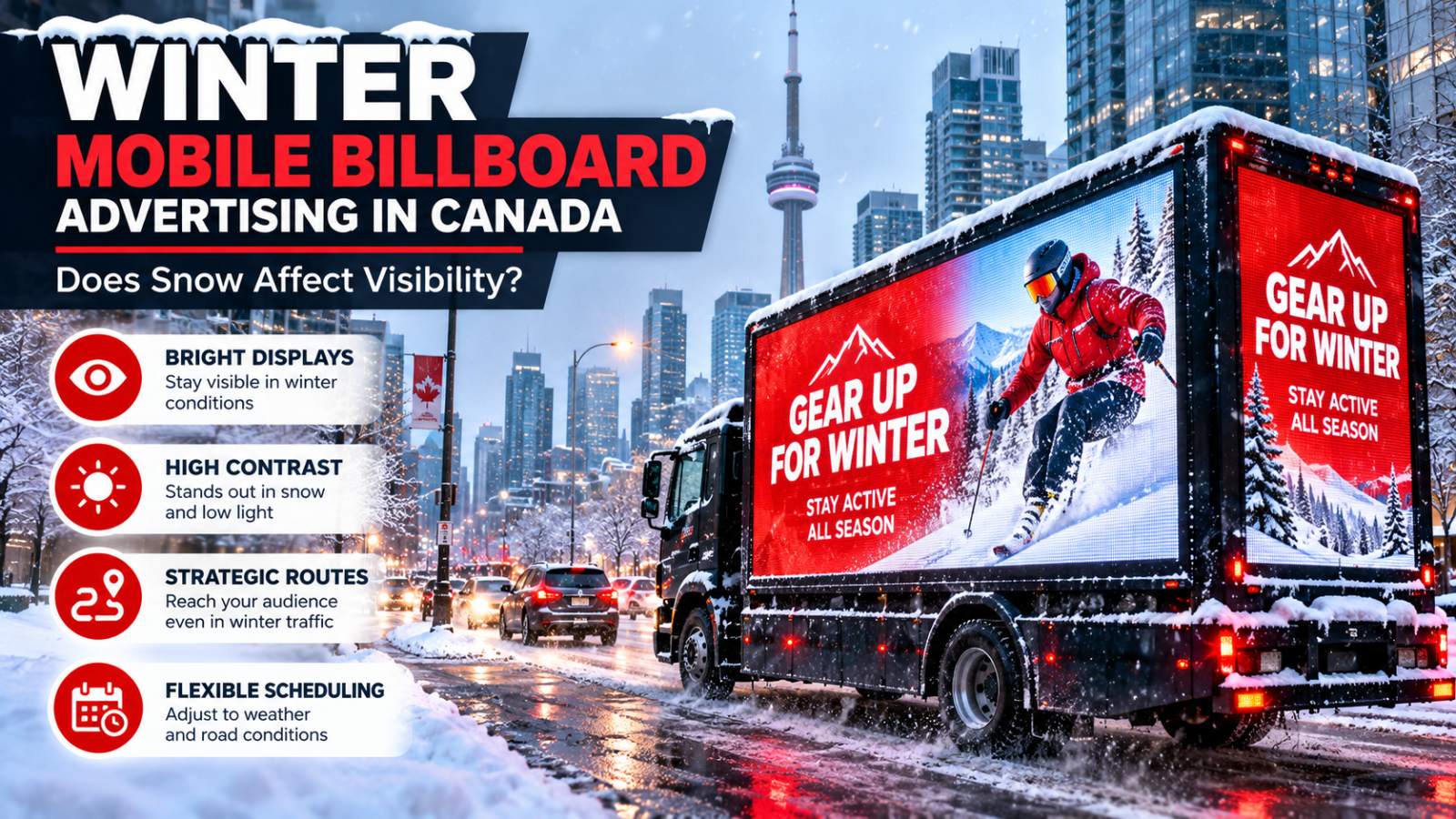
Picture a bright ad rolling through winter traffic. Eye-catching, sure. Then the snow shows up and spoils it a bit. If outdoor advertising Toronto is on your list for a seasonal campaign, it’s worth knowing how the weather changes what people see. Falling snow, road spray, cloudy skies, an early sunset; they all shift the viewing experience.
Does winter mean you shouldn’t advertise? Nope. If the display suits outdoor use, the message reads easily and the schedule keeps local weather in mind, a campaign can still do well. But the screen isn’t everything, so look at the rest i.e., rout, lighting, and road condition, before you spend the budget. The quality of the creative is equally important. Each one affects whether anyone notices your message.
How Does Snow Affect the Visibility of Mobile Billboards?
Snow can affect an ad in a few ways. A light flurry and a heavy snowstorm are very different things, and that difference counts.
Light snowfall? A bright display with a simple message can stay easy to see. But heavy snow cuts visibility across the whole road; however, drivers and pedestrians miss the details.
Road spray is another one. Slush, salt, dirty water; it all collects on exterior surfaces, and the display or the panels around it can look less clean. Fog and overcast skies take away contrast, and wet roads bring glare from headlights and street lighting.
That doesn’t mean a campaign can’t work. People simply get less time to notice the ad and understand it. You just need to adjust driving to changing weather and visibility conditions.
For advertisers, the lesson is pretty simple. A screen that looks great on a clear afternoon may not give the same view during a snowstorm. Weather planning matters, and regular equipment checks do too, before the campaign begins.
Which Display Features Help Advertisements Stand Out in Winter?
Display quality matters, no question. Still, a brighter screen alone won’t fix every visibility problem. When you’re comparing a mobile advertising truck service, check whether the equipment suits outdoor use in cold weather and changing light. Some features deserve extra attention:
- Clear contrast: Contrast is what makes a message jump out, whether it’s dark text on light or light text on dark.
- Readable letters: Big letters carry further. Small print and busy layouts just don’t read from a distance.
- Simple creative: A main message, a familiar image, a clear next step. It’s often the more practical route than cramming in several details.
- Suitable display performance: Ask about the screen’s operating conditions, brightness controls and maintenance requirements.
- Clean surfaces: Regular checks help prevent dirt, salt and road spray from affecting the overall appearance.
Short messages work best, ones people can take in at a glance. They might only see the ad for a second, especially with traffic moving. A complicated offer, or a long web address, is hard to remember.
Also, make sure the display is built for where it’ll actually be used. Not every screen has the same cold-weather capability or visibility performance, so don’t just assume.
When Is the Best Time to Run a Winter Billboard Campaign?
Timing really does change how people experience an outdoor ad. Days run shorter in winter. A schedule built around summer daylight might not hold up once it gets dark early in the evening.
Daytime campaigns can benefit from natural light when the weather is clear. Afternoon and evening slots may suit promotions aimed at people travelling after work, although visibility depends on the screen, the surrounding lighting, traffic and weather. More traffic doesn’t automatically mean more attention; particularly when road conditions need extra concentration.
Before you confirm a schedule, go through these steps:
- Check the forecast a few days before the campaign starts, and once more on the day itself.
- Match the operating hours to the audience you want and the message you’re running.
- Have a Plan B on dates or timing ready before the campaign starts, just in case bad weather gets in the way.
- If severe weather hits, what then? Settle on other dates or timing arrangements beforehand.
Put safety first, every time. When heavy snow or poor roads make travel unsafe, postponing can be the smart call. A flexible schedule lets you react, and nobody has to take an unnecessary risk, whether that’s people or equipment.
What Should Businesses Check Before Booking a Winter Campaign?
Getting ready before you book helps you dodge confusion later. As you look at different providers, ask them for clear details on the equipment, the operating arrangements and the support that’s part of the service. A low price doesn’t always come with the flexibility a campaign needs when the weather can’t be trusted.
Begin with the display. How’s it maintained in winter? Is the equipment suitable for the temperatures and conditions expected during your campaign? And who checks it for dirt, salt residue or other issues that could affect its appearance? Get those answers first.
Then clarify the practical details before you commit:
- Campaign schedule: Confirm the operating hours and expected duration.
- Route planning: Find out how routes get picked and whether they can be changed.
- Weather arrangements: Look at the policy on delays, cancellations and rescheduling.
- Performance reporting: Ask what proof of delivery you’ll get, like operating records or photographs where provided.
- Additional services: For a bigger promotion, ask ifaudio visual rentalis on offer for supporting equipment at an event.
Compare on these points and you’re looking at more than price. You also end up with realistic expectations of what the campaign can achieve.
Can Winter Mobile Billboards Work Alongside Other Promotional Activities?
A moving ad doesn’t need to work alone. Pair it with other marketing activities and people can recognise your message, then find more information after seeing it.
Take a seasonal promotion. Think of a short line on the display, plus maybe a landing page, some social posts and an offer. Catch only part of the ad? You can still learn more afterwards, provided the wording and visuals stay the same throughout.
Running an event as part of the promotion? You might need extra screens or sound equipment, which you can arrange through audio visual rental services. Just check that the equipment is available and suitable for your venue.
Decide how you’ll measure results before the campaign starts. A unique promotional code, a dedicated web page, a trackable enquiry method, any of them can give useful information. Compare the results with your campaign goals. Don’t assume every website visit or enquiry came directly from the moving display.
Is Winter the Right Season for a Mobile Billboard Campaign?
Snow can affect visibility, but it doesn’t automatically rule out a winter campaign. Screen quality, clear creative, sensible scheduling, regular maintenance and safe route planning all influence the viewing experience. Before booking, talk through weather arrangements and realistic campaign expectations with the provider.
Winter weather can be unpredictable, so it pays to think things through before booking outdoor advertising Toronto. Consider your campaign goals, the areas you want to cover and the provider's arrangements for poor weather. That way, you can make a decision based on what your campaign actually needs.









1 thought on “Winter Mobile Billboard Advertising in Canada: Does Snow Affect Visibility?”
Comments are closed.