

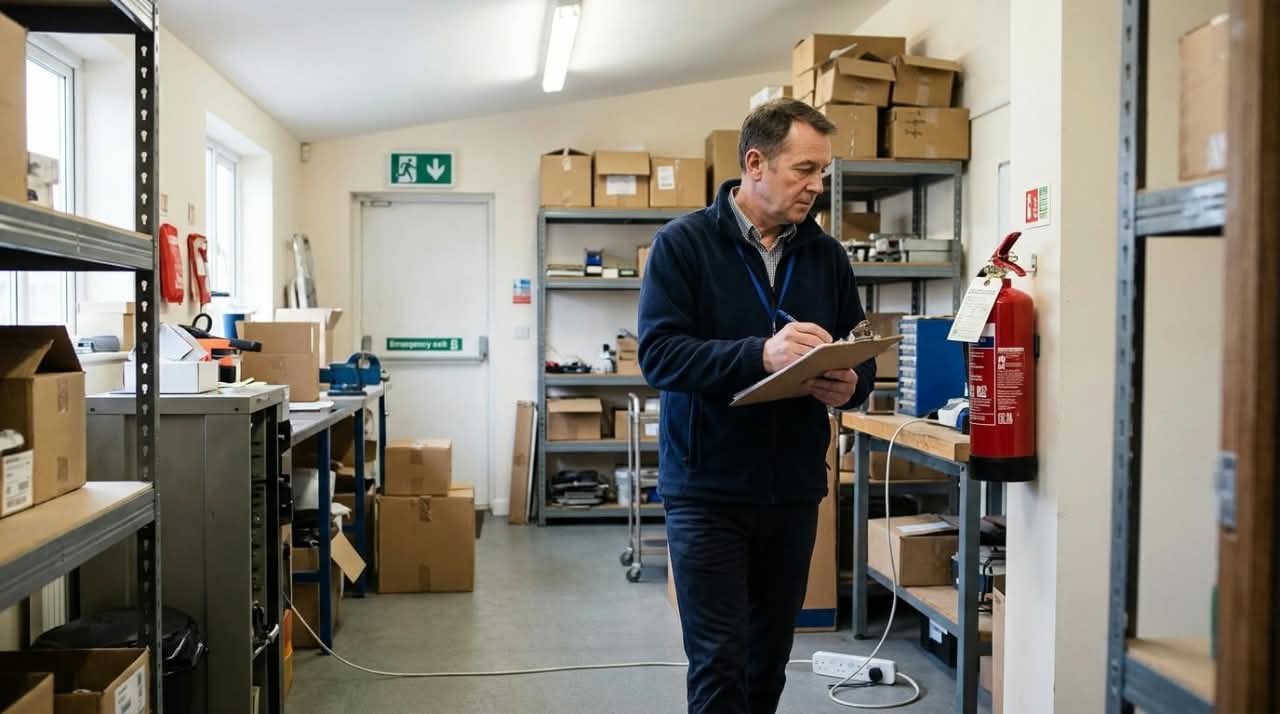
The office kettle has a damaged lead. Cleaning chemicals sit on a shelf without labels. A member of staff uses an old extension cable every afternoon because the nearest socket is too far away. None of these problems is difficult to spot once someone takes a proper look.
Small businesses are busy, and safety tasks can drift down the list while owners deal with customers, invoices and staffing. Yet routine checks can prevent injuries and interruptions that are far more disruptive than a few minutes spent inspecting equipment.
A February 2026 case reported by Britain's Health and Safety Executive showed the consequences of weak chemical controls. A worker at a cleaning-products manufacturer suffered chemical burns when corrosive liquid escaped from a container. Inspectors identified problems including inadequate training and insufficient first aid arrangements. It was an industrial incident, but the need to understand hazardous substances also applies to smaller employers.
Check what is stored in the cleaning cupboard
Businesses often buy chemicals for cleaning floors, toilets, kitchens and machinery without thinking about what happens after delivery. Bottles get moved, instructions are lost and staff combine products without knowing whether the mixture is dangerous.
Start with an inventory of products used at work. Keep them in suitable labelled containers, read supplier safety information and assess how people may be exposed. Some chemicals can irritate skin or eyes, while others may produce hazardous fumes. Workers should know what protective measures are needed and what to do after a spill.
In Great Britain, the Control of Substances Hazardous to Health Regulations, commonly called COSHH, require employers to assess and control exposure to hazardous substances where the rules apply. COSHH Training can help employees understand substance hazards, control measures and safe handling. Owners still need assessments that match the products and tasks in their own business.
A small cleaning cupboard can be easy to forget. Assign somebody to check it when supplies arrive and whenever a new product is introduced.
Look closely at plugs, leads and portable equipment
Portable electrical equipment takes a lot of punishment. Chargers are pulled from sockets, vacuum cleaners travel between rooms and extension leads are trapped under furniture. Damage may stay hidden until somebody notices a frayed cord or a plug that has started to overheat.
Workers should be encouraged to report faults and stop using damaged equipment. Visual checks can catch obvious problems such as cracked casings, loose connections and exposed wires. Equipment used in harsh conditions or moved frequently may need more formal inspection and testing.
The HSE explains that portable appliance testing is not automatically required every year for every item. Employers should take a risk-based approach to maintaining electrical equipment. portable appliance testing training can support employees whose responsibilities include checking portable appliances, provided the training matches the work they are competent and authorised to carry out.
Keep a record of equipment taken out of service. Otherwise a colleague may put a faulty device back into use because it still appears to work.
Walk the routes people use every day
A corridor might be clear during an inspection and crowded an hour later when deliveries arrive. Boxes wait by a fire exit. A mop bucket sits outside a store room, and a trailing lead crosses the route to the printer.
Check busy walkways at the times they are actually used. Make sure emergency exits remain clear, deal promptly with spills and arrange storage so deliveries have somewhere safe to go. In a customer-facing business, consider what happens when visitors and staff move through the same areas.
Ask employees to point out places where they regularly trip, squeeze past obstacles or struggle to carry things. Those observations are often more useful than an inspection done when the premises are quiet.
Do not assume every worker knows the equipment
A new employee may know how to operate a machine but be unfamiliar with the particular model in your workplace. Temporary staff may have been shown the job once during a busy shift. A supervisor might assume everyone understands how to isolate equipment before cleaning.
Short demonstrations and clear instructions help. Check that workers can explain what they would do if equipment jams, a chemical spills or an electrical appliance develops a fault. Where a task involves higher risks, make sure suitable training and supervision are in place before allowing independent work.
Workers also need permission to stop when conditions are unsafe. If the only message they hear is to finish faster, they may take shortcuts despite knowing the precautions.
Keep first aid and reporting arrangements ready
A first aid kit may be fully stocked on the day it is bought and half empty a year later. Check supplies against the risks in the workplace, make sure employees know where they are and identify who will help in an emergency. Review whether specific chemicals require immediate access to eye-washing facilities or other arrangements.
Encourage staff to report near misses as well as injuries. A cable that almost caused a fall or a container that leaked slightly gives the business a chance to fix a problem while the consequences are still small.
Small employers do not need complicated paperwork for every minor decision. They do need sensible arrangements, clear responsibility and a habit of following up.
Build checks into an ordinary working week
Safety checks are easier to maintain when someone owns them. A shop supervisor might check exits before opening. The person responsible for cleaning supplies can review labels and storage when ordering stock. Employees can look over portable tools before use and report damage straight away.
Review the arrangements when the business changes premises, adds equipment or takes on different work. A checklist written for last year's operations may miss the hazards that matter today.
The purpose of these checks is straightforward: find foreseeable problems and put them right while they are still manageable. That is time well spent for a small business.









4 thoughts on “The Workplace Safety Checks Small Businesses Often Overlook”
Comments are closed.