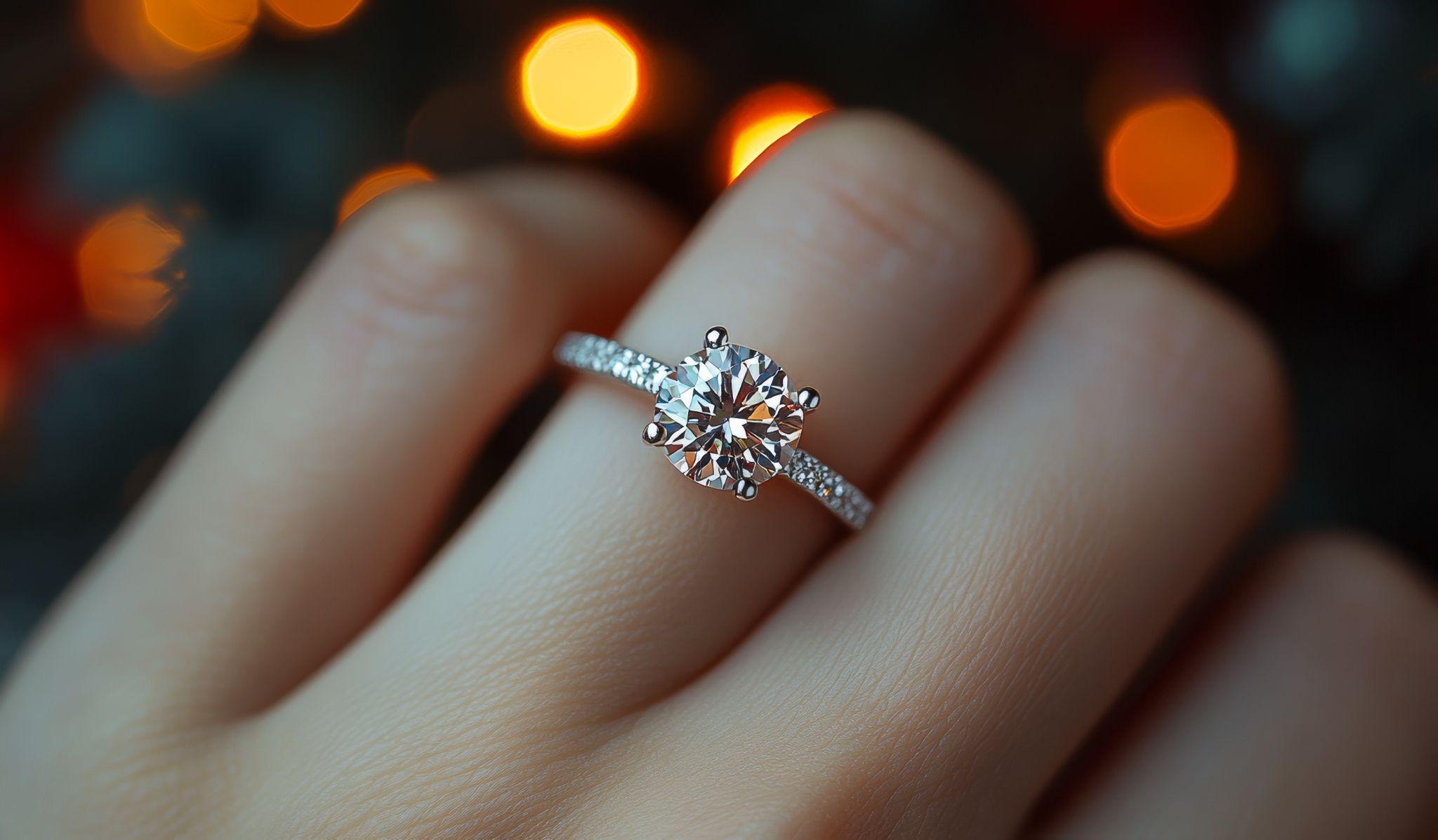
Round, oval, cushion, pear, and emerald-cut diamonds pair beautifully with accent stones hidden beneath the center stone. Each shape creates a different appearance, depending on its proportions and how the surrounding stones are arranged.
When exploring the best diamond shapes for rings, consider how the center stone looks from different angles. Hidden accent stones introduce subtle sparkle without changing the main diamond’s appearance from above. Choosing the right combination helps you create a ring that matches your style while keeping the design balanced.
Why Does Diamond Shape Matter in Hidden Halo Settings?
A hidden halo features small accent diamonds positioned beneath the center stone. Unlike traditional halos, which surround the diamond’s visible edges, hidden halos are primarily noticeable from the side.
The center diamond’s shape influences how these smaller stones are positioned. Round diamonds create a symmetrical outline, while elongated shapes require settings that follow their proportions.
The best diamond shapes for rings with hidden accents should complement the setting without making the design appear crowded.
Which Center Stone Shapes Work Best With Hidden Accents?
Different diamond shapes create different visual effects. Some offer a traditional appearance, while others make the ring look more modern or distinctive.
Round Diamonds for Classic Symmetry
Round diamonds are known for their balanced proportions and brilliant sparkle. Their circular outline allows hidden accent stones to follow a symmetrical arrangement beneath the center diamond.
This combination suits people who prefer a traditional engagement ring with a subtle decorative detail. A simple band can keep attention on the center stone.
Oval Diamonds for an Elegant, Elongated Look
Oval diamonds have an elongated outline that creates a graceful appearance. A hidden halo can follow their curved shape, adding sparkle beneath the diamond without overwhelming it.
This pairing works particularly well with simple bands and cathedral settings. Jewel Nests explores the combination in its guide to oval diamonds and hidden halos.
Cushion Diamonds for Soft, Romantic Details
Cushion-cut diamonds feature rounded corners and square or rectangular outlines. Their softer appearance makes them suitable for romantic and vintage-inspired engagement rings.
A hidden halo adds decorative detail while keeping the center diamond prominent. Both square and elongated cushion cuts can work, depending on your preferred proportions.
Pear Diamonds for a Distinctive Shape
Pear-shaped diamonds combine a rounded end with a pointed tip. Their teardrop outline creates an unconventional appearance that can make an engagement ring stand out.
Hidden accent stones can follow this distinctive outline. However, the pointed end requires a protective setting to reduce the risk of damage during everyday wear.
Emerald Diamonds for Minimalist Elegance
Emerald-cut diamonds have rectangular outlines, cropped corners, and broad step-cut facets. They offer a structured appearance that appeals to people who prefer clean, modern designs.
Adding a hidden halo introduces subtle sparkle beneath the center stone. A simple band can maintain the diamond’s geometric appearance without adding unnecessary decoration.
How Do These Diamond Shapes Compare?
The following table highlights how popular center stones complement hidden halo settings.
| Diamond Shape | Overall Appearance | Hidden Halo Effect |
|---|---|---|
| Round | Classic and symmetrical | Balanced side-view sparkle |
| Oval | Elegant and elongated | Complements curved proportions |
| Cushion | Soft and romantic | Adds detail beneath rounded edges |
| Pear | Distinctive and asymmetrical | Follows the teardrop outline |
| Emerald | Clean and geometric | Creates subtle contrast |
According to the International Gemological Institute’s diamond shape guide, diamond shapes differ in their outlines, facets, and visual characteristics. Understanding these differences can help you select a center stone that matches your preferences.
What Should You Check Before Choosing a Hidden Halo Ring?
Beyond the diamond’s shape, several setting details influence the finished ring.
The height of the center stone affects how visible the hidden accents are. A higher setting may reveal more sparkle from the side, while a lower setting can create a subtler appearance.
When comparing hidden halo diamond engagement rings, pay attention to:
- Stone proportions: Make sure the center diamond looks balanced with the band.
- Setting security: Check that the prongs properly support the diamond.
- Wedding band compatibility: Consider whether another band will sit comfortably beside the ring.
These factors can help you select a design that suits both your appearance preferences and everyday activities.
Frequently Asked Questions
1. Do hidden halo diamonds make the center stone appear larger?
Hidden halos primarily add sparkle beneath the center diamond rather than increasing its visible size from above. Their main purpose is to introduce subtle decorative detail while keeping attention on the center stone.
2. Are hidden halo engagement rings suitable for everyday wear?
Yes, hidden halo rings can be suitable for everyday wear when properly designed. Choose a secure setting, avoid unnecessary impacts, and arrange regular inspections to maintain the ring’s condition.
3. Can hidden halo accent stones be customized?
Customization options depend on the jeweler and setting design. Some rings allow changes to accent stone size, arrangement, or number. Any modifications should complement the center diamond and maintain the setting’s structural integrity.
Find a Hidden Halo Ring That Matches Your Style
Choosing among the best diamond shapes for rings depends on your preferred appearance and setting. Round diamonds offer classic symmetry, oval and pear shapes create elongated profiles, while cushion and emerald cuts provide softer or more structured looks. Each can work beautifully with carefully arranged hidden accents.
At Jewel Nests, you can explore different diamond shapes and hidden halo settings to find a ring that reflects your personality. Compare the proportions, examine the side profile, and choose a design that feels comfortable and meaningful for your engagement.