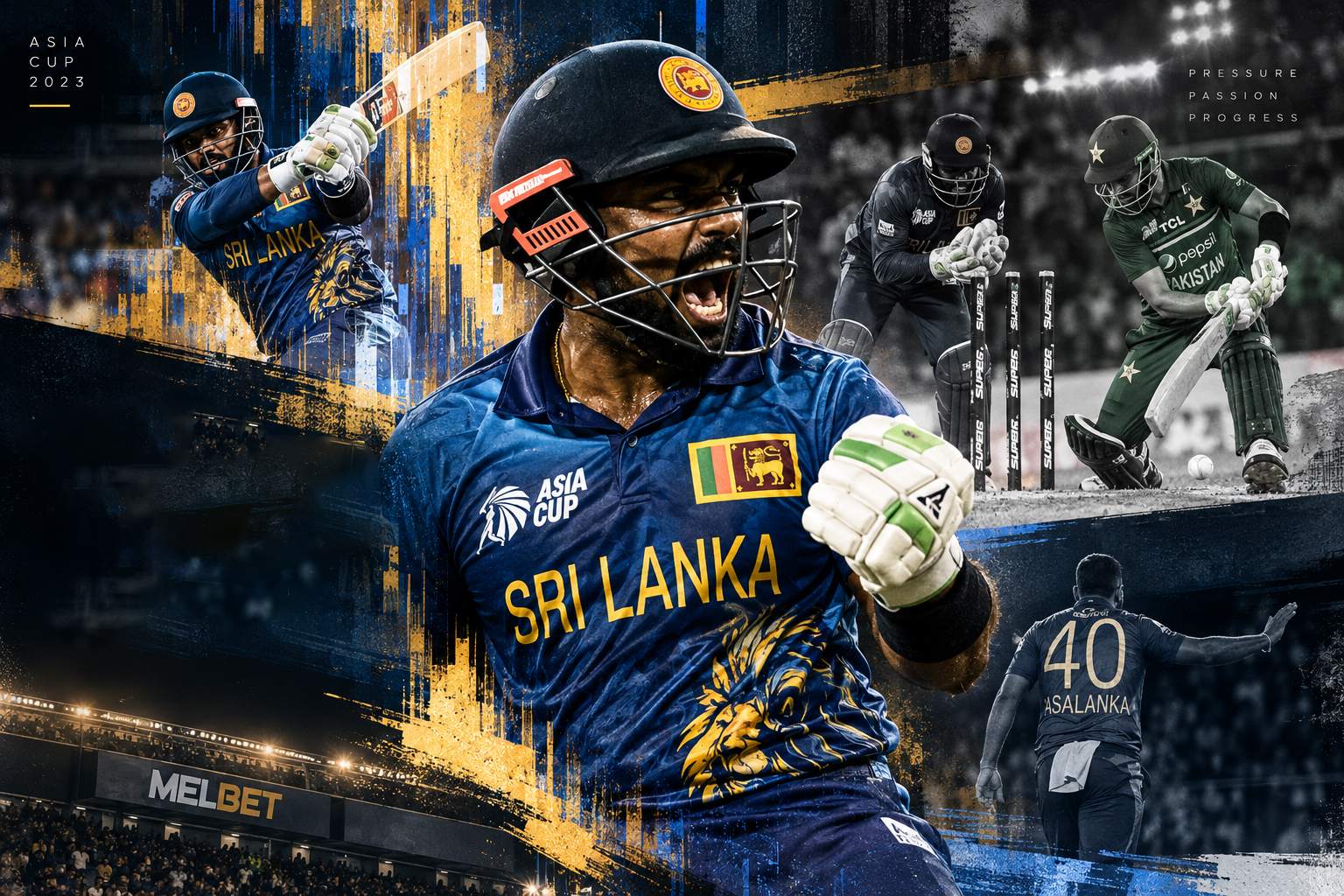
It was well past midnight in Colombo on 14 September 2023 when Zaman Khan took his run-up for the final delivery of the match. The Asia Cup Super Four stage had brought Sri Lanka and Pakistan together in what was effectively a semi-final. Charith Asalanka’s 47 runs were lit up on the scoreboard at R. Premadasa Stadium, and Sri Lanka needed just two runs. The stands were on their feet, the commentators were speaking in whispers, whilst Pakistan were already picturing themselves as finalists. A few seconds later, the ball went to the square leg, and Asalanka sprinted for the winning runs.
This Super Four match dragged on until 01:07 local time. A tropical downpour had shortened the match to 42 overs per side, and the target of 252 runs seemed achievable only with perfect execution. Fans of online slots Sri Lanka know the value of such evenings, when the tension rises with every pivotal moment and the outcome is decided in the final second. Cricket gave spectators the same thrill, only without the reels and multipliers. But now let’s look at everything in more detail.
A downpour stole eight overs
Pakistan arrived for the decisive match with an injury-hit attack. Naseem Shah and Haris Rauf had picked up injuries following the match against India, whilst Salman Ali Agha was also sidelined. Zaman Khan made his debut, for whom such an evening proved a rather harsh introduction to the pressures of cup cricket.
The weather also decided to rewrite the rules. Initially, the match was shortened to 45 overs; after a further break, only 42 remained. Pakistan’s innings rested on three pillars:
- Abdullah Shafique scored 52 and helped the side weather the early departure of Fakhar Zaman.
- Mohammad Rizwan finished on 86* off 73 balls.
- Iftikhar Ahmed added 47; their partnership with Rizwan yielded 108 runs off 78 balls.
At the other end, Matheesha Pathirana took 3/65, whilst Pramod Madushan claimed 2/58. Pakistan finished on 252/7. Under the DLS method, Sri Lanka's target was adjusted to 252 runs from 42 overs, one run fewer than would normally have been required to surpass Pakistan's total. The adjustment reflected the interruptions caused by rain and Pakistan's remaining batting resources.
Mendis gave the chase a steady rhythm
Sri Lanka started aggressively. Kusal Perera managed to score 17 runs off eight balls and looked like a man who was going to take on the required rate single-handedly. Then came a run-out. Pathum Nissanka lasted longer but was dismissed for 29, and at 77/2 the match called for a more measured approach.
Kusal Mendis and Sadeera Samarawickrama set the right pace. Their partnership reached 100 runs and took a significant amount of pressure off the chase. Mendis scored 91 off 87 balls, hitting eight fours and one six. So the Player of the Match award went to him quite deservedly. And if you enjoy predicting such individual performances, it’s worth downloading a sports betting app with detailed player statistics. This makes it much easier to choose markets on top batters.
Returning to the match, after Mendis’s innings the home side’s position looked manageable, but by no means secure:
- After 29.4 overs, the score stood at 177/3.
- By 37.4 overs, it had risen to 222/5.
- By that point, Asalanka had scored 30 off 26 balls and remained the main lifeline at the bottom of the order.
Pakistan needed wickets, and they got them. A calm mid-innings chase gave way to a nail-biting finish, in which a single error cost them the final.
Shaheen brought Pakistan back into the game
Shaheen Shah Afridi brought Pakistan back into contention with two wickets in consecutive deliveries, dismissing Dhananjaya de Silva and Dunith Wellalage in the 41st over. Earlier, Iftikhar Ahmed had dismissed Sri Lankan captain Dasun Shanaka. The lower order of the Sri Lankan line-up began to crumble at an alarming rate. Afriidi himself finished his spell with an impressive 2/52.
Going into the final over, the home side needed to score eight runs. The ball was handed to the young Zaman Khan – the lad was thrown into the thick of the action, the sort of situation that, at his age, one usually only dreams of in theory. However, the pressure worked in their favour. Pramod Madushan was caught out, and Pakistan found themselves just one lucky ball away from the final.
With two balls remaining, the maths had become almost mockingly clear:
- Sri Lanka needed six runs;
- two wickets remained;
- Asalanka was on strike.
He didn’t play the first of the two deliveries cleanly. The edge of his bat sent the ball past the wicket-keeper and short third man for four. There was little beauty in the shot, but it did exactly what was required. Asalanka gently played the final delivery to fine leg. Two runs. The match ended at 252/8 without a single ball left to play.
Asalanka sealed the victory, whilst Mendis laid the groundwork throughout the evening
The final scene quickly made Asalanka a headline-grabbing hero, although the victory hinged on several key players:
- Mendis scored 91 runs;
- Samarawickrama helped build a century partnership;
- Pathirana took three wickets, whilst Rizwan, for Pakistan, almost single-handedly dragged his team into the decider.
It is important to realise that the value of the 49 runs scored by Asalanka lies in the nature of his play. He did not dominate on the pitch from start to finish. Not at all. His role changed tactically as the match unfolded. First, he had to keep the team’s chances of success alive; then, he had to cope with the loss of his batting partners; and finally, he had to score six runs off two balls. And he coped brilliantly with each of these tasks.
In the Sri Lankan Cricket Council’s annual report, his performance is recorded in the dry language of figures: 252 runs for 8 wickets (in 42 overs) – a victory by a margin of two wickets according to the Duckworth-Lewis-Stern (DLS) method, with no balls remaining. However, things at the stadium were far from ‘dry’ – neither literally nor emotionally. Rain cut the match short, and the Pakistani bowlers nearly seized the initiative at a crucial moment. Zaman had to endure an extremely gruelling ordeal. It was only Asalanka’s decisive blow that secured Sri Lanka’s place in the final.