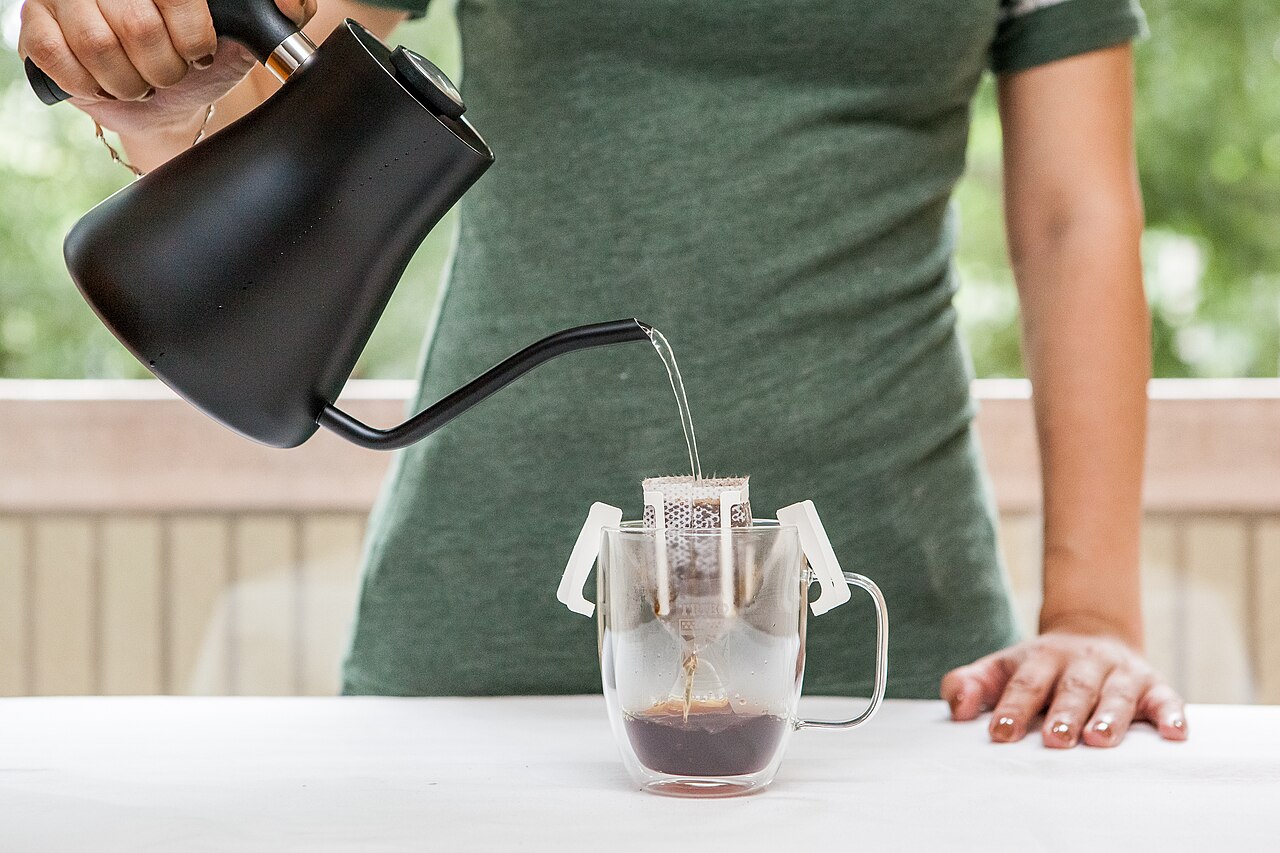
Most bad decaf is not a decaf problem. It is a brewing problem. Decaf coffee beans extract differently than regular coffee, and applying the same setting you use for caffeinated coffee is the most common reason people end up with a flat, hollow cup. Fix the brewing and the flavor comes back.
How Decaf Coffee Beans Are Processed Matters First
Before brewing, the process used to remove caffeine affects what is left in the cup.
Most commercial decaf uses chemical solvents, typically methylene chloride or ethyl acetate. These solvents are applied to green coffee beans to stop caffeine before roasting. Methylene chloride is classified as a possible carcinogen by several health agencies. Ethyl acetate is sometimes marketed as more natural since it can be derived from fruit, but it is usually produced synthetically and still involves direct chemical contact with the beans. Both methods can strip delicate aromatic compounds in the process.
The Swiss Water Process works differently. Green coffee beans are soaked in a water solution that already contains the soluble compounds found in coffee, minus the caffeine. Because the water is already saturated with those compounds, only the caffeine migrates out while the rest of the flavor-carrying molecules stay in the bean. The caffeine is then removed using carbon filters, and the solution is recirculated. No solvents touch the beans at any stage.
Swiss Water decaf reaches 99.9% caffeine-free, and because it skips chemical exposure entirely, delicate flavor compounds stay more intact. When buying decaf coffee beans, the process used is worth checking.
Why Decaf Extracts Differently
The decaffeination process, regardless of method, slightly changes the cell structure of the bean. Decaf coffee beans are more porous than their caffeinated counterparts, and that porosity means hot water moves through them faster. The result is a coffee that extracts quicker and is more prone to over-extraction when brewed with standard settings.
Over-extracted decaf tastes bitter, papery, or hollow. Under-extracted tastes sour and thin. The adjustments that prevent both are simple: brew cooler and grind coarser.
The Two Adjustments That Change Everything
Lower your water temperature by 3 to 5 degrees compared to regular coffee. For filter methods, 91 to 93 degrees Celsius works well. For espresso, 90 to 92 degrees Celsius. Cooler water slows extraction and gives you more control.
Go one or two steps coarser on your grind. A finer grind increases surface area and speeds up extraction, which is already running fast with decaf coffee beans. Backing off reduces that effect and produces a more even result.
These two changes alone make a noticeable difference. Most people who have given up on decaf never made them.
Brewing Decaf Coffee by Method
Pour over and V60: 15 grams of decaf coffee beans to 250 grams of water at 91 to 92 degrees Fahrenheit. Start with a 30-gram bloom for 30 seconds, then pour in stages. Total brew time should land between 3 and 3.5 minutes.
French press: 15 grams to 250 milliliters at 92 to 93 degrees, coarse grind, 4-minute steep. Pour off immediately. Bitterness develops fast with decaf when extraction continues past that window.
Aeropress: 15 grams to 240 milliliters at 88 to 90 degrees, medium-fine grind. Use the inverted method, steep 1.5 to 2 minutes, press slowly over 30 seconds.
Espresso: 18 to 19 grams in, 36 to 38 grams out, 28 to 32 seconds. Decaf crema is naturally lighter than regular espresso.
Moka pot: Fill the basket level without tamping, water just below the valve, medium-fine grind, remove at the first hiss. Moka pot decaf runs concentrated, dilute with hot water or milk rather than reducing the dose.
Common Mistakes That Kill the Flavor
- Buying pre-ground decaf. Buy whole decaf coffee beans and grind before each brew. Decaf loses its subtler notes faster than regular coffee once ground.
- Using old beans. Decaf does not improve with time. Use it within a few weeks of roasting.
- Brewing too hot. Drop the temperature and taste the difference.
- Wrong ratio. For filter methods, 1:16 is a better starting point for decaf than the 1:15 used for regular coffee. You can go as loose as 1:17 or 1:18 with a dialed-in temperature and grind .
FAQs
What decaf process preserves the most flavor in decaf coffee beans?
Swiss Water Process. It removes caffeine without using chemical solvents, which preserves more of the volatile aromatic compounds that carry flavor. Solvent-based methods, which use methylene chloride or ethyl acetate, can strip delicate notes and reduce the clarity of the coffee’s origin character.
Is methylene chloride in decaf coffee dangerous?
Methylene chloride is classified as a possible carcinogen, and residue levels in finished coffee are regulated. Whether those levels present a health risk is debated, but many coffee drinkers prefer to avoid it by choosing Swiss Water or CO2-processed decaf coffee beans.
Why does decaf coffee taste flat or bitter?
Usually a brewing error. Decaf coffee beans extract faster because decaffeination makes the bean more porous. Lower the water temperature and coarsen the grind before assuming the coffee itself is the problem.
How much caffeine is in decaf coffee?
A cup of Swiss Water decaf typically contains 2 to 5 milligrams of caffeine, compared to 80 to 120 milligrams in standard filter coffee.
Can you make espresso with decaf coffee beans?
Yes. Use the same dose as regular espresso, pull at 90 to 92 degrees Fahrenheit. Decaf espresso produces a lighter crema but the flavor can be full and sweet when brewed correctly.