

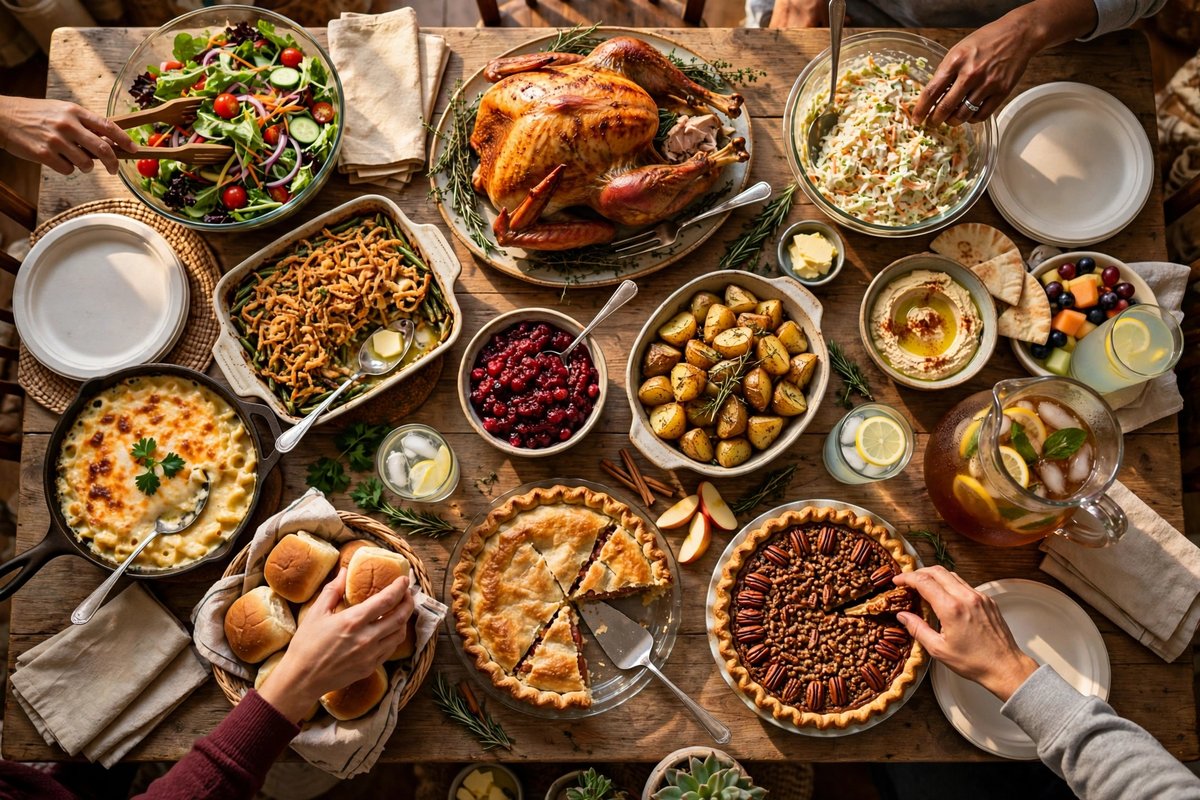
A full potluck table works when every dish has an owner before the day arrives.
A potluck is the simplest way to feed a crowd. Everyone brings one dish, the host does not cook for twenty people alone, and the table ends up with more variety than any single cook could manage. But anyone who has hosted one knows the other side of the story. Five desserts arrive and no main dish. Three people bring the same salad. Nobody brings drinks, plates or serving spoons. The food runs out before the last guests eat, or half of it goes home uneaten.
The difference between a chaotic potluck and a smooth one is rarely the cooking. It is the planning. A potluck works when every dish has a name next to it before the day arrives, when portions match the guest count, and when the boring jobs like drinks, plates and cleanup are assigned just as carefully as the turkey. This guide walks through the whole process, step by step, so your next potluck feels relaxed instead of frantic.
What Is a Potluck Sign Up Sheet?
A potluck sign up sheet is a shared list where every dish, drink and job has one owner. Instead of asking the group chat "who is bringing what" and losing the answers in a hundred messages, the host puts the full menu on one sheet and each guest claims one row.
The easiest way to do this is with a free potluck sign up sheet that lives online. The host picks a guest count, edits the dish list, enters an event title and creates the sheet. Guests open one shared link, type a display name and claim an open dish. If Sam claims drinks, everyone can see Sam next to drinks. No guest needs an account, no one needs to download an app, and the host can see the gaps at a glance. When plans change, the host reopens the dish from the browser that created the sheet and someone else claims it. At the end, the host prints the final list.
A good sign up sheet does three jobs at once. It stops duplicate dishes, it makes the gaps visible while there is still time to fill them, and it gives every guest one clear instruction instead of an open-ended question.
Why Potlucks Go Wrong
Most potluck problems are planning problems, and they repeat in the same five ways.
No one owns the menu. When dishes are decided in a group chat, nobody knows what is actually covered until the day arrives.
The menu is unbalanced. Desserts are fun to bring, so they pile up, while mains, drinks and supplies get forgotten.
Portions are guesswork. A salad for four at a dinner for twenty leaves guests hungry, and a dish with no quantity written next to it invites exactly that.
Dietary needs are an afterthought. Allergies and vegetarian guests discovered at the table turn a friendly meal into a stressful one.
Supplies and cleanup have no owner. Plates, cups, serving spoons and the final tidy are jobs too, and if no one is assigned them, the host does them all.
Step 1: Set the Date, Time and Venue
Pick the date at least two weeks ahead for a casual potluck, and three to four weeks ahead for a holiday meal like Thanksgiving. A weeknight potluck works best between 6 and 8 pm, and a weekend lunch between 12 and 2 pm. Give the serving time in the invitation, not just the arrival time, so hot dishes arrive hot. Check the venue before you plan the menu. A small office kitchen, a church hall and a park picnic need different supplies. If the venue has one oven or one microwave, ask for chilled dishes and slow cooker dishes that do not need reheating. Write the address, the parking notes and the serving time into the invitation so nobody has to ask.
Step 2: Count Your Guests and Set the Headcount
Ask for RSVPs with a firm deadline, ideally five days before the event. Count children as half portions for food planning but as full seats at the table. Add two extra places to your headcount for last minute guests, because potlucks almost always gain a couple of people. The headcount drives everything else: how many mains, how many sides, how much drink and how many plates. If you do not know the number, you cannot plan portions, and portions are where most potlucks fail.
Step 3: Build a Balanced Menu
Start with the main dish, then build outward. A balanced potluck menu has one or two mains, two or three hot sides, one or two cold sides, bread, two or three desserts, drinks and supplies. Give every item its own row on the sign up sheet, with a quantity written in. "Salad" is not a row. "Garden salad for 12" is a row. Quantities stop the guest who brings a salad for four to a dinner for twenty.
|
Category |
Examples |
How many slots |
|
Main dish |
Roast turkey, baked ham, lasagna, pulled pork, vegetarian casserole |
1 to 2 |
|
Hot sides |
Mashed potatoes, green bean casserole, mac and cheese, roasted vegetables |
2 to 3 |
|
Cold sides |
Garden salad, coleslaw, pasta salad, fruit salad |
1 to 2 |
|
Bread |
Dinner rolls, cornbread, garlic bread |
1 |
|
Desserts |
Apple pie, pumpkin pie, brownies, cookies, fruit crisp |
2 to 3 |
|
Drinks |
Lemonade, iced tea, soda, water |
2 |
|
Supplies |
Plates, cups, napkins, cutlery, serving spoons |
1 to 2 |
Step 4: Create and Share the Sign Up Sheet
Build the sheet as soon as the menu is set, and share one link in the group chat with a clear deadline and serving time. Put the date, location and serving time at the top of the sheet so the details travel with the link. Ask guests to claim early, and check the sheet every day or two. If the main dish is still open three days before the event, ask someone directly instead of waiting. When a guest cancels, reopen their dish right away so someone else can claim it. Print the final list on the day so you can check dishes off as they arrive.
Step 5: Handle Dietary Needs and Allergies
Ask about allergies and dietary needs in the invitation, not on the day. Put a vegetarian or vegan main on the menu as a named dish, not as a side dish that happens to have no meat. Label dishes at the table with small cards that list the main ingredients. Keep one serving spoon per dish so serving spoons do not travel between dishes. If a guest has a serious allergy, ask the cook to bring the ingredient list or the packaging, and keep that dish at the end of the table where it is easy to reach without crossing other dishes. A gluten free template helps here: it reminds every cook to bring packaging or an ingredient list, and it keeps the dessert row as a planning prompt rather than a promise that a recipe suits every guest.
Step 6: Plan Portions So Food Lasts
The most useful rule of thumb is about one pound of food per person in total, across all dishes. That sounds like a lot until you add a main, two sides, salad, bread and dessert together. Use the table below as a starting point and adjust for your crowd. Teenagers and big eaters push the numbers up, and a mostly older crowd pulls them down.
|
Dish |
Amount per person |
|
Main protein |
4 to 6 ounces |
|
Each side dish |
1/2 to 3/4 cup |
|
Salad |
About 1 cup |
|
Bread or rolls |
1 to 2 pieces |
|
Dessert |
1 serving |
|
Drinks |
2 drinks in the first hour, then 1 per hour |
One more tip: ask for dishes in serving sizes, not single portions. A casserole that serves 8 to 10 is far more useful than four individual portions, and it is easier to keep warm.
Step 7: Check the Gaps the Day Before
Open the sheet the day before and read it like a shopping list. Is the main dish claimed? Are drinks covered? Is there a serving spoon for every dish? Is someone on cleanup? Message anyone with an open row and confirm they are still coming. Confirm the oven schedule if more than one hot dish needs it: who gets the oven, at what time, and for how long. Charge the slow cookers, clear fridge space for dishes that arrive cold, and put out the labels and pens for the ingredient cards. The tool does not send automatic reminders, so this check is the host's job, and it takes ten minutes.
Step 8: Set Up and Serve in the Right Order
Set the table in the order guests will move through it: plates first, then mains, then hot sides, then cold sides, then bread, then drinks at the end so nobody carries a full plate and a full cup at the same time. Put desserts on a separate table or keep them covered until the mains are cleared, or they will be picked at before dinner. Keep hot food hot with slow cookers and foil, and cold food cold on ice or in the fridge until serving time. Put the labels out before the food, not after. Announce the serving time once, then let people eat. A potluck is not a restaurant, and nobody needs a speech before the first plate.
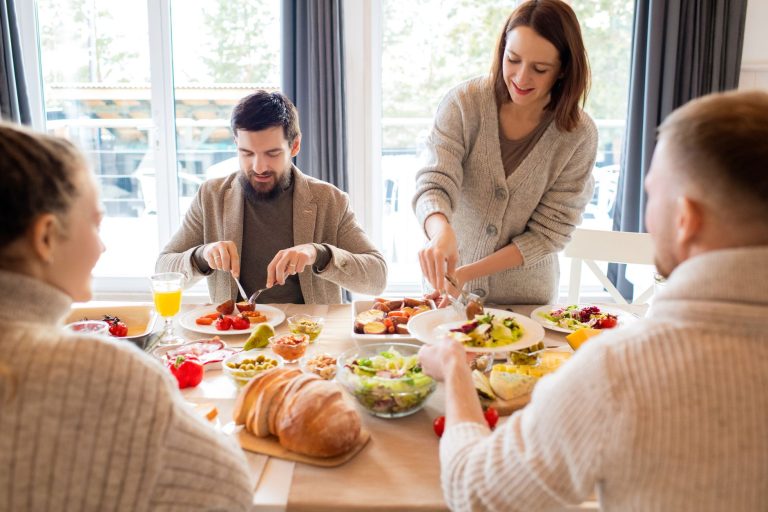
Guests serve themselves in one smooth line when the table is set in serving order.
Step 9: Plan Cleanup Before Anyone Arrives
Cleanup is the job everyone forgets until the last guest leaves. Put it on the sign up sheet as its own row, with a named volunteer. Bring trash bags, foil and containers for leftovers before the event starts, not after. Ask guests to take their own dishes home and to pack leftovers in the containers you provide. A ten minute tidy with three or four people beats an hour alone, and it is the reason hosts agree to do it again next year.
Potluck Dish Ideas That Always Work
Mains: roast turkey, baked ham, lasagna, pulled pork, chicken casserole, vegetarian stuffed peppers, lentil shepherd's pie.
Hot sides: mashed potatoes, green bean casserole, mac and cheese, roasted vegetables, scalloped potatoes, baked beans.
Cold sides: garden salad, coleslaw, pasta salad, fruit salad, cucumber salad, potato salad.
Desserts: apple pie, pumpkin pie, brownies, cookies, fruit crisp, chocolate cake.
Drinks and supplies: lemonade, iced tea, soda, water, plates, cups, napkins, cutlery, serving spoons, foil.
Templates for Every Occasion
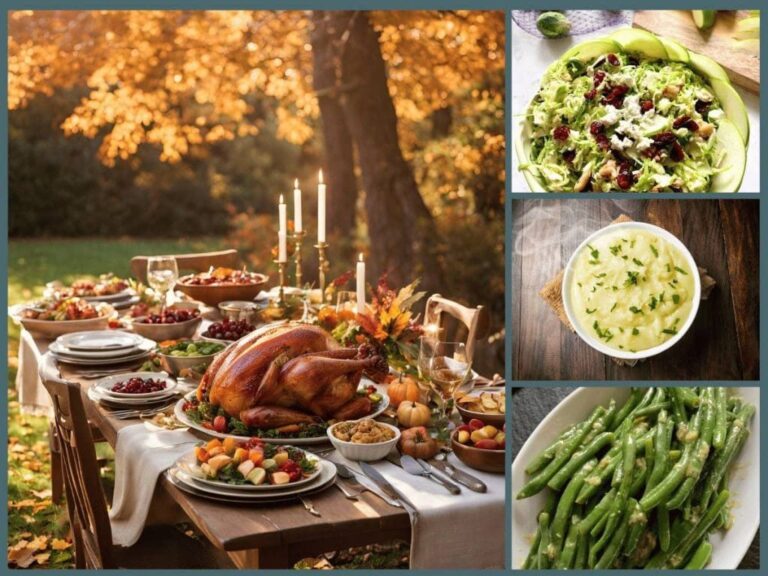
One menu does not fit every gathering, which is why ready made templates help. A Thanksgiving dinner at home starts with turkey, stuffing and pie, and gives gravy its own slot if someone else brings the turkey. A Thanksgiving lunch at work uses a 12 person holiday menu and assigns rolls, drinks or cleanup to coworkers who cannot cook. A church potluck after the service uses a casserole menu with a kitchen handover and clear volunteer assignments. A Friendsgiving asks the turkey volunteer to plan the carving time and puts ice and leftover containers on the board so friends without kitchen space can still help. Game day plans the buffet around kickoff and saves a spot for halftime snacks. You can browse the full set of potluck templates and customize any of them for your own guest count and menu, instead of starting from a blank page.
7 Mistakes That Ruin a Potluck (and How to Avoid Them)
- No sign up sheet, so five people bring dessert and nobody brings a main.
- Vague rows like "salad" with no quantity, so a dish for four arrives at a dinner for twenty.
- No drinks, plates or serving spoons on the list, so the host buys them all at the last minute.
- Dietary needs discovered at the table instead of in the invitation.
- Hot dishes with no oven plan, so three casseroles queue for one oven.
- No labels, so guests with allergies have to guess.
- No cleanup volunteer, so the host cleans alone for an hour.
The Night Before Checklist
Main dish claimed and confirmed
Drinks, plates, cups and serving spoons assigned
Oven and fridge space confirmed
Labels and pens ready for ingredient cards
Trash bags, foil and leftover containers ready
Cleanup volunteer confirmed
Final list printed
Frequently Asked Questions
How do you organize a potluck dinner?
Start with the date, time and venue, set the headcount, build a balanced menu with one or two mains, sides, bread, desserts, drinks and supplies, then put every item on a shared sign up sheet and let each guest claim one row. Check the gaps the day before and print the final list on the day.
How much food do I need per person at a potluck?
A useful rule of thumb is about one pound of food per person in total, or 4 to 6 ounces of main protein, 1/2 to 3/4 cup of each side, about 1 cup of salad, 1 to 2 rolls and 1 dessert serving per person. Ask for dishes in serving sizes, such as a casserole that serves 8 to 10.
What should I bring to a potluck if I cannot cook?
Bring drinks, bread and rolls, a fruit tray, a cheese plate, a store bought pie or cake, or take a supplies row such as plates, cups and napkins. A potluck needs non cooking contributions just as much as cooked dishes, and they are often the rows left empty.
How do you avoid duplicate dishes at a potluck?
Use one shared sign up sheet where each dish is its own row with a quantity. Once a guest claims a row, everyone else can see it is taken and picks something else. Check the sheet in the days before the event and ask someone directly if a key dish is still open.
How do you handle food allergies at a potluck?
Ask about allergies in the invitation, label every dish with its main ingredients, keep one serving spoon per dish, and ask cooks to bring packaging or ingredient lists. Put allergy friendly dishes at the end of the table so they are easy to reach, and invite guests to discuss their needs privately with the cook.
How far in advance should I plan a potluck?
Two weeks is enough for a casual potluck, and three to four weeks for a holiday meal like Thanksgiving. Send the sign up sheet as soon as the menu is set, set an RSVP deadline five days before the event, and do the final gap check the day before.
What is the best way to collect potluck sign ups?
A free online sign up sheet works best: the host creates the sheet, shares one guest link in the group chat, and guests claim dishes with just a display name, no account needed. The host sees the whole menu at a glance, reopens dishes when plans change, and prints the final list.
Final Word
A good potluck is not about perfect cooking. It is about a clear plan, a balanced menu and a sheet where every dish has a name next to it. Do those three things and the food takes care of itself. The host relaxes, the guests eat well, and someone always asks when the next one is.
Start with the menu, share the sheet early, check the gaps the day before, and enjoy the meal. That is the whole secret, and it works for a Thanksgiving dinner, an office lunch, a church gathering or a backyard Friendsgiving.




3 thoughts on “How to Organize a Potluck Dinner Without the Chaos: A Complete Guide”
Comments are closed.