Golf has always been at the mercy of the calendar. A quick nine after work meant racing the sunset, and a rainy forecast could wipe out weeks of practice without much warning. That’s changing faster than most golfers realize. Indoor simulators used to be a novelty tucked in the back of a pro shop, a toy for people who wanted CGI fairways. Now they’re becoming a real substitute for tee time, and the technology has finally caught up to the promise.
The Rise of Indoor Golf
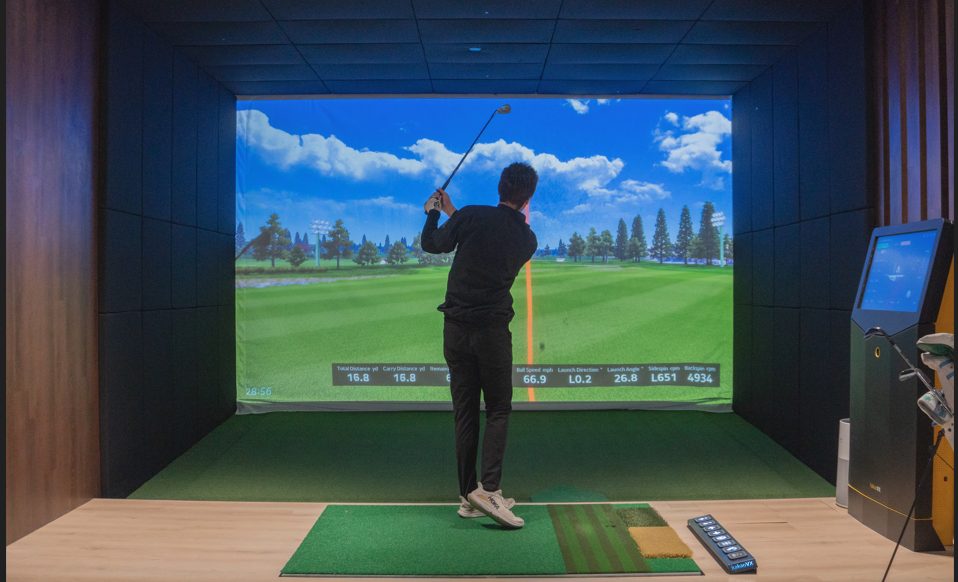
Ten years ago, simulator golf meant a grainy projection and a launch monitor that lost the plot on anything but a dead center strike. Today’s systems track ball speed, spin rate, launch angle, and clubhead path closely enough that the numbers hold up next to what tour players see on a range day. That accuracy is the actual story here, more than the graphics. Once the data can be trusted, a simulator stops being a game and starts working like a mirror: it shows a golfer exactly what their swing did, shot after shot, without a single ball lost in the rough.
That shift matters most for people who never had steady access to the game. Apartment dwellers without a backyard, parents grabbing an hour between school pickups, beginners who feel out of place on a crowded range, all of them now have a low-pressure way to build actual skill. Weather stops mattering. A February evening in Minneapolis can look a lot like a July afternoon on a links course in Scotland, at least from inside the bay.
Why Golfers Are Making the Switch
Ask a handful of simulator regulars why they switched and the answers cluster around the same three things: convenience, feedback, and reps.
Convenience is the easy one to explain. A session gets booked and finished in about the time it used to take just driving to a course. No fighting for a tee sheet, no standing behind a slow foursome, no need to haul a full bag when all someone wants is thirty minutes on wedge distances.
Feedback is where the technology earns its keep. Instead of guessing why a shot sliced, a golfer sees numbers on face angle and swing path right away. That turns practice into iteration instead of repetition. Nobody needs to hit the same flawed shot fifty times when the third or fourth attempt already shows what changed.
And reps are what the other two add up to. Because sessions are fast and don’t depend on the weather, golfers end up playing more often, not just longer when they do get out. Consistency, more than any single lesson or new driver, is usually what actually moves a handicap.
Home Simulators vs. Simulator Venues
People are bringing this technology into their game in two pretty different ways, and which one fits usually comes down to space, budget, and how often someone actually plays.
For golfers with a garage, basement, or spare room to give up, a home setup turns any hour of the day into potential practice time. Companies building in this space, Golf VX among them, have put real effort into making the hardware compact enough for a two-car garage without losing the shot data quality golfers expect from a commercial-grade launch monitor. That last part matters. A home unit is only worth the floor space if the numbers it reports can actually be trusted for swing changes, not just for keeping score with friends.
For golfers who don’t want to give up a room, or who aren’t ready for that kind of purchase, simulator venues cover the same ground differently. These locations pair similar launch monitor technology with a lounge setting built for groups, leagues, and people just walking in. Play Golf VX runs on that model: multiple bays, food and drinks on site, and a format that works as well for a solo practice hour as it does for a birthday outing or a work event. It’s golf rebuilt as a social plan that happens to sharpen a swing along the way.
Neither format wins outright. A home simulator rewards golfers who want daily reps without much friction. A venue rewards the ones who want the social side, don’t have a spare room, or want to try the experience before deciding whether a home setup makes sense.
What to Look For in a Simulator Setup
Not every system is built the same, and the gap between a toy and something worth training on comes down to a few specifics.
Launch monitor accuracy matters more than screen resolution. A gorgeous projection means nothing if the ball flight it shows doesn’t match physics. Look for systems reporting full data instead of a smoothed guess at distance.
Course and range library decides how long the appeal lasts. One simulated course gets old fast. A rotating or growing library of courses and practice modes keeps sessions interesting for months instead of weeks.
Space requirements are easy to underestimate. Ceiling height, net distance, and side clearance all factor in, and a setup that looks compact in marketing photos can be tight once it’s actually sitting in a garage. Measuring the room before buying saves a return headache later. A quick look at the specs lists for its home units is a fast way to check whether a system fits a given space before spending anything.
Software updates and support separate a system that ages well from one that’s outdated in two years. Golf tech moves fast, and a simulator that keeps getting new courses and calibration updates protects the investment.
The Social Side Nobody Talks About Enough
One thing that gets underrated: simulator golf changes who actually gets to play together. A scratch golfer and a total beginner can share a bay without either one slowing anybody down, since the format removes the pressure of holding up a group on a real course. Leagues built around simulator venues have become a genuine draw for people who want the camaraderie of a golf league without needing four hours and a course membership. It’s turned golf into something closer to bowling night. Low commitment, easy to repeat, social because that’s the point.
Where This Is Heading
More golfers are going to build home setups the way people once built home gyms, treating a few square feet of garage as a legitimate training space. At the same time, venue-based play keeps growing as a social and competitive outlet, especially in places where outdoor golf is only realistic for half the year. As launch monitor accuracy keeps improving and the hardware keeps shrinking, the gap between simulator golf and regular golf is only going to keep closing.
Whether the goal is shaving strokes off a handicap or just finding a way to play more without fighting a tee sheet, indoor golf isn’t a rainy day backup plan anymore. For anyone curious what that actually feels like before committing to a garage build or a membership, dropping into a Play Golf VX location for one session is usually the easiest way to find out.