

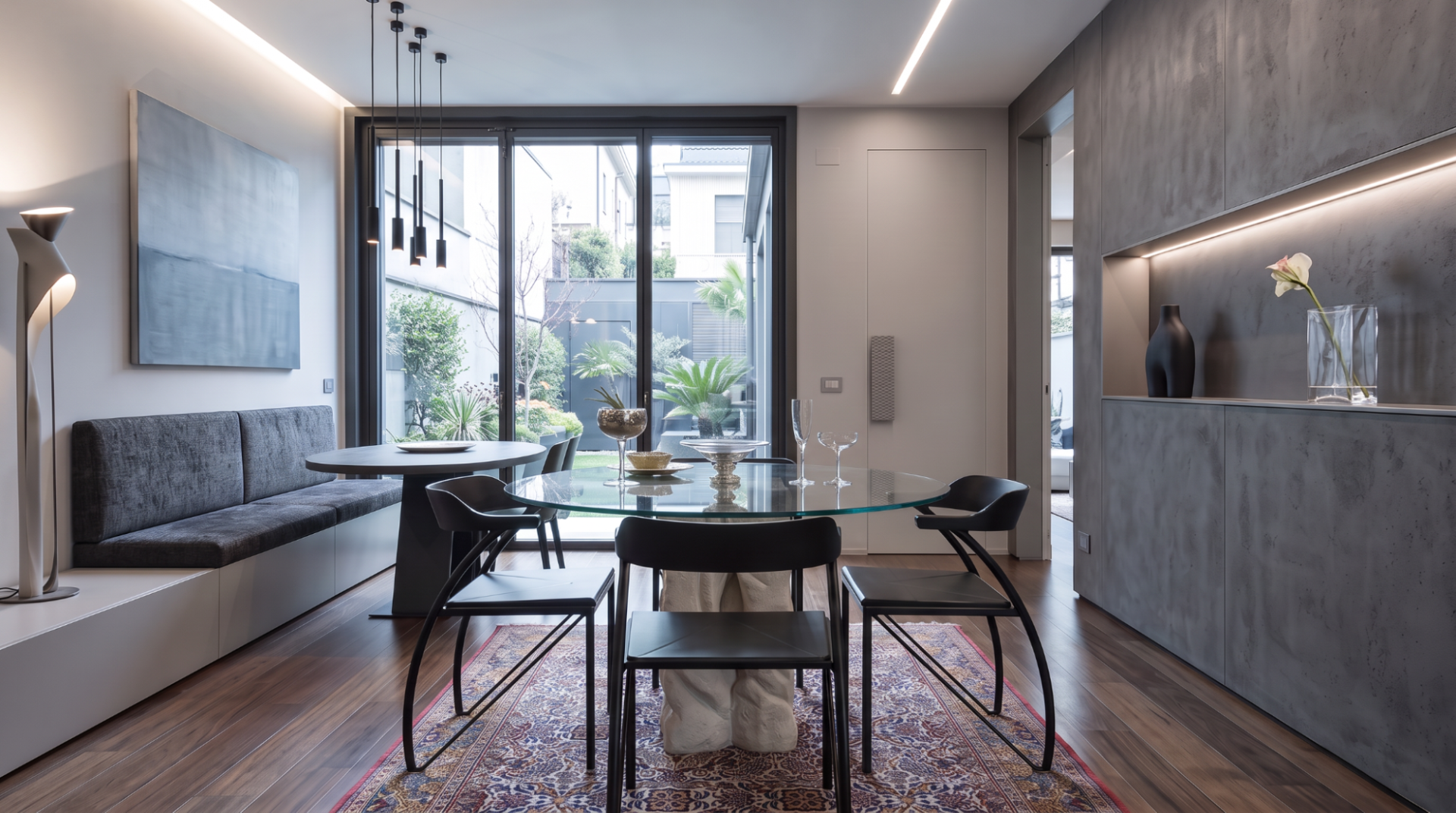
Choosing the right tabletop glass is less about appearance and more about how the glass will be supported, how large it is, and how it will be used. A tabletop spanning a pedestal base has very different structural demands from a glass cover sitting directly on a wooden surface. For many residential applications, tempered glass table top is preferred because it is stronger than ordinary annealed glass and is designed to break into smaller, relatively blunt fragments if it fails. But tempered glass is not indestructible, and choosing the wrong thickness, edge treatment, or support configuration can still create problems.
This article explains the major factors homeowners, furniture makers, designers, and contractors should consider when selecting glass for a dining table, coffee table, desk, patio table, or replacement project.
Why Tempered Glass Is Commonly Used for Tables
Tempered glass is heat-treated to increase its strength compared with annealed glass. When properly manufactured, it provides greater resistance to everyday impact and thermal stress than standard untreated glass.
Its biggest safety advantage is what happens when it breaks. Instead of typically producing large, sharp shards like annealed glass, tempered glass is engineered to fracture into many smaller pieces.
That does not mean tempered glass cannot break. A severe impact, manufacturing defect, excessive edge damage, or certain types of thermal stress can still cause failure. The key difference is that tempered glass is designed to behave more safely when breakage occurs.
This makes it particularly useful for furniture applications where people interact with the glass every day.
What Thickness Should a Glass Tabletop Be?
Thickness should never be selected based on appearance alone. The correct thickness depends on the size of the glass, its shape, the support underneath it, the amount of overhang, and the expected load.
Common tabletop thicknesses include 1/4-inch, 3/8-inch, 1/2-inch, and 3/4-inch. Different applications call for different specifications.
A 1/4-inch piece may be appropriate when the glass is primarily being used as a protective cover over a fully supported surface. A thicker piece is generally more appropriate when the glass itself is functioning as the structural tabletop.
For example, glass covering an existing wood tabletop has continuous support underneath it. By contrast, a large round glass surface resting on a central pedestal has a significant unsupported span.
Glass fabricators commonly recommend thicker glass as unsupported spans increase. One U.S. glass supplier, for example, describes 3/8-inch glass as suitable for heavier-duty tables where the glass forms the tabletop and 1/2-inch glass for heavier applications with greater unsupported areas.
1/4-Inch Glass
1/4-inch glass is frequently used for protective covers and some smaller or adequately supported furniture applications.
Because it is relatively lightweight, it can work well when placed directly over an existing tabletop. It should not automatically be treated as suitable for every freestanding table design.
3/8-Inch Glass
3/8-inch glass offers additional rigidity and is commonly considered for medium- to heavier-duty furniture applications.
It can be appropriate for certain dining tables, desks, coffee tables, and other designs where the glass has meaningful unsupported areas.
1/2-Inch Glass
1/2-inch glass provides a substantially more substantial appearance and is frequently used for larger or heavier-duty furniture.
It can be particularly appropriate for freestanding tops, larger dining surfaces, conference tables, and pedestal designs, depending on the engineering of the base.
3/4-Inch Glass
3/4-inch glass is generally reserved for large, substantial, or architecturally styled tabletops where the additional thickness and weight are justified.
The base becomes especially important at this thickness. A very heavy glass surface requires furniture designed to safely carry its weight.
The Difference Between a Tabletop and a Table Cover
This distinction is frequently overlooked. A glass table cover sits over another structural surface, such as wood, stone, or an existing furniture top. Its primary purposes may be protecting the underlying material from scratches, spills, heat, or everyday wear.
A glass tabletop, on the other hand, may itself be the primary structural surface. Because a cover has continuous support underneath it, it can often be thinner than a freestanding tabletop. Replacementglass.co similarly distinguishes protective glass covers from glass tops that function as the actual surface of a table. Confusing these two applications is one of the easiest ways to select an inappropriate thickness.
How Table Size and Support Affect Glass Thickness
The physical dimensions of a tabletop matter, but dimensions alone don’t determine the correct specification. Support configuration is critical. A small tabletop with four well-positioned supports may behave very differently from a large tabletop attached to a single pedestal. Likewise, a rectangular top supported continuously around its perimeter has different structural characteristics from a large round surface supported only near its center.
Overhang matters, too. The farther glass extends beyond its support, the greater the mechanical demands on the material.
For unusually large tabletops, unusual shapes, significant overhangs, or commercial applications, the specification should be reviewed by an experienced glass professional rather than selected from a generic thickness chart.
Choosing the Right Shape
Glass can be fabricated for many furniture configurations, including:
- Round
- Square
- Rectangle
- Oval
- Racetrack
- Irregular or custom shapes
Round glass is popular for dining and patio tables because it eliminates sharp corners and works naturally with pedestal bases.
Rectangular glass is common for dining tables, desks, conference tables, and console furniture. Oval and racetrack shapes can provide some of the visual benefits of rectangular furniture while softening the corners.
For an unusual furniture design, a physical template can be useful. The LA Glass Company recommends using cardboard or kraft paper templates for irregular shapes and emphasizes that glass cannot simply be trimmed after tempering.
That last point is particularly important: measurements need to be correct before tempering.
Why Edge Finishing Matters
The edge is one of the most important parts of a glass tabletop because it is exposed to contact. Common finishes include flat-polished, pencil-polished, and beveled edges. A polished edge removes the sharpness associated with a raw cut edge and provides a finished appearance. A beveled edge creates an angled decorative surface that can complement traditional or contemporary furniture.
The best choice depends on the furniture design and the desired appearance. For a modern dining table, a flat-polished edge can provide a clean architectural appearance. A pencil-polished edge creates a softer visual transition, while a bevel can add a more decorative character.
Corners deserve particular attention on rectangular or square tops. Rounded corners can reduce the severity of exposed corners in furniture used around children or in high-traffic spaces.
Can Tempered Glass Be Cut After It Is Made?
No. This is one of the most important technical limitations to understand. Tempered glass must generally be cut, drilled, shaped, and edge-finished before the tempering process. Attempting to cut or drill tempered glass afterward can cause it to fracture. This means measurements for:
- Overall dimensions
- Holes
- Notches
- Cutouts
- Corners
- Edge treatments
need to be finalized before the glass enters tempering. This is also why replacing a broken tabletop isn’t simply a matter of buying a similar-looking piece and trimming it to fit. The replacement must be fabricated to the required dimensions from the start.
What About Heat Resistance?
Tempered glass has greater resistance to thermal stress than ordinary annealed glass, but calling it “heatproof” would be inaccurate. Sudden and uneven temperature changes can create stress in glass. For example, placing an extremely hot object directly onto a cold glass surface can create localized thermal stress.
A trivet or heat-resistant pad is still sensible for very hot cookware and serving dishes. The same principle applies outdoors. Patio tables can experience substantial temperature fluctuations, so the glass, frame, supports, and surrounding hardware all need to be appropriate for outdoor conditions.
Is Tempered Glass Scratch-Proof?
No. This is another common misconception. Tempered glass is stronger than ordinary annealed glass in several important respects, but it is not scratch-proof. Abrasive particles, gritty objects, metal hardware, and improper cleaning techniques can damage the surface over time. Routine cleaning with a soft cloth and appropriate glass cleaner is generally preferable to abrasive materials. If a tabletop is used heavily in a commercial environment, its expected exposure to abrasion should be considered when choosing the material and finish.
How Much Does a Glass Tabletop Cost?
There is no single price because the cost depends on several variables. The major factors include size, thickness, glass type, shape, edge finish, holes or cutouts, customization, packaging, and shipping.
A small, simple rectangular piece can cost substantially less than a large custom round top with a decorative edge. Thicker glass also weighs more, which can increase handling and transportation requirements.
Current U.S. listings demonstrate how broad the range can be. Retail listings include smaller tempered replacement tops as well as larger custom-sized pieces, while specialized glass companies price projects according to dimensions and specifications.
For replacement projects, comparing the cost of new glass with replacing the entire piece of furniture is often worthwhile. A custom-fabricated replacement can preserve a usable table base while avoiding the cost and waste associated with replacing the complete table.
What Information Do You Need for a Replacement?
If an existing glass surface has broken, start by documenting the original dimensions and configuration.
Measure the required diameter or width and length carefully. If the table has a special shape, create a template rather than relying on estimates.
Also identify:
- Glass thickness
- Shape
- Edge profile
- Corner radius
- Center holes
- Notches or cutouts
- Base and support configuration
If the original glass was tempered, don’t assume that a replacement should automatically use the same thickness without considering the table’s current condition and support structure. A qualified fabricator can evaluate whether the existing specification makes sense for the replacement application.
How to Make a Better Decision
The smartest way to choose tabletop glass is to work backward from the furniture rather than starting with a preferred thickness. First determine whether the glass is a protective cover or the actual structural tabletop. Then evaluate the table’s dimensions, support points, overhang, intended use, and expected loads. Next choose the glass type and thickness. After that, determine the shape and edge treatment. Finally, verify every measurement before fabrication. That process is much more reliable than simply choosing the thickest glass available.
Final Takeaway
A good tabletop specification balances safety, structural performance, appearance, weight, and cost. Tempered glass is often an excellent choice for furniture because of its strength and breakage characteristics, but the material alone doesn’t determine whether a tabletop is appropriate. Thickness, support, edge treatment, dimensions, and fabrication detail all matter. The biggest mistake is treating tabletop glass as a one-size-fits-all product. A small protective cover and a large unsupported dining surface may both be made from glass, but they do not have the same engineering requirements. For unusual, oversized, or heavily loaded furniture, getting the specification reviewed by an experienced glass professional is the safer approach.








3 thoughts on “Frameless Mirrors for Home Gym: Size, Safety & Setup”
Comments are closed.