

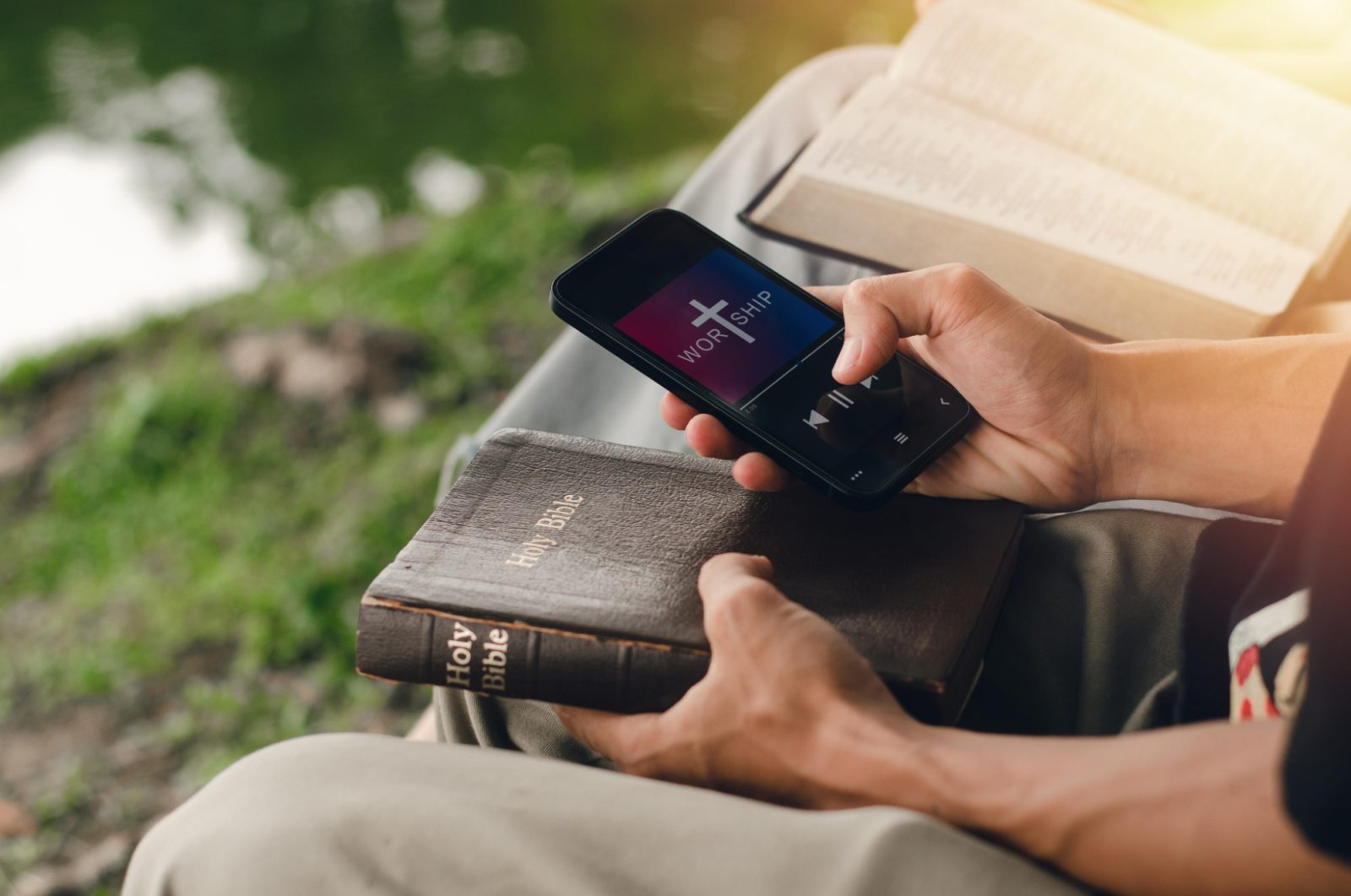
There’s a particular kind of tired that has nothing to do with sleep. You’ve prayed the same three sentences for weeks now. You open your Bible app, scroll past a dozen notifications, and close it again without reading a single verse. You know you need quiet with God. You just can’t find the door into it anymore.
If that’s you tonight, you’re not failing at faith. You’re just human, living through a season louder than your soul was ever built to hold. A lot of believers are finding that a Christian meditation app works like a gentle hand on the shoulder — nudging them back toward stillness on the nights their own discipline has simply run dry.
This isn’t about swapping prayer for an app, and it never should be. It’s about giving prayer somewhere soft to land when you can’t quite build the landing pad yourself.
What Christian Meditation Really Means
Let’s clear something up first, because the word “meditation” makes some Christians nervous, and honestly? That caution isn’t crazy. Eastern meditation often aims at emptying the mind. Christian meditation does the opposite. It fills the mind, on purpose, with truth.
Psalm 1:2 describes the blessed person as one “whose delight is in the law of the Lord, and who meditates on his law day and night.” The Hebrew word behind “meditate” there, hagah, actually carries a sense of muttering — turning something over and over in your mouth until it settles into you, kind of like worrying a stone smooth in your pocket without even noticing you’re doing it. It’s not passive. It’s rehearsal.
So Christian meditation isn’t about clearing your head out. It’s about fixing your attention on Scripture, on who God actually is, on one promise you need to hear again — and letting it travel the slow distance from your mind down into your heart. Paul says something similar in Philippians 4:8, urging believers to dwell on whatever is true, noble, right, pure. That’s not a suggestion for idle moments. That’s a discipline you build, badly at first, like anything worth building.
How Scripture Meditation Calms the Mind Before Sleep
Anyone who’s lain awake at 1 a.m. running through tomorrow’s to-do list knows exactly how loud an unguarded mind gets right before bed. It’s often the only quiet hour left in the day — which means it’s also the hour your worries finally get the floor.
This is one of the most overlooked strengths of scripture meditation, honestly. Instead of letting your mind default to anxious replay — did I send that email, why did I say that, what if — you’re giving it something else to chew on. Something steady. Psalm 4:8 says it plainly: “In peace I will lie down and sleep, for you alone, Lord, make me dwell in safety.” Not wishful thinking. A settled kind of confidence your tired mind can actually rest inside.
Even five or ten minutes of a short guided meditation can interrupt the spiral before it picks up speed. Some nights that means reading a psalm slowly, phrase by phrase. Other nights it means listening to someone else read it to you, because some days you just don’t have the energy to read anything at all — and that’s okay. That’s exactly where a tool built for this moment can help. Falling asleep to guided prayers for better sleep takes the pressure off having to “perform” your own quiet time when you’re running on fumes, and just lets Scripture do the work it was always going to do anyway.
Creating a Peaceful Christian Bedtime Meditation Routine
You don’t need anything elaborate here. You need something repeatable.
Put the phone down after the meditation, not before it — scrolling right up until your eyes close tends to undo whatever calm you just built, no matter how good the psalm was. Dim the lights if you can. Get comfortable. Pick one short passage instead of a whole chapter, because the goal isn’t information. It’s absorption.
Here’s a rhythm that’s worked for a lot of people, and might for you: read the verse once for meaning, once for feeling, once as a prayer said back to God. Psalm 23 is made for this. “The Lord is my shepherd, I lack nothing” hits differently the third time through than it did the first — try it and see.
Consistency beats length, every time. Five honest minutes every night will shape you more than one long session you only manage once a month and then feel guilty about.
Bible Verses and Prayer Practices for Restful Sleep
A few worth keeping close, taped to your nightstand or saved in your notes app:
“I lie down and sleep; I wake again, because the Lord sustains me” (Psalm 3:5). “Cast all your anxiety on him because he cares for you” (1 Peter 5:7). “You will keep in perfect peace those whose minds are steadfast, because they trust in you” (Isaiah 26:3).
Try praying that last one as your own request instead of just reading it past — “Lord, keep my mind steadfast tonight, because I’m choosing to trust you with what I can’t control.” Small shift in wording. Bigger shift in posture than you’d expect.
And on the nights the words genuinely won’t come? Let a written prayer or a recorded one carry you instead. There’s no extra credit in the Christian life for doing it alone, and nobody’s keeping score.
A Quiet Word Before You Close Your Eyes
Maybe tonight won’t be the night your mind finally goes still. That’s alright. Faithfulness was never measured by how quiet your thoughts get. It’s measured by whether you keep showing up to the quiet at all — one imperfect night after another, trusting God is near even when your prayers feel more like fragments than finished sentences.









1 thought on “How a Christian Meditation App Can Support Your Daily Prayer Routine”
Comments are closed.